


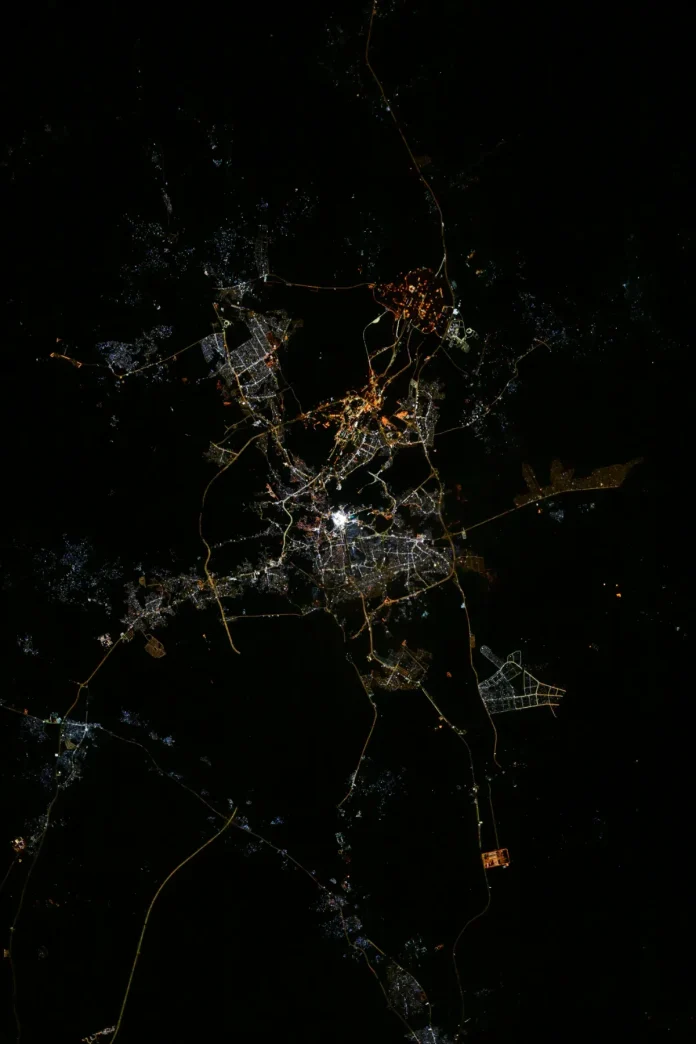
Astronaut Don Pettit captures stunning ISS photo of Mecca’s Kaabah shining from 400km above the Earth
AN extraordinary image taken from the International Space Station has captured global attention, showing Islam’s most sacred site radiating brilliantly against the Saudi Arabian landscape from hundreds of kilometres above.
NASA astronaut Don Pettit shared the striking orbital photograph on social media platform X, where it quickly went viral. The image reveals the Kaabah appearing as a luminous focal point within Mecca’s urban expanse, visible even from the station’s altitude of approximately 400 kilometres.
“Orbital views of Mecca, Saudi Arabia. The bright spot in the center is the Kaabah, Islam’s holiest site, visible even from space,” Pettit wrote in his post on December 1.
The photograph showcases the Grand Mosque (Masjid al-Haram) nestled within Mecca’s dense cityscape, surrounded by rugged mountain terrain. The cube-shaped structure, draped in its distinctive black kiswah cloth, stands out prominently due to continuous floodlighting that reflects both sunlight and artificial illumination toward orbit.
Pettit captured this remarkable image during his fourth ISS mission, which ran from September 2024 to April 2025. The astronaut, renowned for his artistic approach to space photography, shot the scene through the cupola window using a high-resolution Nikon camera.
Travelling at approximately 28,000 kilometres per hour (17,500 miles per hour), Pettit needed to use fast shutter speeds to freeze the scene below. Modern advancements in camera technology, particularly the improved ISO performance of the Nikon Z9 used aboard the ISS, have made such night photography increasingly viable.
The Grand Mosque remains illuminated around the clock for prayer and to accommodate Hajj pilgrims. This constant lighting, combined with the surrounding city’s glow from millions of LED and sodium lamps, creates a distinctive bright patch visible to the ISS’s sensitive cameras.
The Kaabah serves as the qiblat—the direction Muslims worldwide face during their daily prayers—and represents the destination of the Hajj pilgrimage, which every able Muslim is required to undertake at least once in their lifetime.
The photograph has resonated deeply with viewers across religious and cultural boundaries. One user commented that it’s “a breathtaking sight. Really something else,” while others expressed respect for the sacred significance of the location.
Another viewer remarked: “From orbit, the Kaabah’s glow hits different—like Earth’s own eternal nightlight for the soul”.
This isn’t the first time Pettit has captured stunning imagery from space. The astronaut-photographer has previously shared images of Mount Kilimanjaro’s icy peak, spectacular displays of the northern lights, and various atmospheric phenomena visible from the ISS.
During his first ISS mission in 2002, Pettit even invented a barn door tracker using materials available on the station, demonstrating his innovative approach to overcoming the challenges of space photography.
The recent Kaabah photograph stands as another testament to both the technical capabilities of modern space photography and the enduring power of Earth’s most sacred sites to inspire wonder, even from the heavens.



