


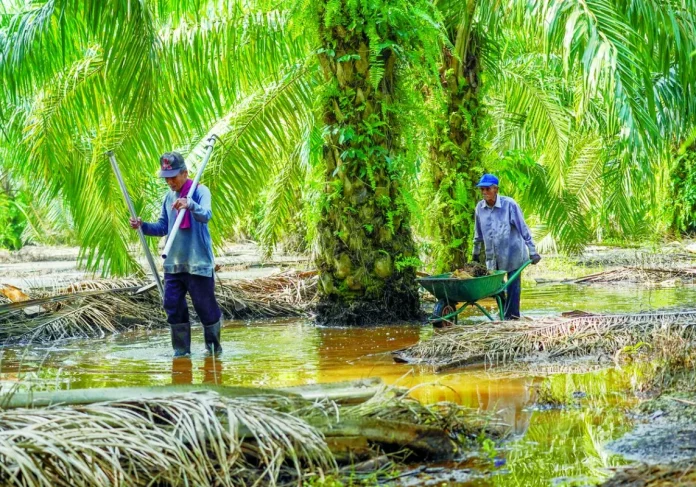
NGOs warn that using palm plantations for AI data centres and solar farms requires strict oversight to prevent environmental and social risks
PETALING JAYA: While repurposing oil palm plantations for artificial intelligence (AI) data centres and solar farms could support renewable energy, environmental NGO RimbaWatch stressed that careful monitoring and transparency are needed to avoid environment and social risks.
Its director Adam Farhan said with free, prior and informed consent from local communities, converting estates, particularly oil palm plantations with low biodiversity value, could be a positive step toward reducing reliance on fossil fuels.
“However, this should be used to primarily support grid decarbonisation, rather than providing asset-level power supply for data centres, and this also does not address concerns surrounding the high water usage of data centres.”
Adam said if the focus is solely on expanding renewable energy capacity for the grid, it could be considered a form of real climate action, but warned that using the estates primarily to power data centres may risk greenwashing.
He also highlighted that Malaysia has limited space, energy and water to host these centres, and has not yet set a fair-share carbon budget aligned with the Paris Agreement’s 1.5°C target.
“Existing industries may already push Malaysia beyond this budget, let alone fossil fuel-guzzling data centres,” he said.
Adam said Malaysia’s hot climate means data centres require substantial cooling capacity, which drives high water consumption. A 100MW facility can consume about 4.16 million litres daily, roughly the needs of a town of 10,000 people, according to Sahabat Alam Malaysia.
“If water becomes scarce, who gets priority – local communities or high-income companies?”
He pointed out that the risk of triggering new land clearing by turning plantations into data centre zones depends on the specific circumstances.
He said data centres are not as land-intensive as oil palm, and many of the plantations being replaced are in suburban areas, where it is more economically viable to urbanise the land rather than continue commodity planting.
“As a start, data centres should disclose where their water comes from, how much they expect to use and their projected greenhouse gas emissions over their full lifespan.
“Once operating, they should publish daily water use and emissions data,”
he said.
Universiti Putra Malaysia Faculty of Forestry and Environment senior lecturer Dr Mohd Yusoff Ishak said using already cleared land could reduce pressure on forests, but only if new developments are carefully planned.
He said some palm oil companies are using parts of their estates to host data centres and solar farms, which could help meet the growing demand for land and renewable energy as Malaysia’s digital economy expands.
“Solar farms on plantation land could support clean energy, but data centres come with heavier environmental demands.
“They require large amounts of electricity, major cooling systems and a steady water supply.
“Without proper controls, these projects can cause water stress, heat buildup, noise and pressure on nearby communities.”
Mohd Yusoff said new data centres must ensure that they use advanced cooling systems, reclaimed water and publish transparent water-use reporting.
“Data centres affect more than electricity, they influence water, heat, materials, land use and local communities.
“The conversion of unused oil palm land could also represent the loss of potential biodiversity rehabilitation sites within plantations,” he said.
Mohd Yusoff called for a whole ecosystem approach to ensure the digital economy does not come at the cost of environmental stability or community wellbeing.
Malaysia is seeing more major palm oil companies repurpose parts of their estates for AI-related data centres and large-scale solar farms.
This comes as the data centre sector rapidly expands, attracting about US$34 billion (RM141.8 billion) in investments from global tech giants.



