




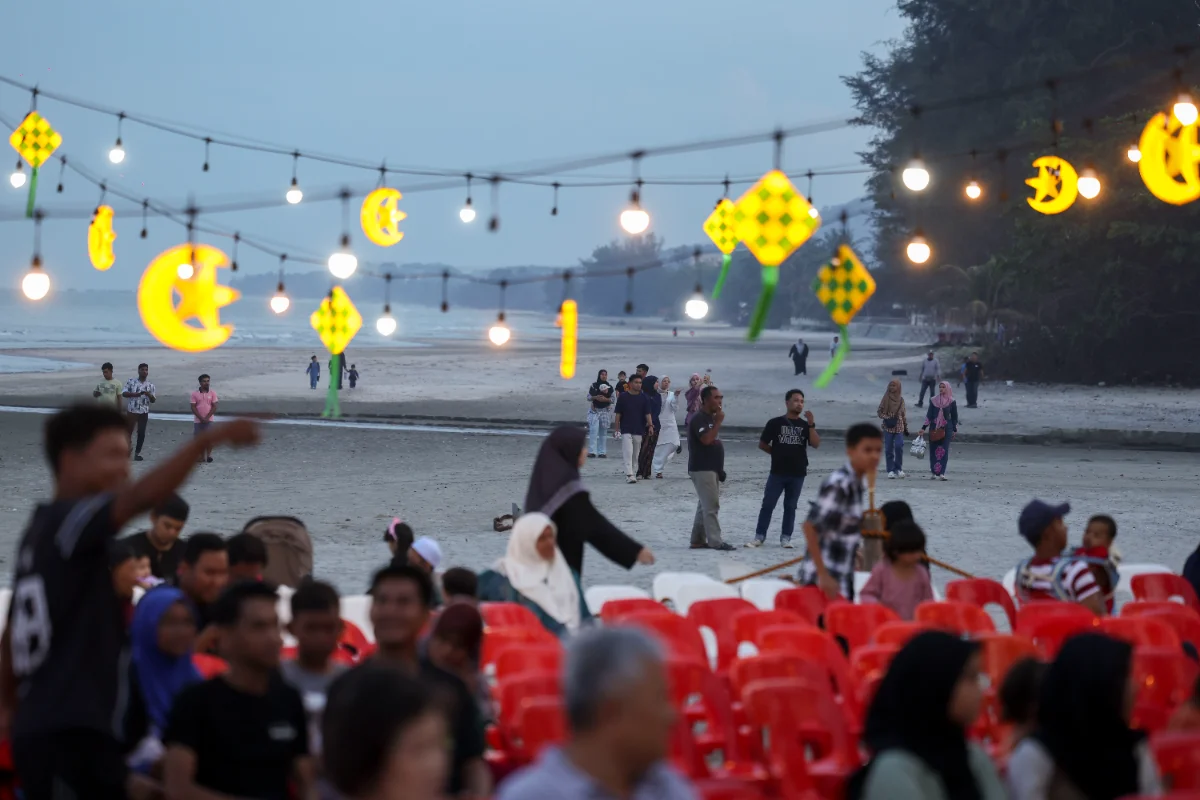
Seeing invisible poverty: Why true philanthropy goes beyond festive charity to dignity, local action and compassion
THE festive glow often illuminates a beautiful, collective impulse: the desire to give. Across Malaysia, as observed in recent weeks, this has manifested in a surge of generosity towards orphanages, old folks’ homes and established charities, so much so that many organisations find their calendars filled with goodwill months in advance.
This is a profound credit to our national character – a demonstration of compassion that should be celebrated. Yet, this seasonal ritual also invites a deeper reflection on the very nature of need and philanthropy.
Is our generosity reaching its fullest potential or are we, in our well-intentioned haste, seeing only the most visible forms of suffering?
The act of donating to a recognised institution is charity – a vital, immediate response to organised need – but philanthropy is a broader undertaking. It is the sustained love of humankind that seeks to understand and address needs in all its complex, often hidden, dimensions.
The crucial insight, one that dawned on me this season, is that poverty and desperation are heterogeneous. They do not only reside in designated buildings. For every child in an orphanage, there may be a family next door, intact but fractured by debt, quietly skipping meals. For every elderly resident in a care home, there may be a pensioner in a modest apartment, choosing between medication and electricity.
Their poverty is invisible, woven into the array of ordinary life, mistaken for simple frugality or even pride. Or it could be a helpless man taking shelter in a five-foot way and gets woken up rudely with water hosed on him.
My encounter with the young man running a struggling car wash in my condominium epitomises that destitution often comes in disguise. His need isn’t for a holiday hamper; it is for consistent patronage, a thread of economic stability to help him meet his monthly expenses.
Supporting him is not about charity in the classic sense; it is a conscious, micro-philanthropic choice to bolster dignity and enterprise where it already exists, yet falters.
He represents a vast cohort – the gig worker without a safety net, the small merchant battling inflation and the single parent whose resilience masks profound exhaustion. They wear no uniforms of need and their struggles are often mistaken for personal failing, a cruel and simplistic judgement that ignores the intricate web of circumstance, systemic barriers and plain bad luck.
If we broaden our gaze from our local communities to the global stage, this lesson becomes starker and more urgent. Consider the haunting landscapes of war in Gaza, Sudan or Ukraine. Here, need is catastrophic and visceral, yet even amidst such glaring tragedy, it wears many masks.
International aid convoys target refugee camps, and rightly so. But what of the family that did not flee, now trapped in a shattered suburb, their need as desperate but their access to help blocked by rubble and danger?
What of the professional – the teacher or the engineer – whose world has collapsed, whose poverty is not a lifelong condition but a sudden, violent erasure of all they built?
In war zones, the “invisible” need may be the trauma facing a specialist treating children, themselves on the verge of breakdown, or the local journalist documenting atrocities while running out of food. The aid maps are drawn along supply lines but suffering seeps into every crack, seen and unseen.
This brings us to a humbling, yet empowering, realisation that poverty eradication on a macro scale may be an ideal beyond our individual reach. The architectures of conflict, inequality and economic disparity are colossal. Yet, to use that as an excuse for apathy is to surrender our fundamental humanity.
The philosophy that “the thought counts” is not a platitude; it is the foundational ethic of a compassionate society. It means that our individual power lies not in solving everything but in seeing more clearly and choosing to act within our sphere.
True philanthropy, therefore, begins with perception. It asks us to look closer at our neighbour, at the small business owner or at the complex narratives behind the headlines from warring states. It then asks us to act in ways that honour the specific dignity of that need.
This could mean patronising a struggling local enterprise consistently, offering pro bono skills to a non-profit organisation, contributing to grassroots NGOs adept at finding “invisible” families or supporting humanitarian agencies known for reaching behind the frontlines.
The outcome of our giving, whether it truly alters a life’s route is often beyond our control. We give, not with the arrogance of solution-bearers, but with the humility of fellow humans offering a handhold in a steep climb.
The festive season is not over yet for us Malaysians, with two major celebrations coming up. Let our generosity evolve from a seasonal destination of check-marked bucket list items into a year-round journey of nuanced engagement. For need is not a simple address; it is a condition that whispers as often as it cries.
By learning to hear those whispers, we do more than give. We affirm a powerful, healing truth that you are seen, your struggle is real and you are not alone. That, in the end, is where hope truly begins.
Dr Bhavani Krishna Iyer holds a doctorate in English literature. Her professional background encompasses teaching, journalism and public relations. She is currently pursuing a second master’s degree in counselling. Comments: [email protected]



