




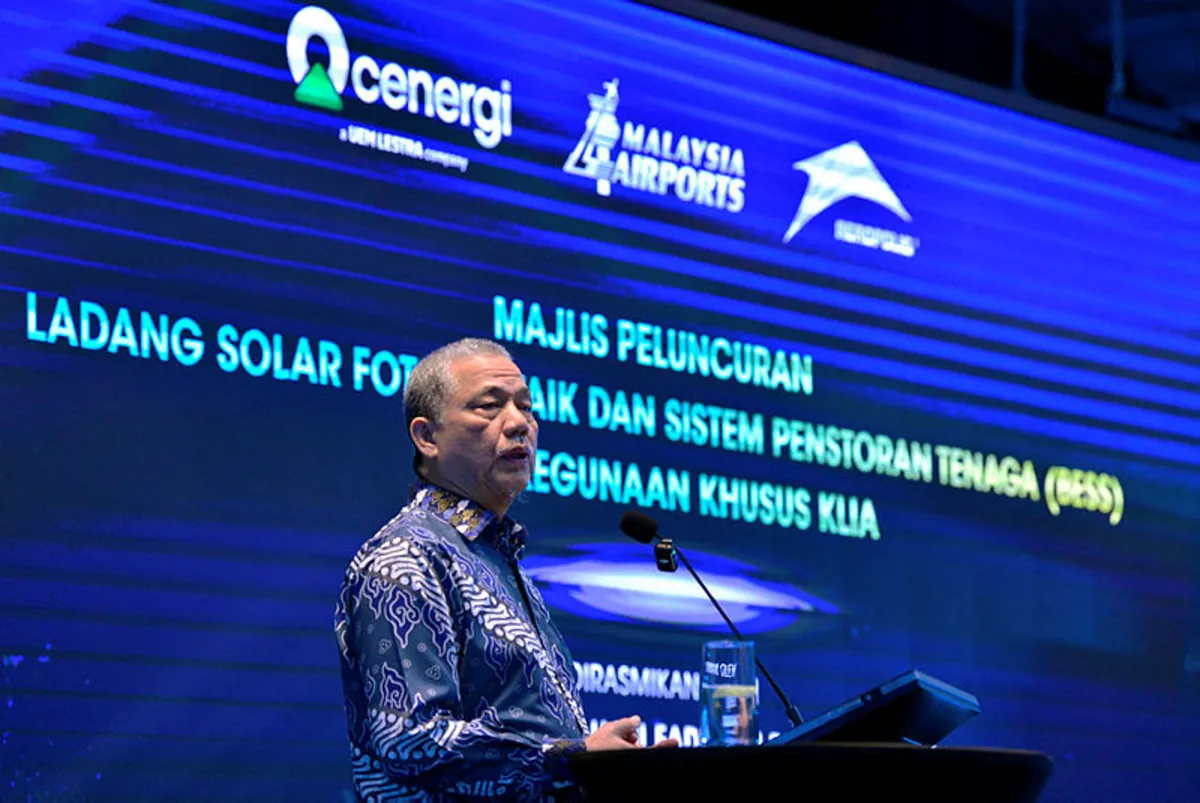
A new solar farm and battery system at KLIA will generate 46 GWh of green power yearly, supporting Malaysia’s 70% renewable energy target by 2050
SEPANG: The Photovoltaic Solar Farm and Battery Energy Storage System (BESS) project at KLIA Aeropolis, developed exclusively for the use of Kuala Lumpur International Airport (KLIA), is a crucial step in ensuring that Malaysia’s energy transition takes place in a practical, stable and large-scale manner.
Deputy Prime Minister and Minister of Energy Transition and Water Transformation Datuk Seri Fadillah Yusof said the initiative also supports Malaysia’s target of achieving 70 per cent renewable energy usage by 2050.
He said that as the nation’s main transportation hub and Malaysia’s economic gateway, KLIA is a critical infrastructure that requires a stable, secure and high-quality energy supply to ensure the continuity of large-scale operations.
“When fully completed, this project is expected to generate around 46 gigawatt-hours (GWh) of green electricity annually for KLIA’s use.
“In terms of environmental impact, the project is projected to reduce carbon dioxide emissions by about 35,000 tonnes per year, equivalent to removing approximately 8,000 vehicles from the roads,” he said at the Solar Farm and BESS launch ceremony here today.
Fadillah said the initiative would also position KLIA as a more competitive international airport in achieving a favourable standing under the Airport Carbon Accreditation (ACA).
He said the implementation of the KLIA Aeropolis project should be viewed as a strategic initiative that supports Malaysia Airports Holdings Bhd’s (MAHB) aspiration to achieve a renewable energy mix target of 20 per cent by 2030 and net-zero carbon emissions by 2050, in line with MAHB’s Net Zero Decarbonisation Roadmap.
“This project reflects a new approach in the energy sector, moving beyond merely adding generation capacity towards building a more flexible, intelligent and resilient energy system,” he said.
Fadillah said he noted that a Special Purpose Vehicle (SPV), Cenergi Aeropolis Renewable Energy Sdn Bhd (CARE), had been established through a strategic collaboration between MAHB and Cenergi SEA to manage the implementation of the project in a more structured and focused manner.
He said solar energy is a clean and competitive energy source, but its intermittent nature depends on weather conditions and time.
Therefore, he said that within the context of managing the national electricity supply system, components that can enhance system reliability and flexibility are required.
“This is where the role of BESS becomes a game changer. With energy storage systems in place, excess solar energy generated during the day can be stored and utilised during peak demand periods, while KLIA’s load operations can be managed more efficiently to reduce peak demand, which has cost implications through network and capacity charges,” he said.
Fadillah said projects such as this assist the Ministry of Energy Transition and Water Transformation (PETRA) and implementing agencies in accelerating the transition of the national energy landscape towards a more stable grid system, smarter demand and energy management, and higher integration of renewable energy sources, without compromising energy security.
He stressed that the nation’s energy transition must progress in tandem with the need for reliable electricity supply, cost efficiency and Malaysia’s economic competitiveness.



