




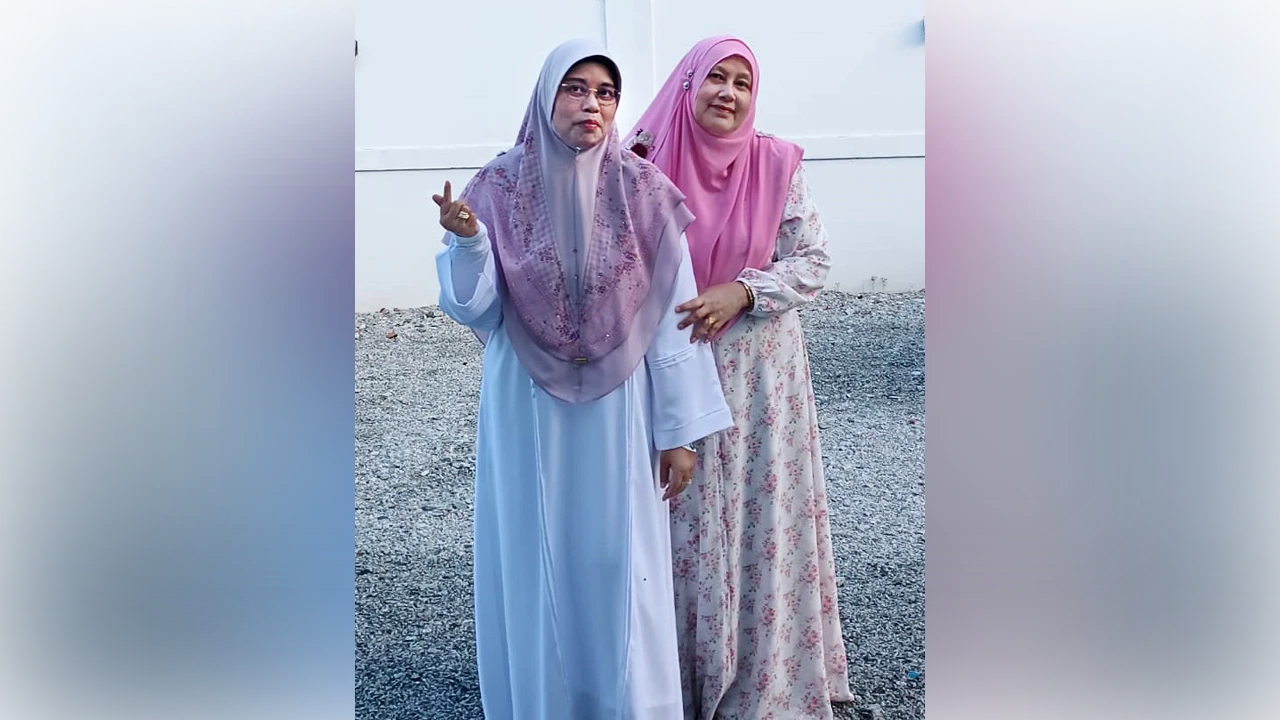
Two women share their journey battling the debilitating disease with resilience and faith, urging early detection
PETALING JAYA: A lump that did not appear on a mammogram. Stomach pain dismissed as gastric discomfort. For two Malaysian women, these easily overlooked symptoms turned out to be stage four cancer – a stark reminder that early action can be life-saving.
For many, cancer is an invisible battle, one that tests not only the body but also the heart and mind.
As the world marks World Cancer Day today, the stories of Mushitah Abu and Komagal serve as powerful lessons in vigilance, resilience and the importance of listening to one’s body.
For Mushitah, now 63, the first warning came in 2018, when she was 55. She felt a small, hard lump in her right breast but did not immediately panic.
“I thought it might be due to hormonal changes,” she recalled.
When the lump did not subside after a week, she sought medical attention at the Universiti Sains Malaysia Advanced Medical and Dental Institute, a specialised cancer centre serving the northern region.
A mammogram revealed nothing abnormal.
“It was a false negative. I have very dense breast tissue. The lump was there but it couldn’t be seen.”
Further investigations – including an MRI, ultrasound and biopsy – later confirmed the diagnosis: hormone-negative, hereditary-positive breast cancer, an aggressive type known to spread rapidly.
Doctors initially believed the cancer was at stage three, making her a potential candidate for a clinical trial testing a new cancer drug.
However, mandatory CT (computed tomography) and bone scans revealed the disease had already spread to her backbone, upgrading the diagnosis to stage four.
Her specialists recommended targeted therapy, a relatively new option in Malaysia at the time.
The cost was daunting – more than RM10,500 every three weeks.
After discussing the treatment with her husband and children, Mushitah decided to proceed.
“The first year was gruelling,” she said, adding that she underwent 18 cycles of targeted therapy alongside six cycles of conventional chemotherapy.
“For six months, I had no energy. I only got up to pray or go to the toilet. Many patients give up because it’s too difficult.”
Mushitah credits her survival to a strong support system and her faith.
Both she and her husband are biology educators, while her daughter, a nurse, helped her navigate treatment side effects and critical medical decisions.
Even so, the fear of dying was real.
“I almost gave up,” she admitted.
Eight years on, Mushitah continues medication and regular scans.
A brief six-month interruption in treatment last year was followed by cancer in her brain, underscoring the need for lifelong vigilance.
“I don’t call myself a survivor. I’m a fighter,” she said.
Despite ongoing treatment, she lives a full and active life – exercising daily, travelling with her family and advocating breast cancer awareness as a spokesperson for the National Cancer Council or Makna .
For Komagal, 29, an insurance advisor, the warning signs were far subtler.
She experienced brief stomach pains, which she assumed were ordinary gastric discomfort.
By March, her symptoms worsened, prompting her to visit a polyclinic, where she was treated for gastric inflammation.
However, by July, an endoscopy by a specialist revealed a mass in her stomach. A week later, the diagnosis was confirmed – stage four gastric cancer.
“Hearing those words was overwhelming. I realised what I had dismissed as ‘just gastric pain’ was actually something far more serious.”
While cancer took a physical toll, she said the emotional burden was heavier.
Her family, friends and medical team became her pillars of strength. Learning more about her illness gave her a sense of control and mental resilience.
“Their dedication, knowledge and compassion gave me hope when I needed it most.”
Komagal’s experience carries a vital warning, especially on World Cancer Day – persistent symptoms, even mild ones, should never be ignored.
“Early detection can save lives. Seeing a doctor early isn’t overreacting – it’s protecting yourself.”
Mushitah hopes her journey will inspire others to seek help early and hold on to hope.
“If your time has not come, you will survive. So choose to fight and live as fully as you can.”
Komagal echoed the sentiment: “Resilience isn’t about being strong all the time. It’s about showing up every day, even when you’re afraid or exhausted.”



