


KUALA LUMPUR: Nomura Asset Management Malaysia Sdn Bhd has launched the Nomura Global – Multi-Theme Equity Fund, positioning it as a way for Malaysian investors to navigate a global investment environment increasingly shaped by higher interest rates, fiscal dominance and rapid advances in artificial intelligence (AI).
The fund provides exposure to the Nomura Funds Ireland – Global Multi-Theme Equity Fund, which invests in global equities through a multi-thematic strategy targeting long-term structural growth trends rather than single-theme bets.
Speaking at the launch, Nomura Asset Management Malaysia director Atsushi Ichii said the strategy reflects a shift away from the post-global financial crisis era of easy monetary conditions towards a more complex regime driven by sovereign spending, supply-chain security and technological disruption.
“Our specialists identify themes from three perspectives, breakthrough technologies, emerging market opportunities and structural changes in society,” he said, adding that by investing across several themes, investors can achieve a more balanced approach to long-term growth compared with single-theme strategies.
Nomura Asset Management Co Ltd senior portfolio manager Rika Naito said the firm reviews its core themes every three to five years, with updates made more frequently in response to fast-changing market conditions.
“Our themes have been updated three times since 2024,” she said.
“This ensures flexibility while maintaining diversification across both high-growth and more stable growth themes.”
According to Naito, the fund’s growth mandate focuses on identifying companies with strong growth characteristics while managing downside risks.
“In an upside market, the upside capture ratio is 106%, while the downside capture ratio is 89%.
“Combining high-growth and stable-growth themes gives us protection through diversification.”
The event also featured a macroeconomic outlook presentation by Dr Asyraf Abdul Halim, senior lecturer at Universiti Malaya’s Faculty of Business and Economics.
He warned that the next decade would look markedly different from the past 15 years of monetary exceptionalism.
“We are settling into an entirely new structural regime,” he said.
“The era of free money is over. Fiscal policy, not central banks, will be the primary driver of markets in the coming decade.”
Asyraf argued that rising defence spending, energy security and supply-chain reshoring would create a structural inflation floor, pushing the risk-free rate higher and making passive investing less effective.
“In a world where the risk-free rate could be 3% to 4.5%, simply tracking indices may no longer deliver sufficient returns,” he said, adding that market-cap weighted indices are increasingly vulnerable to higher discount rates due to their reliance on distant future cash flows.
He said the investment environment from 2026 to 2036 would be defined by dispersion, the widening gap between companies that can price in higher costs of capital and those that cannot, making active stock selection and thematic strategies more critical.
On AI, Asyraf said, the technology had moved beyond the hype phase into large-scale implementation, with “agentic AI” emerging as a key driver of productivity gains.
“Agent AI is not just a reactive assistant. It is an autonomous digital worker capable of executing end-to-end workflows,” he said, citing examples in banking and logistics where AI adoption has reduced approval times and operating costs.
He added that AI could be the only lever capable of offsetting structurally higher interest rates by boosting returns on invested capital through productivity improvements.
Asyraf also highlighted Malaysia’s potential “neutrality premium” in an increasingly fragmented global economy, describing the country as a neutral platform where Western and Eastern capital can coexist.
“Malaysia is not hiding,” he said.
“Fiscal discipline and the National Semiconductor Strategy make the country strategically important to both the US and China, allowing neutrality to be maintained for as long as possible.”
Naito echoed the long-term AI theme, saying the firm does not view the AI rally as a bubble.
“We are still in the early stages, particularly in upstream areas such as semiconductors,” she said, adding that downstream beneficiaries across software, industrials and services would emerge over the next three to five years.

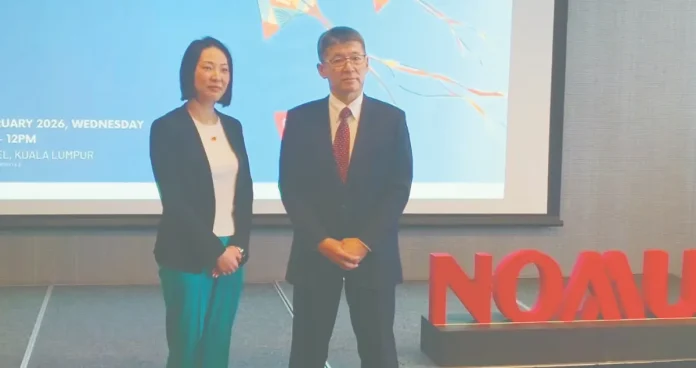
Nomura AM rolls out global multi-theme equity fund

Popular Categories


