




LONDON: Britainâs government is facing growing criticism over how it awarded contracts for virus-related goods and services during the pandemic, its detractors alleging a âchumocracyâ in which politically connected companies got priority.
âI think in comparison to Britain 10 years ago, thereâs a level of corruption that we havenât reached before,â said Emily Barritt, a lecturer in law at Kingâs College London.
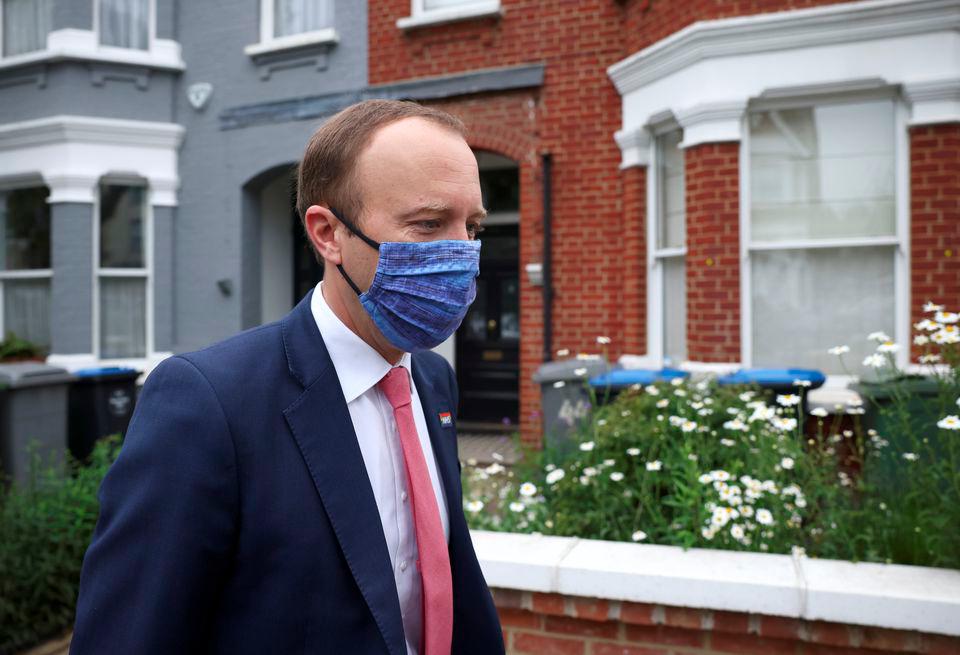
The latest revelation came in late June when Health Secretary Matt Hancock (pix) resigned after it emerged he was having an affair with a university friend he had appointed as an aide, Gina Colodangelo.
Hancock was already facing questions over a series of virus-related contracts.
One was a £30-million (RM172-million) contract to produce vials for Covid-19 testing that was awarded without competition to a company run by his former neighbour â someone who had no background in making medical goods.
The conservative Daily Telegraph has reported that another £28-million contract was awarded to a healthcare company where Colodangeloâs brother is strategy director.
And in June, the High Court ruled against another senior Conservative minister, Michael Gove.
Gove had unlawfully awarded a £560,000 contract for virus-related communications to market research firm Public First, having failed to go through proper procedures.
The companyâs founders are friends of Dominic Cummings, who until recently served as Prime Minister Boris Johnsonâs top adviser.
Issues of âcronyismâ
The opposition Labour party is calling for an independent probe into the governmentâs handling of the pandemic.
Its Shadow Secretary of State for Scotland Ian Murray told the BBC: âThe huge part of the story is all the issues that remain unresolved with regards to cronyism.â
Rules on awarding public contracts were already very flexible, said Daniel Fisher, a postgraduate researcher at City University of London.
The pandemic âhas provided opportunities to relax rules even furtherâ, with a loosening in ethical standards leading to âspeedy opaque contractingâ, he added.
The Department of Health and Social Care, contacted for comment by AFP, said that it was âinaccurate to say we have relaxed the procurement rulesâ.
The ministry has âstringent rules in placeâ and âministers have no role in this processâ, it insisted.
The government does have the right in the case of a major emergency to award contracts without competitive tendering. But it is legally obliged to publish the terms of the contracts awarded â something it did not do in a number of cases.
The Good Law Project, a British non-profit campaign group, has taken legal action against the government, including the case that led to the High Court ruling against Gove.
It estimates that spending on contracts linked to the virus amounted to at least £17 billion between April and November 2020. The government failed to publish details of £4.4 billion of these contracts, it says.
And what is known about these contracts is âalarming,â it argues, alleging that the government awarded them to companies that lacked relevant experience.
It gives the example of Ayanda Capital, a company âwith connections to Liz Truss,â international trade minister. It was awarded a £252-million contract to supply facemasks for the health service. But most of them could not be used.
Transparency International was also critical in a report issued in April.
âThe way the UK Government handled bids for supplying personal protective equipment (PPE) and other Covid-19 response contracts appears partisan and systemically biased in favour of those with political access,â it argued.
âWhile relaxing the rules may have been defensible at the start of the pandemic, when countries were scrambling to secure vital supplies, any such justification has long since passed,â the anti-corruption campaign group added.
Britainâs is not the only government to face questions over public contracts during the pandemic.
In the United States, the Brookings Institution think tank reported that up to US$273 million (RM1.14 billion) went to more than 100 companies owned or operated by major donors to former president Donald Trumpâs election efforts.
Anti-corruption campaigners point out that other countries have managed to hold public tenders quickly and yet be transparent. European Union members Sweden, Slovakia, Estonia and Lithuania have not had problems specifying who won the contracts, and how much was involved, they argue.
Ukraine published such contracts âwithin 24 hoursâ, said Steve Goodrich, head of research and investigations at Transparency International UK. â AFP



