




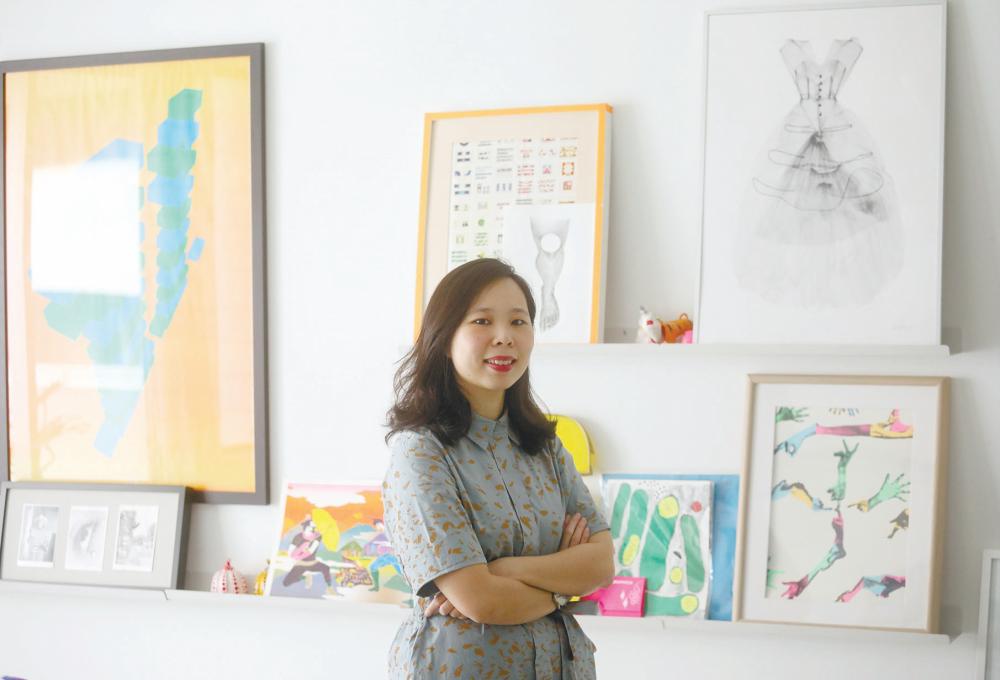
WHEN it comes to Joanne Chewâs job description, it is difficult to relate her to just one thing. She is a visual storyteller, graphic artist, creative director, and also an aspiring writer.
A graduate of the Parsons School of Design in New York, Chew has worked for several boutique design firms in New York and Singapore. In 2014, she founded Fictionist Studio, a multi-disciplinary design studio.
âI wanted to gain the experience of working abroad before I made a footing back home. I figured that having a foreign experience could give me a wider perspective on design practices,â said Chew, referring to why she did not start her studio earlier.
âI also voted for the first time during the 2013 Malaysian elections. The very act of exercising my democratic right somehow triggered me to move back to Malaysia, and I thought to myself that perhaps it was time to contribute to my own country; even if itâs just a beautifully designed business card.â
The first time I met her was at the launch of photographer Kenny Lohâs book Born In Malaysia: A Photographerâs Journey. She designed the bookâs cover. She also designed the cover and concepts for Yasmin I Lup Chew, a book featuring the late filmmaker Yasmin Ahmadâs musings, notes and poems.
Chew has also been involved in several other design projects, including the handpainted cafe storefront for Universal Bakehouse, the Obat Sakit Hati packaging for The Royal Press in Malacca, and some really eye-catching ang pow packets.
When asked how she comes up with ideas, Chew said: âEach project is different in its genesis and intention. We always start by understanding and identifying both of these notions.
âWe then craft a core concept which tells a story as succinctly and imaginatively as possible, all within the boundaries of the project; boundaries we often try to push. The final step is to generate the designs â whether itâs a logo, book cover or website â with accompanying visual imprints, reinforcing the story we would like to tell.â
When it comes to book covers, Chew added the right cover will draw in the viewer.
âThe book cover design should not give away the entire content of the book, but instead create enough intrigue for the viewer to pick it up.
âFor example with the Yasmin I Lup Chew book, we designed a book jacket which doubled up as a poster when unfolded, a typographic poster on the front and a pictorial poster on the back. At first glance, due to the way itâs folded, a sliver of the pictorial part is visible, inducing a sense of curiosity and prompting the viewer to discover more,â said Chew.
When asked what her favourite book covers are, Chew said: âI really like the series of classic Penguin paperback book covers. The design language has evolved over the years- from simple, colour-banded, purely typographic ones to designs which have illustrations on them.
âI have this book titled Penguin by Design: A Cover Story 1935-2005 by Phil Baines; itâs a book Iâd recommend if you are interested in the impeccable story of Penguin covers and its diverse design heritage.â
Many creative people are facing problems with clients who prefer that they copy someone elseâs idea instead of going with something new and original.
âI believe that there is an abundance of creative talent in Malaysia. It is how you choose to exercise and nurture it.
âFor all of us in Fictionist Studio, I try to encourage everyone to embody this philosophy: we are both design and art-led. I believe that this duality allows us to help brands stand out and thrive, whilst satiating our thirst for experimentation and championing originality to the best extent we can.
âWe want to be the Renaissance creative, a serial dabbler in any creative medium, always imaginative and intelligent in thought; robust and rhythmic in action.
âApart from helping clients find the drumbeat of their brand, product or service, we want to produce music, write poetry or critical essays, create installations, build surrealist sets, snap photographs, make short films and many more.â
âSpeaking about her inspiration for some of her works, Chew said: âInspiration can come from anywhere. It could be a piece of fiction or a steaming bowl of umami goodness (yes, ramen).
âI especially love fashion and modern art. I often draw inspiration from both these worlds.â



