




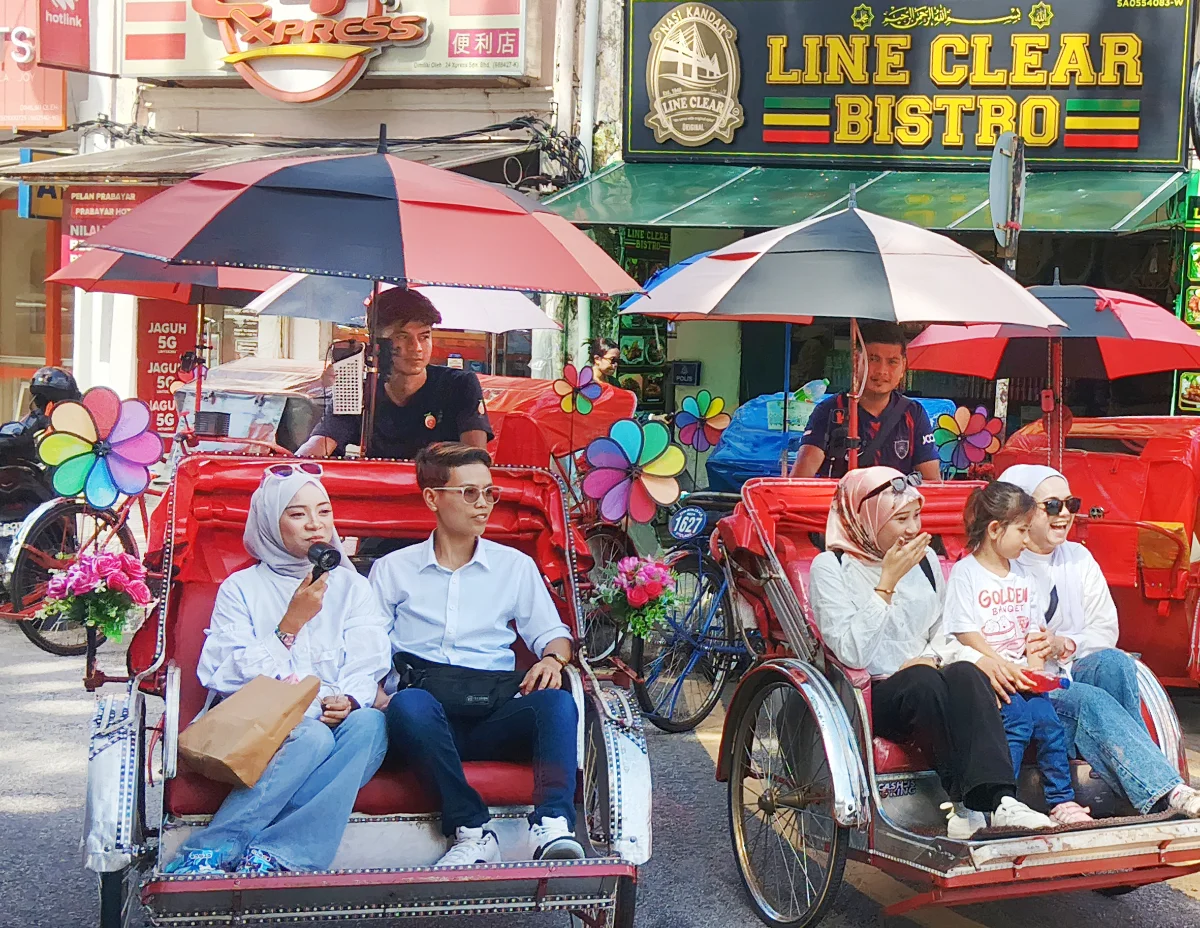
New riders rejuvenating one of Penang’s oldest attractions, ferrying visitors around while also serving as informal tour guides
GEORGE TOWN: Once seen as a fading symbol of the past, George Town’s iconic trishaw trade is experiencing an unexpected revival as a younger generation of riders breathes new life into one of Penang’s oldest tourist attractions.
Long associated with ageing operators struggling to sustain the trade, the sight of young riders weaving through the Unesco World Heritage Site is now drawing attention from both tourists and locals.
READ MORE: No plans to restrict 24-hour eateries in Penang
Among them is Amiruddin Alif, in his 30s, who followed in his uncle’s footsteps and has spent the past four years ferrying visitors around Armenian Street and George Town’s heritage enclave.
He said about 20 young riders now operate around Armenian Street alone, while the total number of trishaw riders across George Town is estimated at between 50 and 60.
“If there are only one or two customers, we move on our own. But if there are many tourists, we usually move in groups,” he said.
“One of the important things is that the work is halal and we can manage our own time.”
Amiruddin said most of his customers are foreign tourists from China, Japan, Korea, India, the US, Europe and Arab countries, many of whom are eager to explore George Town’s murals and heritage streets.
Among the most requested attractions is Ernest Zacharevic’s “Children on a Bicycle” mural, which has become one of the city’s most photographed landmarks since its introduction during the George Town Festival in 2012.
Tourists also frequently request visits to the many murals and wrought-iron caricature artworks scattered throughout the heritage zone.
Trishaw rides typically cost between RM50 and RM80 for journeys lasting between 30 minutes and an hour, depending on the route, while shorter rides within the heritage area are usually priced at about RM30.
“Customers definitely bargain over prices,” Amiruddin said. Beyond ferrying tourists, he said many riders also serve as informal tour guides by sharing stories and snippets of George Town’s history.
“Sometimes, we explain what we know about the buildings and the history of the place.”
Amiruddin said riders usually cover between one and two kilometres, depending on customer requests. While the tropical heat remains manageable, rainy weather often affects business.
“The heat can still be managed, but when it rains, it becomes difficult to get customers,” he said, adding that traffic has generally not been a major issue as motorists tend to give way to trishaws.
He said riders could earn between RM2,000 and RM3,000 a month, or more during peak tourist seasons. “This is one of our national heritage attractions and it helps attract tourists,” he said.
George Town’s trishaw riders currently receive a RM200 monthly allowance from the Penang government, an initiative introduced during the Covid-19 pandemic and continued as part of efforts to preserve the living heritage.
George Town World Heritage Incorporated has also previously assisted registered riders through repair and refurbishment programmes aimed at maintaining traditional trishaws for tourism purposes.
The trade is regulated under a licensing system overseen by Penang Island City Council, while rider associations have periodically appealed for stronger financial assistance and subsidies, particularly during difficult economic periods.
Amiruddin hopes the state government will continue supporting trishaw riders through incentives, tourism-related training and licensing opportunities to help improve services for foreign visitors.
Although uncertain whether he would remain in the trade long term, he believes trishaws will continue to endure as part of George Town’s cultural identity. “As long as tourists keep coming, I think the trishaws will still be here,” he said.



