




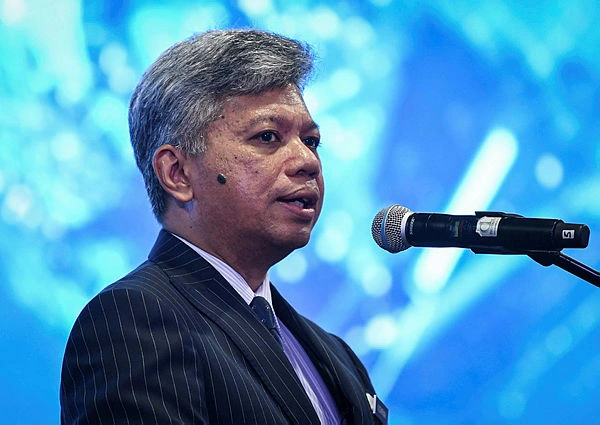
The government strengthens border control and international cooperation to address Rohingya issues through a comprehensive approach, says MKN.
PADANG BESAR: The government is adopting a comprehensive and integrated approach to addressing issues involving the Rohingya community in Malaysia, with a focus on strengthening border control, enforcement and international cooperation.
National Security Council (MKN) director-general Datuk Raja Nushirwan Zainal Abidin said the approach is objective and data-driven, and should be viewed within the broader context of national security to ensure the country’s continued safety and stability.
“Although the involvement of the Rohingya community in crime at the national level remains low, the issue still warrants attention as it is also linked to border control challenges and the activities of cross-border syndicates,” he said.
He told reporters this after officiating the handover ceremony for the MKN’s Kampung Angkat MADANI (MADANI Adopted Village) initiative at Kampung Titi Tinggi Hulu here today.
Commenting on the situation in Perlis, Raja Nushirwan said that, at the first 2026 Perlis State Security Working Committee meeting held yesterday, police reported that 210 Rohingya registered with the United Nations High Commissioner for Refugees (UNHCR) had been recorded in the state.
“Overall, the security situation in Perlis remains good, thanks to close cooperation between the federal and state governments, as well as relevant agencies, despite the state’s challenges as a border area,” he said.
He added that the MKN is coordinating several strategic initiatives under the 13th Malaysia Plan (13MP), including a proposal to build security walls and fencing along the Malaysia-Thailand border.
He said the proposed project would cover a 131.4-kilometre stretch across Perlis, Kedah and Perak at an estimated cost of RM327.198 million. It is currently at the Statement of Needs (SON) preparation stage to determine the project’s operational requirements, scope and specifications.
“Malaysia’s future border control approach will not focus solely on the construction of walls and fencing, but will also incorporate modern technologies, including artificial intelligence (AI), drones and smart surveillance systems,” he said.
On the MADANI Adopted Village initiative, Raja Nushirwan said it is being implemented in border areas to empower local communities through infrastructure, social, family and human capital development, with RM1 million allocated for the initiative.



