




KUALA LUMPUR: Malaysia’s next energy transition challenge is managing a more complex electricity system after more than a decade of expanding renewable energy (RE) capacity, with stronger grid infrastructure and energy storage becoming more critical as solar penetration rises.
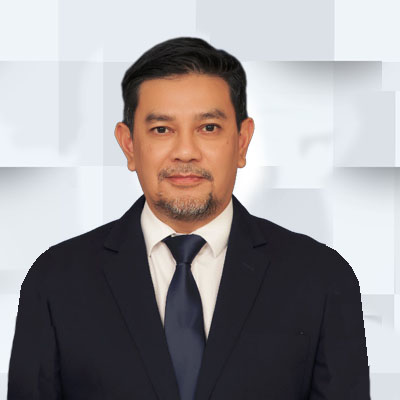
Sustainable Energy Development Authority (SEDA) Malaysia chief strategy officer Saiful Hakim Abdul Rahman (pic) said the next challenge lies in integrating substantially more intermittent renewable generation into the national grid while meeting rising electricity demand.
He said Malaysia has achieved 14.86 gigawatts (GW) of RE capacity in 2025, equivalent to a 32% share of the country’s installed capacity and slightly ahead of the Malaysia Renewable Energy Roadmap (MyRER) target of 31%.
“We have grown our infrastructure quite a lot in terms of our generation, all the resources. So now we have to start focusing on managing the complexity of the system, developing the grid, and managing the grid to ensure that we can get more penetration of renewable energy and ensure the grid is still stable,” he said on the sidelines of the Global Maritime Economic Conference (GMEC) 2026 recently.
The shift reflects the evolution of Malaysia’s energy transition.
Over the past decade, government policies have largely focused on adding renewable generation through initiatives such as the Feedin Tariff (FiT), Large-Scale Solar (LSS), Net Energy Metering, and, more recently, Solar ATAP and the Corporate Renewable Energy Supply Scheme (CRESS).
The next stage, however, requires greater investment in grid infrastructure, battery storage, and system flexibility to support much higher levels of renewable penetration, he said.
Malaysia aims to increase the share of installed capacity from renewables to 40% by 2035 and 70% by 2050, with solar expected to account for 58% of the country’s renewable energy mix by then.
Notably, solar has become the dominant driver of Malaysia’s renewable energy growth.
SEDA’s data show that solar now accounts for half of the country’s renewable energy capacity, while large hydro contributes 40%, biomass 6%, small hydro 3%, and biogas 1%.
Since 2012, solar capacity has expanded at a compound annual growth rate (CAGR) of 54%, compared with 33% for biogas, 2% for small hydro and just 1% for biomass.
Overall renewable energy capacity has grown at an annualised rate of 11% over the same period.
Saiful said Malaysia’s heavy reliance on solar is largely dictated by geography and resource availability rather than policy preference.
“In terms of resources that we have, solar is the most abundant resource that we have. So we have to rely a lot on solar for now,” he said.
He noted that other renewable sources face natural constraints.
Biomass and biogas depend largely on the palm oil industry, whose plantation footprint is no longer expanding, while small hydro has limited potential due to geographical constraints and competing land uses.
Saiful noted that although solar has become Malaysia’s largest renewable energy source, it generates electricity for only about four to five hours a day, requiring coal, gas and hydro to continue supplying electricity outside those hours.
The challenge, he said, is not simply adding more solar panels but managing the electricity system as renewable penetration increases.
To support that transition, SEDA believes significant investment in the national grid is essential.
However, Saiful said the national utility has already incorporated the investments required to support Malaysia’s long-term renewable energy ambitions.
“Our utility has already put up a big commitment in terms of investment for the grid infrastructure. They have already committed to support the energy transition to achieve our target of 70% by 2050.”
Asked whether the planned investments were sufficient, he replied that the utility had already estimated the infrastructure spending required to accommodate higher levels of renewable energy penetration.
“I believe the amount of investment is sufficient to help us meet the target,” he said.
He added that battery energy storage systems form part of those plans.
“When you want to have a grid that can support higher penetration, this will include the right amount of storage required by the grid to make sure that we can accommodate a higher percentage of renewable energy while maintaining system stability.”
SEDA’s identifies battery energy storage systems (BESS), smart grids, distributed energy resources and a stronger green financing ecosystem as key enablers of Malaysia’s next phase of energy transition, particularly for sectors such as maritime transport that are increasingly electrifying operations.
The authority also sees growing opportunities for ports to procure renewable electricity through mechanisms such as CRESS and Third-Party Access, supporting initiatives including onshore power supply (OPS), port microgrids and cleaner port operations.
It argues that maritime decarbonisation increasingly depends on broader progress in Malaysia’s electricity transition, including higher renewable penetration and more flexible grid infrastructure.
Despite the progress, Saiful believes the country’s biggest challenge over the coming decade will not be renewable energy deployment itself but balancing rapidly rising electricity demand against the planned retirement of ageing coal-fired power plants. “The big challenge now is to meet the energy required by the data centres. At the same time, the plan is to retire the coal once the coal reaches retirement age. The challenge is how we are going to transition once we retire the coal while at the same time catering for the increase in demand.” While renewable energy deployment has accelerated considerably over the past decade, the next stage will require not only building more clean generation but ensuring the electricity system can deliver it reliably as demand from energyintensive industries such as data centres continues to grow.



