




Analysis argues Russia and the US stand to benefit most from a proposed Ukraine peace plan, raising questions about losses, power shifts and accountability.
“THE Ukrainian conflict should never have happened and would not have happened if I were president.” – Donald Trump on Truth Social, September 2022.
As the war in Ukraine stumbles into its endgame, analysts from the contesting sides will be evaluating the wins and losses in the struggle for power and dominance among Europe’s nations and other countries of the world having a stake in the outcome.
What are the political and economic advantages gained or lost in this conflict, super-eminent in the arena of international geopolitics since it first started?
ALSO READ: Orbán’s greatest challenge yet
For now, it is clear that the 28-point peace plan currently providing the basis of a post-war settlement will have two winners – Russia and the United States. Both will be gaining strategic and economic advantages from what appears to be an asymmetrical plan requiring significant territorial concessions on the part of Ukraine.
An examination of the points likely to emerge from what could be the final Ukraine–Russia agreement reveals the following list of potential gains and losses for the five key players in what has been amongst the deadliest wars in European history, and which ranks as one of the most casualty-intensive conflicts since World War II.
Ukraine
For Ukraine, the end of active hostilities is likely to result in a loss of territorial sovereignty in Crimea, Donetsk, Luhansk and other Russian-occupied areas.
Its military is to be capped at yet-to-be-determined number, and no foreign troops are to be stationed on its soil. There will effectively be a ban on Nato membership – one of the catalysts of the war – though this is to be balanced by security guarantees already denounced as “vague”.
On the positive side, Ukraine will receive reparations, primarily through a reconstruction fund, financed in part by US$100 billion (RM413 billion) in frozen Russian assets – a proposal which Russia has rejected as amounting to “theft” – and an additional US$100 billion investment from Europe.
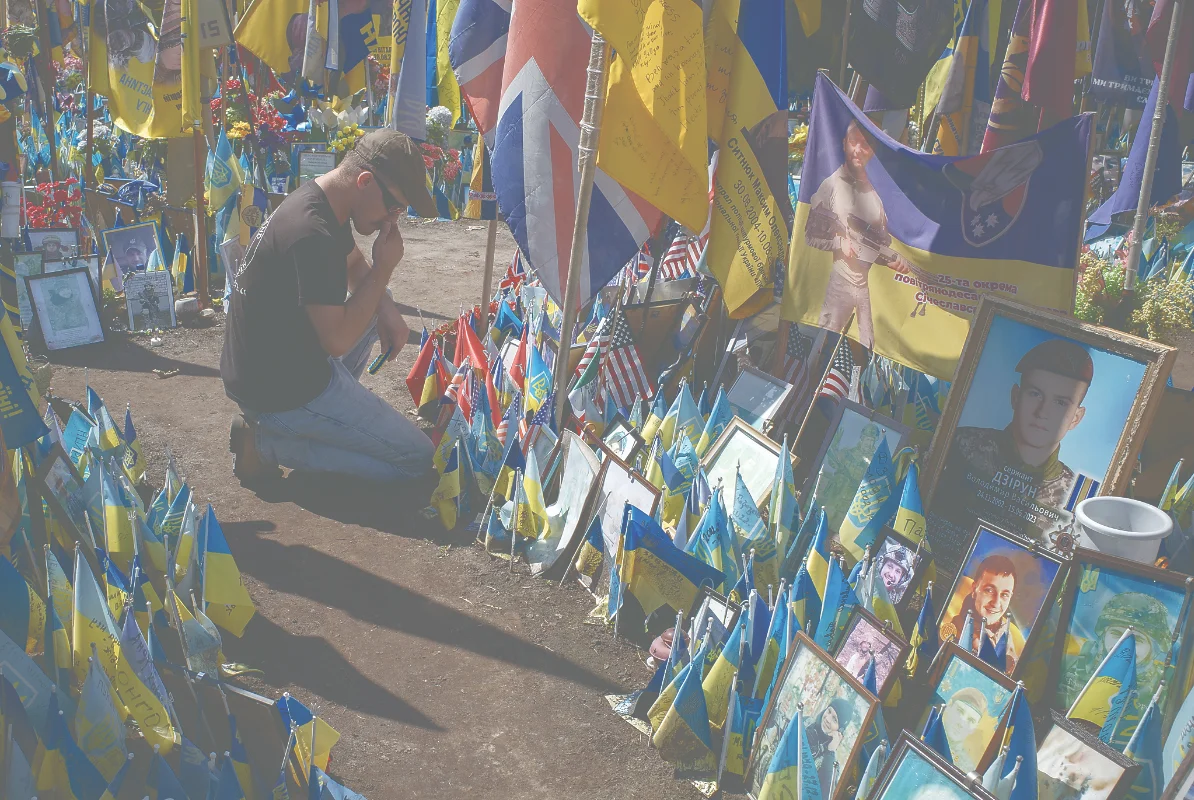
Whatever the amount of reparations and resources poured into reconstruction can never make up for the devastating combination of hundreds of thousands of military and civilian casualties, massive displacement of over 11 million people and hundreds of billions of dollars in economic and infrastructure damage that the present generation and future Ukrainians have to bear.
European Union (EU)
For the EU, the end of a devastating war on its doorstep has brought no territorial gain or enhanced security. Its war-oriented and fear-mongering policies have not produced any advantage against Russia but rather they have deepened internal divisions within the EU and undermined cohesion on how to engage with Russia.
Finland, Estonia, Latvia and Lithuania – which share a border with Russia and imposed multiple rounds of sanctions – have had big hits to their economy. The alleged threat of a Kremlin invasion has driven tourists and investors away, and sanctions have effectively shut down cross-border trade, which is unlikely to resume or recover anytime soon.
Forced by Trump to drastically increase their defence budgets, EU member states will struggle to find additional funding – that is unlikely to provide greater security against Russia’s nuclear arsenal.
An arms race in Europe, which the EU has committed itself to, will result in greater losses for the continent’s people due to the significant economic and social costs, increased political fragmentation, dependence on external suppliers and heightened security risks and instability. It will also make the prospect of a nuclear conflict breaking out in Europe more likely.
North Atlantic Treaty Organisation (Nato)
Whilst avoiding direct military confrontation with Russia, Nato has seen its expansion plans in Ukraine, Georgia and other potential countries from the Collective Security Treaty Organisation thwarted. Just as important is its loss of prestige and standing as a powerful and potent political military alliance, with its professed peacekeeping principles now seen by many as meaningless or hypocritical.
Nato’s 32-member countries have a combined military forces and defence spending far exceeding that of Russia. This includes superiority in personnel, air forces and naval assets. But its military resources and industrial capacity, as well as financial resources, have been unable to provide a quick or delayed victory.
As Ukraine’s military defeat is now almost inevitable, the end of the war is also seeing greater internal political disarray and coherence, particularly concerning long-term strategy and the relevance of Nato within Europe and in a multipolar world order.
Russia
The war in Ukraine has been enormously costly for Russia, with estimates suggesting the direct economic cost is over US$200 billion.
Russia has also suffered a devastating human toll, with hundreds of thousands of casualties. However, President Vladimir Putin’s primary strategic objective to block Nato expansion into Russia’s eastern flank has been successful.
Ukraine is now in the process of being neutralised and demilitarised. At the same time, it is highly probable that the territorial gains provided by the 2022 referendum in the four regions that were formerly part of Ukraine – Donetsk, Luhansk, Zaporizhzhia and Kherson voted overwhelmingly to formally join the Russian Federation – will be recognised and legitimised.
Also significant are the likely economic outcomes, even if modifications are made to the current peace plan, in the attempt to push back on what is regarded as a US and Russian concocted agreement, incorporating the maximalist demands of Putin.
With the lifting of sanctions, Russia will see its reintegration into the global economy. Perhaps most significant is that it will restore Russia’s image as a major and respected global power.
Within Russia, the peace deal is seen as a clear victory for Putin, achieved on his own terms.
The framing of the war’s conclusion as a triumph that has secured Russia’s national interest will undoubtedly enhance the Kremlin’s and Putin’s domestic and international prestige and standing.
United States
The US policy during Joe Biden’s presidency was defined by its leadership of Nato and the provision of sustained military and financial support for Ukraine’s defence.
The mission – ostensibly to help Ukraine defend its sovereignty and territorial integrity – saw the US become Ukraine’s largest military backer, providing billions in direct military aid, including advanced weaponry and intelligence.
With Trump replacing Biden as the president, it is claimed that Trump’s realignment of American foreign policy in Europe – culminating with the peace agreement plan – will end US financial and military involvement in Ukraine’s war, reduce the drain on US resources and prioritise an “America First” foreign policy approach.
Other key gains claimed include:
- Financial benefits and reconstruction involvement: The proposed peace plan includes provisions where the US would receive 50% of the profits from investments in Ukraine’s reconstruction. There is also the potential for US companies to gain access to Ukraine’s natural resources, including critical rare-earth elements.
- Leveraging alliances for greater European contribution: By conditioning US support and pushing a policy where the US sells weapons to Nato allies, who then pass them to Ukraine, Trump can claim to benefit US industry.
- Demonstrating diplomatic leverage/power: By pursuing a separate US-Russia peace process and potentially recognising Russian territorial gains, Trump can claim to demonstrate US power.
- Potential of Russian reintegration: A core part of the proposed plan involves the potential reintegration of Russia into the global economy and a lifting of sanctions, which could lead to renewed trade and economic cooperation benefiting US business interests. A big unknown is the potential of Russia as an ally against China, which both Republican and Democratic party leaders see as America’s existential rival in the world.
Beyond the calculus of geopolitics
The scale of recent combined military casualties (killed and wounded) for Ukraine and Russia may run to over a million.
This is a casualty count that historians and others investigating the origins of the war and its extensive, debilitating sociocultural, political and economic impacts will certainly be focusing on while debating whether the war was preventable or avoidable.
Besides questioning its inevitability – if Trump is right, this war should never have taken place – analysts should also be focusing on how or why the combat and its horrific toll were permitted to go on for so long.
The possibility that Western leaders and their decision-making staff – Biden, Boris Johnson, Rishi Sunak, Keir Starmer, Emmanuel Macron, Friedrich Merz and others instrumental in encouraging the war and its prolongation – have as much, if not more, blood on their hands as their Russian and Ukrainian counterparts, is not as far-fetched as it may appear to be.
This question should be a fundamental concern for all sceptical of the propaganda of government explanations and the supportive narratives in the mainstream media, in any pursuit of an independent, objective and critical account of the war.
Lim Teck Ghee’s Another Take is aimed at demystifying social orthodoxy.
Comments: [email protected]



