




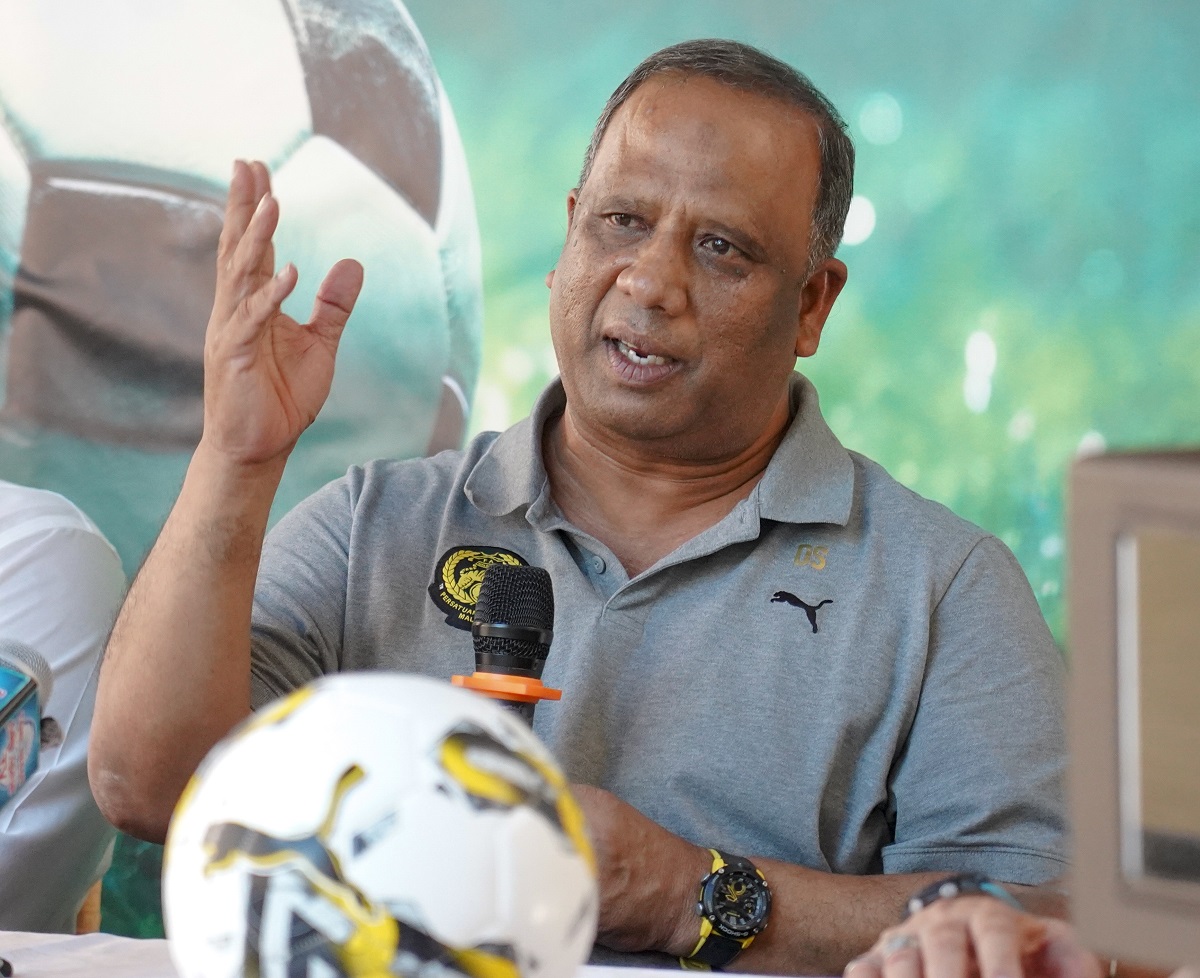
FAM VP says constant reshuffling cost Asian Cup spot
CONSTANT reshuffling of players and a lack of on-field chemistry were among the main reasons the national Under-16 squad failed to secure qualification for the 2026 Saudi Arabia AFC U-17 Asian Cup, according to Football Association of Malaysia (FAM) vice-president Datuk Dollah Salleh.
Speaking to reporters after an event in Bukit Kiara, the former national team head coach said the team led by Javier Ribera could not find their rhythm and stability needed for high-level competition. “We actually played well, individually the boys are good. But I feel there were shortcomings in the team due to what I believe was a miscalculation in selection. We kept changing players and because of that, the team could not build proper chemistry. “Overall, the players are good. But during the match against Vietnam especially, we looked a little lost. The lack of understanding between players showed because too many changes were made. That was where the mistake happened,” said the former national striker.
According to Dollah, despite the team mixed results in their international assignments, several players impressed him with their potential. “From what I saw, there are five or six players who have a very high ceiling and deserve to be developed further. I truly believe they are capable and worthy,” he added.
Dollah said the players have now returned to their respective teams, but FAM has already identified several players who will be closely monitored, adding that both the National Football Development Programme (NFDP) and Akademi Mokhtar Dahari (AMD) will play significant roles in ensuring promising youngsters are systematically guided. “We don’t want a repeat of what happened in previous years when we failed to produce enough players ready for the senior level. This time, we want each batch to have at least ten players who are good enough to progress.
Dollah revealed that he had held discussions with Datuk Ong Kim Swee, the candidate for the AMD technical director post, to ensure Malaysia no longer loses talented players due to weak monitoring or insufficient long-term development planning. Asked about criticism claiming the U-16 squad’s failure reflected the overall weakness of Malaysian grassroots football, Dollah strongly disagreed. “That is not the issue. The real problem is that sometimes we fail to identify the right players early enough. We overlook players who actually have high ability, this is what we must avoid.”
On the shortage of potential players progressing to senior Malaysian football teams, Dollah said many talented youngsters end up as benchwarmers in state squads despite being capable of playing at higher levels – a situation that ultimately stunts their development. “We don’t want players to stagnate at youth level. They must play regularly at the highest level possible. Otherwise, they will fade.”
Dollah added that many players perform well at youth tournaments but lose their edge once they transition to senior levels due to poor career mapping or lack of competitive opportunities. To address this, FAM is now working on a structured plan outlining the pathway for players once they pass the age of 17.
This includes deciding where they should play, how they should continue training and what steps must be taken to ensure they do not lose their momentum. “We are in the process of ensuring that after age 17, the players know exactly where they are headed. We need to monitor them closely so they don’t lose their capabilities. We cannot allow players who shine at 15 or 16 to suddenly struggle at 19 or 20.” In the U-17 Asian Cup qualification, Malaysia finished second in Group C with 12 points from five matches, behind host Vietnam’s 15. Malaysia last qualified for the U-17 Asian Cup in 2023, while their best performance was reaching the quarterfinals in 2014.



