




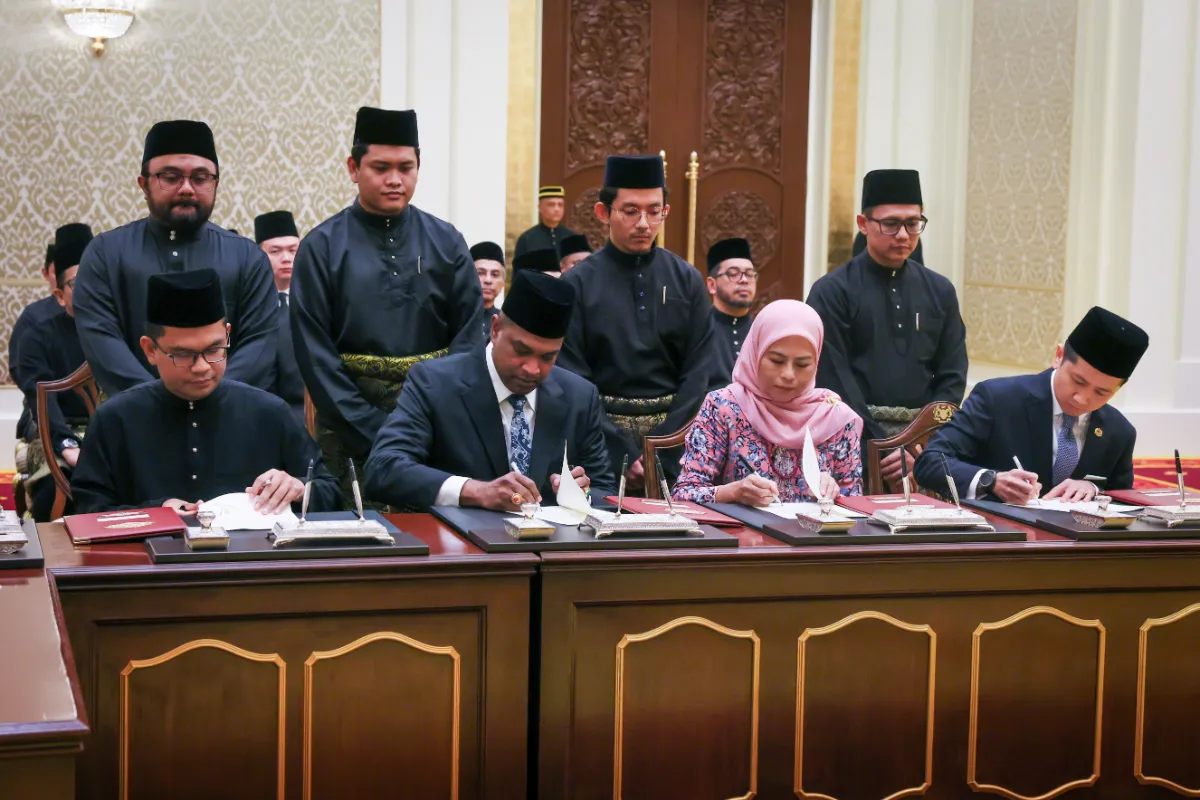
PETALING JAYA: Malaysia’s new Plantation and Commodities Minister Datuk Seri Dr Noraini Ahmad is expected to steer the palm oil sector towards a productivity- and sustainability-led growth model, as economists point to yield improvements, replanting programmes and stronger environmental, social and governance (ESG) alignment as key strategies to support prices and safeguard global market access next year.
Taylor’s Business School associate professor Dr Pek Chuen Kee, who is also a green economics specialist, said Noraini’s emphasis on sustainable practices could strengthen Malaysia’s competitiveness at a time when global buyers are increasingly favouring ethically produced palm oil.
“Dr Noraini’s strategies for sustainable palm oil practices can position Malaysia as a leader in ethical palm oil production, allowing it to capitalise on emerging global trends favouring sustainability,” he told SunBiz, adding that this would enhance Malaysia’s standing in international markets rather than weaken it.
On pricing and export performance, Pek said yield improvement and replanting programmes could deliver tangible economic gains without relying on land expansion, which has drawn scrutiny from environmental groups and overseas regulators.
“Yield improvement and replanting programmes can drive substantial economic benefits through increased production efficiency, better quality exports, job creation and overall sustainability,” he said, noting that higher productivity would translate into stronger export revenues over time.
Taylor’s University research cluster lead for innovative management practices Professor Dr Poon Wai Ching echoed this view, stressing that the environmental risks associated with boosting palm oil output depend heavily on how growth is pursued.
“Expansion through additional land conversion, particularly from forested areas, carries significantly higher environmental risks, whereas productivity-led approaches such as improving fresh fruit bunch yields per hectare present far lower impacts,” she said.
Poon added that Malaysia’s palm oil sector, given its maturity, is better placed to focus on innovation, soil remediation and biotechnology rather than acreage expansion, especially as climate risks and global ESG scrutiny intensify.
Both economists highlighted the challenge of balancing sustainability requirements with the realities faced by smallholders, who make up a significant portion of the industry.
Pek said the ministry would need a multifaceted approach to ensure smallholders are not left behind while larger producers push ahead with greener practices. “Inclusive policy development, targeted financial incentives, and cooperative models can help smallholders transition to sustainable practices while remaining economically viable.”
Poon said chronic yield stagnation among smallholders is closely linked to weak integration with processing mills and poor soil health, calling for a shift in government policy from passive regulation to active investment.
“The government should incentivise circular economy models that convert processing waste into organic soil amendments,” she said, adding that integrating biomass waste recovery with regenerative agriculture could restore soil organic carbon and lift stagnant yields.
On global ESG standards, both economists see more opportunity than threat if Malaysia moves decisively.
Pek said Noraini’s tenure comes at an “ESG tipping point” for the industry. “By enforcing MSPO 2.0 with stronger traceability and supporting smallholder inclusion, Malaysia can meet global ESG standards, reassert market credibility and foster more equitable growth across the sector.”
Poon noted that ESG frameworks are becoming more pragmatic, focusing on measurable outcomes rather than box-ticking compliance. She said this opens the door for Malaysia to reposition its palm oil as a premium, sustainability-led product.
“By transitioning towards regenerative palm oil practices and leveraging high-integrity carbon credits, Malaysia’s export strategy could evolve towards stronger environmental performance as a core value proposition,” she said.
Climate change considerations, meanwhile, are expected to play a bigger role in shaping long-term planning under the new minister.
Poon said the sector should move beyond treating ESG as a compliance cost and instead tap into global carbon markets to fund green investments.
“By monetising carbon sequestration and emissions avoidance, companies can transform compliance costs into a new revenue stream,” she said, adding that this would help hedge against climate-induced yield volatility.
Overall, both economists believe Noraini’s immediate priorities are likely to centre on stabilising palm oil prices through productivity gains, accelerating sustainable practices aligned with global requirements, and ensuring smallholders remain part of the industry’s long-term growth story, without compromising Malaysia’s environmental commitments.



