



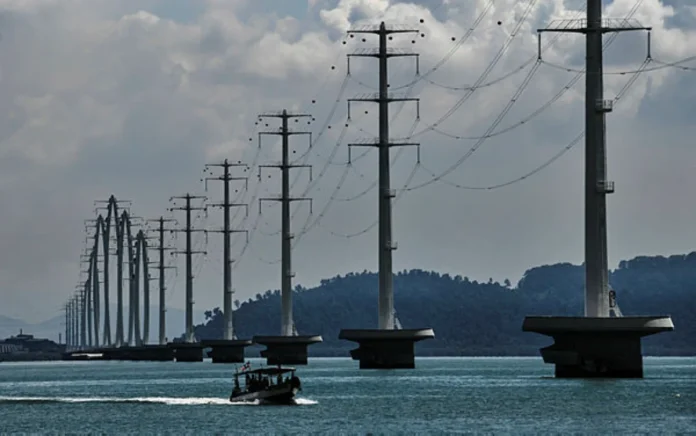
TNB says scaling Malaysia’s energy roadmap requires sustained investment, resilient infrastructure and regional collaboration to support the National Energy Transition Roadmap.
KUALA LUMPUR: Scaling Malaysia’s energy transition will require sustained investment, resilient infrastructure and strong collaboration across utilities, policymakers and regional partners.
Tenaga Nasional Bhd (TNB) chief distribution network officer Mahathir Nor Ismail emphasised the need to align infrastructure, financing and regional interconnection for a sustainable energy future.
He said Malaysia is implementing the National Energy Transition Roadmap (NETR) by strengthening grid readiness at the distribution level.
ALSO READ: TNB key enabler for ASEAN energy cooperation via power grid
The NETR is a strategic plan launched in 2023 to shift the country from fossil fuels to a green economy by 2050.
Mahathir stated that accelerating the transition requires more than just deploying renewable energy sources.
Grid resilience, system flexibility and digital visibility are critical foundations for success.
He made these remarks at the Malaysia Pavilion during the COP30 climate conference in Belém, Brazil.
“Initiatives such as advanced SCADA systems, network automation and battery energy storage systems were cited as key enablers,” Mahathir said.
TNB has used the SCADA system for remote grid monitoring and control since 2006.
Mahathir cited the Laos-Thailand-Malaysia-Singapore Power Integration Project as a practical example of cross-border cooperation.
At the ASEAN Pavilion, TNB’s chief sustainability officer Leo Pui Yong highlighted how the utility is integrating climate risk into infrastructure planning.
With over 90,000 assets nationwide, floods, extreme heat and sea-level rise are already affecting performance.
“These realities position climate adaptation not as a future aspiration, but as an immediate system reliability priority,” she said.
Leo explained that TNB’s approach uses climate risk assessments and data-driven analysis to strengthen long-term resilience.
Building resilient infrastructure requires cross-sector collaboration, shared data and regional cooperation across ASEAN.
TNB chief procurement officer Amir Mahmod Abdullah said sustainable procurement is critical for an inclusive energy transition.
He explained that TNB has embedded ESG principles into supplier engagement for NETR-aligned initiatives.
Initiatives like TNB’s sustainable procurement code of conduct provide a framework to guide suppliers on ESG expectations.
Amir highlighted this at a COP30 session on strengthening sustainable supply chains for a just transition.
The session explored how national and regional frameworks can support decarbonising supply chains across ASEAN.
“By harmonising standards and promoting supplier transparency, ASEAN can build a new ecosystem,” Amir said.
Malaysia’s Pavilion at COP30 carried the theme “Climate Action Now: Net Zero Pathway Unlocked”. – Bernama



