



Platform accountability highlighted, paving way for tougher rules on age-appropriate access, content moderation, safety duties
PETALING JAYA: This year, the gloves came off. Regulators found themselves under growing pressure to rein in online harms hitting children and vulnerable users, and the heat did not let up.
A combination of enforcement crackdowns, headline-grabbing incidents and blunt international warnings inevitably placed platform accountability squarely in the spotlight, paving the way for tougher rules on age-appropriate access, content moderation and digital safety duties.
Platform accountability and child safety
Escalating cases involving harmful online content and youth exposure intensified regulatory scrutiny of social media platforms in the second half of 2025.
Between January and November, the Malaysian Communications and Multimedia Commission (MCMC) detected 957 cases of offensive content targeting children on social media platforms, with 899 items removed, reflecting a 94% compliance rate by platforms as of Dec 3.
MCMC said services such as TikTok, Facebook and Tumblr responded most promptly to takedown requests as enforcement cooperation with police intensified through joint operations.
Concerns over children’s social media exposure were further amplified by violent incidents involving youths.
In October, a 14-year-old student was charged with the murder of a schoolmate at a secondary school in Bandar Utama, Petaling Jaya.
Police revealed that investigators had recovered a handwritten note containing gaming-related references, including “NPC” (non-player character), alongside phrases pointing to a distorted perception of reality.
On Oct 27, police also said they had not ruled out the possibility that online game Roblox may have influenced a case in Batu Pahat, where a nine-year-old boy allegedly attacked his six-year-old brother.
Johor police chief Datuk Ab Rahaman Arsad said preliminary investigations showed that the elder child had been playing the game extensively.
These incidents further fuelled debate over age limits, parental controls and the adequacy of platform safeguards for minors.
Global scrutiny of platform practices intensified
The human cost behind commercial cybercrime in Malaysia was laid bare on Dec 6, when theSun exclusively reported that online scam losses had exceeded RM2.16 billion since 2022, involving more than 57,000 cases as of October 2025.
Citing data linked to police records, the National Cybersecurity Agency told theSun that investment scam losses alone had grown from RM219 million to RM1.25 billion while telecommunication fraud losses surged to RM628 million.
Globally, a Nov 6 report blew the lid off Meta’s own projections, revealing that roughly 10% of its 2024 revenue, an estimated US$16 billion (RM64.83 billion), was tied to advertisements linked to scams, banned goods and services, including illegal gambling.
More damning still, the report cited internal estimates suggesting billions of high-risk scam ads were being served to users every day across Meta’s platforms.
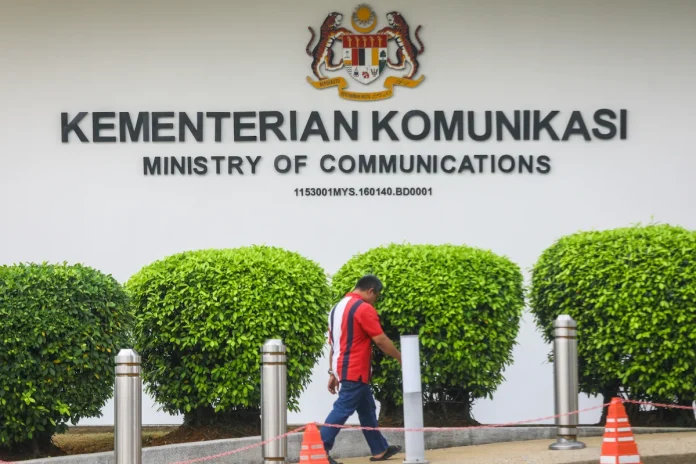
In response, Communications Minister Fahmi Fadzil said the ministry had summoned platform representatives to press for stronger enforcement on child protection and scam-related advertisements.
Expanding regulatory reach
By late 2025, Malaysia intensified its move to formalise oversight of major digital platforms amid mounting concerns over online harm, scams and child safety.
Fahmi signalled a series of policy shifts, including plans to restrict social media access for users aged under 16 by mid-2026 and the proposed rollout of electronic Know Your Customer mechanisms tied to verified identity documents such as MyKad and MyDigital ID.
The measures were framed as part of broader enforcement under the Online Safety Act 2025, aimed at strengthening regulators’ powers to act against harmful online content.
Throughout the year, MCMC also stepped up engagements with platform operators, summoning representatives to address enforcement gaps, delayed takedowns and advertising-related abuses.
Against this backdrop, Malaysia moved to anchor these expectations within its licensing framework.
On Dec 15, MCMC announced that social media and internet messaging platforms with eight million or more users in Malaysia would be automatically deemed registered under the Application Service Provider Class licence from Jan 1, 2026.
The new deeming provision, set to be enforced under Section 46A of the Communications and Multimedia Act 1998, emerged as one of the most consequential digital regulatory moves of the year.
2025 digital newsflash in a nutshell
As the year closes, Malaysia’s digital agenda has moved firmly into enforcement territory.
Platform practices, online harm and mounting financial losses drive regulatory expansion, shifting the focus from policy signalling to accountability.
The year ahead would test whether these measures translate into meaningful protection and deterrence.



