




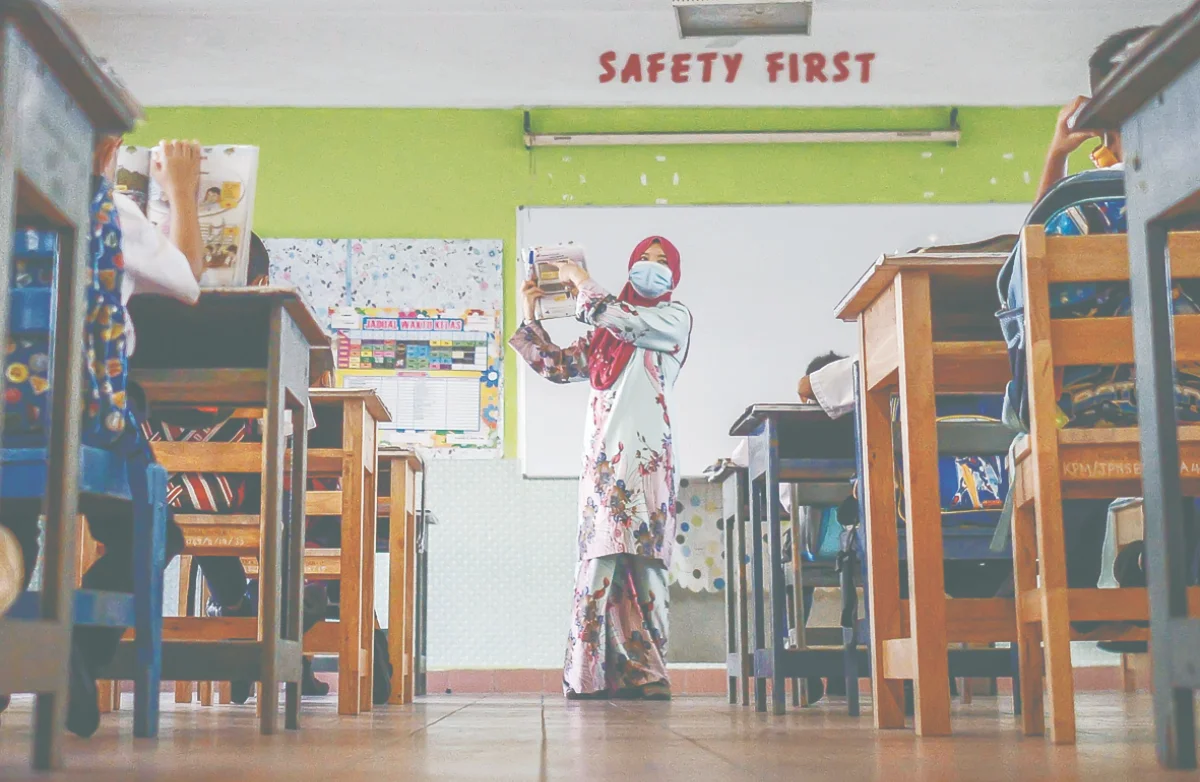
Education groups urge systemic reforms to protect teacher welfare, cut admin workload and restore classroom authority amid rising student challenges.
PETALING JAYA: As schools grapple with increasingly complex social and behavioural challenges, growing concern over the welfare of teachers has sparked renewed calls for systemic reforms to restore balance, authority and sustainability within the profession.
National Union of the Teaching Profession (NUTP) secretary-general Fouzi Singon has urged the Education Ministry to establish a dedicated crisis management division to address emerging and critical issues in a more structured, coordinated and systematic manner.
He said schools are now confronting a widening range of challenges, including disciplinary and emotional issues among students, underscoring the need for a comprehensive review of existing disciplinary policies.
ALSO READ: Teaching our young to save for tomorrow
“This includes discussions on restoring greater professional autonomy for teachers in managing classroom discipline, with clear guidelines in place.”
He also called for a reduction in non-teaching administrative duties, adding that clerical and non-core tasks have increasingly diverted the attention of teachers from their primary responsibilities.
“Teachers should be allowed to focus on teaching and learning, assessment-related documentation, student attendance and marking students’ work,” he said, adding that programmes initiated by agencies outside the ministry should not place undue pressure on teachers, as this disrupts core educational responsibilities.
He said teachers today are facing immense emotional and professional pressure, particularly in managing student discipline and emotional well-being.
Fouzi also said schools are increasingly confronted with serious issues such as bullying, social misconduct, including sexual violence and harassment, student deaths and health-related challenges such as the influenza A outbreak.
“The uncontrolled use of social media among students has also contributed to behavioural and moral issues, further compounded by an ongoing shortage of teachers that places added strain on existing educators.”
While acknowledging and appreciating initiatives already implemented by the ministry to ease teachers’ workload, he emphasised that further improvements are necessary, particularly in reducing clerical tasks and strengthening information and communication technology infrastructure within the ministry.
“Weak or inefficient systems continue to contribute to emotional stress among teachers and must be addressed comprehensively.
“The principle of ‘teachers enjoying teaching and students enjoying learning’ must be embedded within the education system. Education should be balanced, nurturing students emotionally, physically and spiritually.”
In line with this, Fouzi proposed that the ministry consider a four-day academic learning week, complemented by one day dedicated to character development and co-curricular activities to support holistic student development without compromising academic learning.
“NUTP strongly advocates for a comprehensive teacher and student wellbeing policy that restores schools to an environment free from unnecessary pressure, in which teaching and learning could take place in a calm and conducive climate.
“This could only be achieved by eliminating non-core burdens that fall outside teachers’ primary professional responsibilities.”
Echoing these concerns, primary school headmistress Jamilah Mohamad Hanipah said priority must be given to teachers’ welfare and professionalism, adding that a well-supported teaching workforce is essential for delivering quality education.
She highlighted the importance of reducing administrative workloads and non-teaching responsibilities, allowing educators to dedicate their full attention and energy to teaching and learning in the classroom.
“There is also a need for continuous professional development that is relevant to current educational demands, particularly in areas such as digital literacy, innovative teaching strategies and student-centred learning approaches.”
Jamilah also urged that teachers be actively involved in policymaking, saying their insights are crucial to ensuring reforms are realistic and deliver positive outcomes in schools.



