



PETALING JAYA: The Federation of Malaysian Manufacturing (FMM) has welcomed the transparent and structured mechanism under the Incentive-Based Regulation (IBR) Framework in determining gas facility base tariffs, which are reviewed every three years by the Energy Commission and approved by the government.
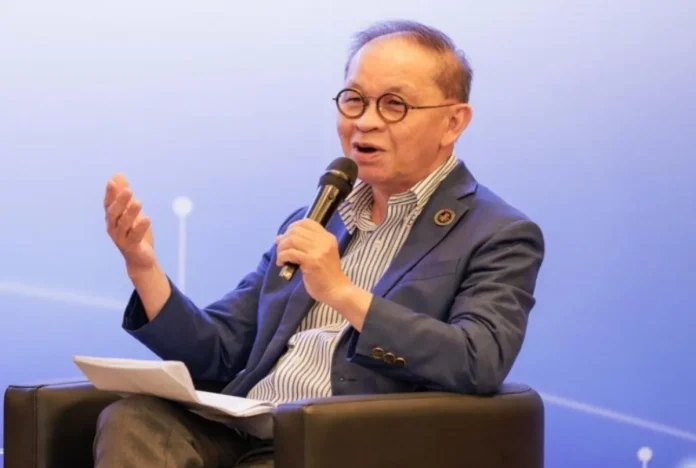
In a statement, FMM president Jacob Lee Chor Kok said the federation recognises that the determination of the base tariff for gas facility services, including transmission and distribution (T&D) pipelines, follows due regulatory process and considers the impact on stakeholders across both the power and non-power sectors.
“While the revised gas facility base tariff for the Third Regulatory Period from January 2026 to December 2028 reflects an increase of 16.7%, particularly for T&D facilities, and the allowed tariff (revised annually) for January 2026 to December 2026 is expected to increase by 26.7%, FMM notes that this does not translate into a higher overall gas price for end-users in the near term,” he added.
Based on current projections, he said, the total gas price to be paid by end-users, including industrial customers, in the first quarter of 2026 (Q1 2026) is expected to be lower compared to the fourth quarter of 2025 (Q4 2025).
“This is because the regulated gas facility tariff accounts for approximately 8% of the total gas price paid by consumers. In contrast, the gas molecule price constitutes more than 90% of the end-user gas price and is benchmarked to the Malaysia Reference Price, which is influenced by international market conditions and supply-demand dynamics,” said Lee.
With gas molecule prices forecast to be lower in Q1 2026, he noted that the overall gas prices are expected to decline, resulting in estimated savings of approximately 1.97% for end-users on the distribution pipeline (non-power sector) and 3.75% for end-users on the transmission pipeline (power sector).
These savings for the power sector would also be aggregated and passed-through to electricity users through the Automatic Fuel Adjustment Mechanism, said Lee.
Looking ahead, he said gas prices for end-users in 2027, inclusive of the facility tariff, are projected to remain lower than 2025 levels, notwithstanding that more than 90% of the price paid by consumers is determined on a willing buyer-willing seller basis.
At the same time, FMM highlighted industry concerns over potential future volatility.
“Should gas molecule prices increase significantly due to global market developments, the overall cost impact on industries could be substantial, given the dominant share of molecule pricing in the total gas price structure,” Lee said.
FMM also noted the Energy Commission’s clarification during the recent stakeholder engagement session that, despite a reduction in capital expenditure or the facility operator, the increase in the facility tariff is largely attributable to higher operating expenditure. This includes costs associated with digitalisation initiatives such as metering upgrades, as well as reduced gas throughput arising from lower demand from certain sectors, including the rubber glove industry, which has resulted in underutilised pipeline capacity.
In this regard, FMM is hopeful that the Energy Commission will continue to ensure strong regulatory discipline, including the avoidance of any over-recovery of costs, and uphold the principle of fair and equitable cost distribution among all pipeline users, particularly through the annually adjusted allowed tariff.
FMM also emphasised the need for stakeholder engagement sessions to be held at a much earlier stage of the tariff determination process to enable meaningful consultation and informed stakeholder input.
Lee said such assurances are crucial to maintaining industry confidence, cost competitiveness, and the long-term sustainability of Malaysia’s gas supply ecosystem.



