



KUALA LUMPUR: Malaysia is unfazed by Laos’ growing presence in China’s durian market, as global demand for the fruit continues to expand beyond a single destination, said Agriculture and Food Security Minister Datuk Seri Mohamad Sabu.
He said the entry of more durian-exporting countries into China should not be viewed as a threat to Malaysia, as demand, particularly from China, remains strong while new markets are also opening up.
“The durian market is becoming more accepted and increasingly widespread. China remains the main market because consumption there is very high, but Malaysia is also actively promoting durian in other regions,” he told reporters at an event today.
Mohamad said Malaysia has been promoting durian in emerging markets such as the Middle East, including Dubai and Tehran, as well as other international destinations, reflecting a strategy to diversify export markets beyond China.
“As more countries enter the durian export space, it does not necessarily create a problem from a competition standpoint. The overall market is growing, and demand is expanding,” he said.
The minister’s comments come as Laos steps up durian exports to China, adding to competition in a market long dominated by Thailand. Malaysia, however, has positioned itself as a premium durian exporter, particularly with Musang King and other high-value varieties that command premium prices.
Beyond durian exports, Mohamad reiterated the government’s broader focus on strengthening Malaysia’s food security, including reducing long-term dependence on imports for key food items.
He said Malaysia cannot continue to rely on domestic production levels that remain below optimal self-sufficiency ratios (SSR), stressing the need for structural improvements in the agriculture sector. “We cannot sustain domestic production at below 60% forever. We need to give serious focus to increasing our SSR to a more satisfactory level in the future.”
Mohamad noted that while imported rice prices are currently relatively low, the situation may not be permanent, making it important for Malaysia to prepare for future price volatility. “At the moment, imported rice prices are low, but this will not remain forever. That is why we need to work harder and plan seriously to strengthen our food security.”
At the same time, the minister said, Malaysia is expanding trade ties with a wider range of partners to enhance supply chain resilience, particularly in the agrifood sector.
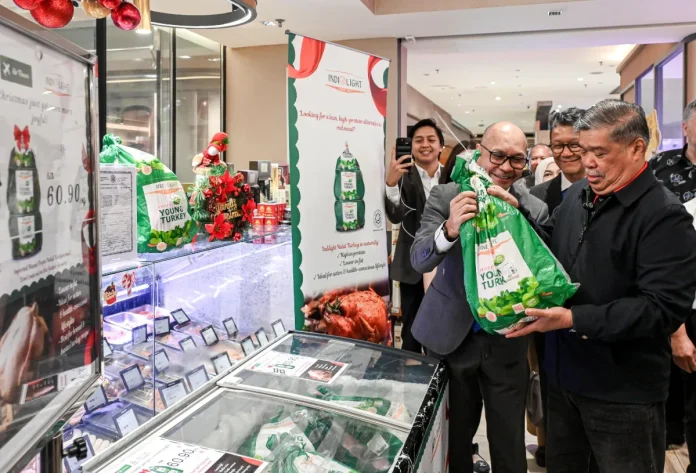
Mohamad’s remarks on Malaysia-Russia trade were made during the “From Russia With Love” event, which officially introduced halal-certified Russian food products into the Malaysian market.
He noted that the event highlighted broader bilateral cooperation in the agrifood sector, showcasing how Malaysia is diversifying trade partners and strengthening food security through strategic international partnerships.
Total trade between Malaysia and Russia currently stands at about US$3 billion (RM12.19 billion), reflecting broader economic engagement between the two countries, Mohamad said.
Specifically for agrifood, trade between Malaysia and Russia amounted to RM2.5 billion as of September 2025, underscoring the growing role of food and agriculture in bilateral trade relations.
“We need to explore more areas of cooperation and increase the number of our trade partners so that Malaysia’s food security can continue to improve over time,” he said.
Mohamad also highlighted the importance of strong regulatory and halal governance frameworks in supporting agri-food trade, noting that effective cooperation between authorities helps ensure food safety and consumer confidence.
Looking ahead, he said Malaysia will continue balancing export growth including premium products such as durian with domestic food security priorities, particularly amid ongoing global supply chain uncertainties.



