



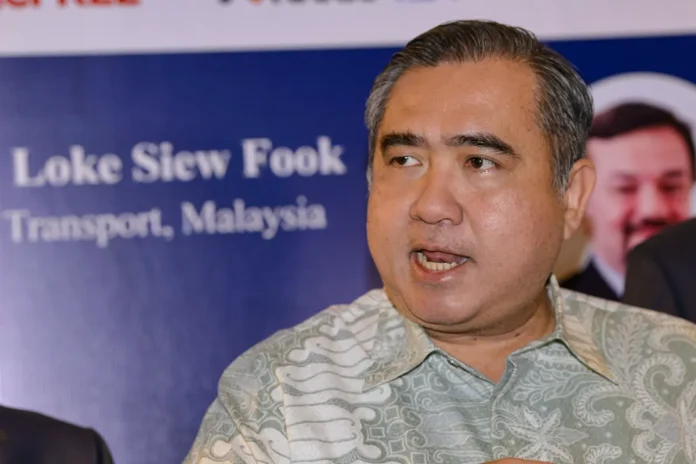
PETALING JAYA: The success of the Johor-Singapore Special Economic Zone (JS-SEZ) will hinge not just on big-ticket rail projects such as the Rapid Transit System Link (RTS Link), but on how well transport connectivity is integrated with surrounding developments, Transport Minister Anthony Loke Siew Fook said.
Speaking on the sidelines of Rehda Institute’s CEO Series 2026 today, Loke said efforts are under way to physically link the RTS Bukit Chagar station with surrounding commercial buildings, hotels and developments to improve access and enhance property values in the area.
“We have already linked up with several main buildings and there is an agreement with the private sector. In the near future, more buildings will cooperate with MRT Corp to connect directly to Bukit Chagar,” he said, adding that better connectivity would make the area more attractive and accessible for commuters and visitors.
Loke noted that Bukit Chagar is expected to become a major transit-oriented development (TOD) hub rather than just a rail station, reflecting a shift in how transport infrastructure is planned to support urban growth and real estate value creation.
At the conference earlier, Loke said transport infrastructure must be viewed as a strategic economic enabler, particularly for the JS-SEZ, which is seeing strong investor interest.
Between January and September 2025, the zone attracted an estimated RM29.51 billion in potential investments, with more than RM37 billion approved in the first half of the year.
He said the RTS Link, which connects Bukit Chagar to Woodlands North, will play a critical role in easing chronic congestion at the Johor-Singapore border, which currently sees about 300,000 commuters and 100,000 vehicles crossing daily.
“The RTS is not just a rail project. It is a structural economic enabler,” Loke said, noting that the system will have a capacity of 10,000 passengers per hour per direction, providing predictability for businesses and workers moving across the border.
He added that the RTS Link is on track for completion by the end of this year, with system integration and testing already under way, and the first train expected to run on Jan 1, 2027.
Beyond rail, Loke said, cross-border buses and taxis remain vital, especially as Malaysia targets 22 million Singaporean visitors annually.
According to Department of Statistics Malaysia data, Singapore was Malaysia’s leading destination for services exports in 2024, contributing RM58.5 billion, driven largely by travel and transport services.
To support this, both governments are improving border processing efficiency through digital systems such as QR code clearance, automated lanes and upgraded immigration facilities.
A key enabler for the RTS Link will be co-located immigration, customs and quarantine clearance, which will allow passengers to clear both Malaysian and Singaporean immigration at a single location.
“This sounds simple, but it requires legal changes because it involves foreign immigration officers operating on our land,” Loke said, adding that the Cabinet has agreed to the necessary amendments.
He said the relevant law will be tabled during the next Parliament session and is expected to be ready this year, ensuring the RTS Link can operate as designed.
Loke also highlighted the importance of linking the JS-SEZ internally to the rest of Malaysia, citing the KTMB Electric Train Service (ETS) extension between Johor Bahru and Kuala Lumpur, which has shortened travel time and improved intercity connectivity.
“Transport infrastructure shapes development patterns,” he said, adding that projects such as RTS, ETS and enhanced bus corridors directly influence residential, commercial and industrial real estate demand.
He said TOD would be critical in reducing congestion, improving affordability and supporting sustainable urban growth, not just in Johor but across the country.
Similar integrated transport-led developments are being planned or expanded in areas such as Penang Central, Ipoh Central and Segamat, while the East Coast Rail Link is expected to support industrial and logistics growth along its corridor.
“When transport is reliable and well integrated, it turns mobility into productivity,” Loke said, adding that coordinated planning between government, developers and building owners would be key to ensuring long-term economic returns from major infrastructure investments.



