



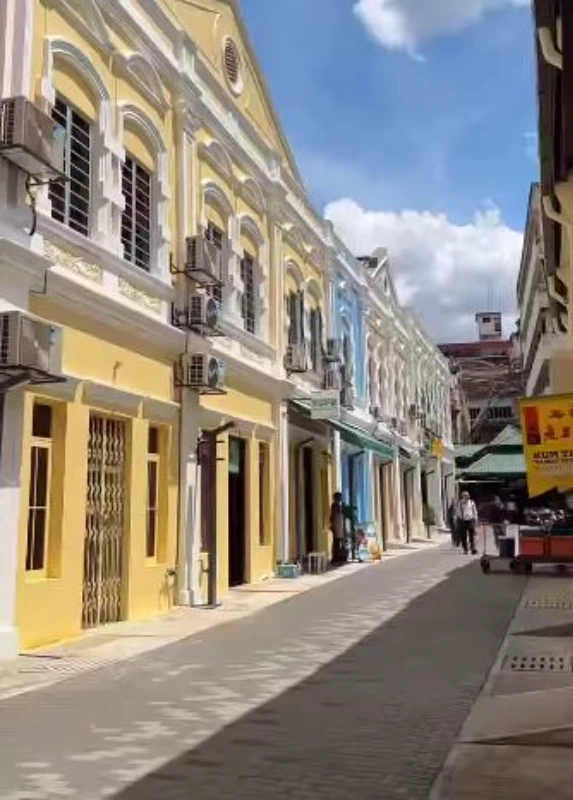
Historic Chinatown market transforms into pastel paradise with heritage architecture and photo-worthy design
KUALA LUMPUR’s heritage precinct has gained a revitalised landmark following the comprehensive renovation of Pasar Lee Lam Thye, a historic market space that has been transformed into a visually striking destination blending traditional architecture with contemporary aesthetics.
Named in honour of former politician and prominent public figure Tan Sri Lee Lam Thye, the market has undergone extensive refurbishment that has dramatically altered its appearance while preserving its architectural heritage.
Situated in the heart of Chinatown along Jalan Tun H.S. Lee, Pasar Lee sits directly across from a Public Bank branch and can be reached via a dedicated pedestrian walkway, making it easily accessible for foot traffic in the busy commercial district.
The revamped market announces itself with a bold red archway that serves as both entrance and landmark, ensuring visibility from the surrounding streets.
Beyond this gateway, visitors encounter a collection of two-storey café establishments distinguished by their soft pastel color schemes—a departure from traditional Chinatown aesthetics that creates a unique visual identity.
The renovation strategy has carefully balanced preservation and modernization. While the original façade structure remains intact, maintaining connections to the site’s historical character, the updated design elements project a fresh, inviting atmosphere that appeals to contemporary urban visitors.
The market’s photogenic qualities are immediately apparent, with its combination of heritage features, color-coordinated buildings, and distinctive entrance creating numerous opportunities for photography enthusiasts and social media content creators.
The design choices—from the attention-grabbing crimson archway to the Instagram-friendly pastel palette—position Pasar Lee Lam Thye as a destination that merges cultural heritage with the visual language of contemporary urban spaces.
Early indications suggest the renovated market is poised to become a significant draw for both local residents and tourists exploring Kuala Lumpur’s historical districts. The transformation demonstrates how heritage sites can be adapted to meet modern expectations while respecting their original character.
As Chinatown continues to evolve as a cultural and commercial hub, Pasar Lee Lam Thye represents a model for urban renewal that honors the past while creating spaces relevant to present-day visitors.
The market’s combination of accessible location, distinctive design, and adaptable café spaces positions it as a potential gathering point for those seeking alternatives to conventional shopping and dining environments in the capital.



