




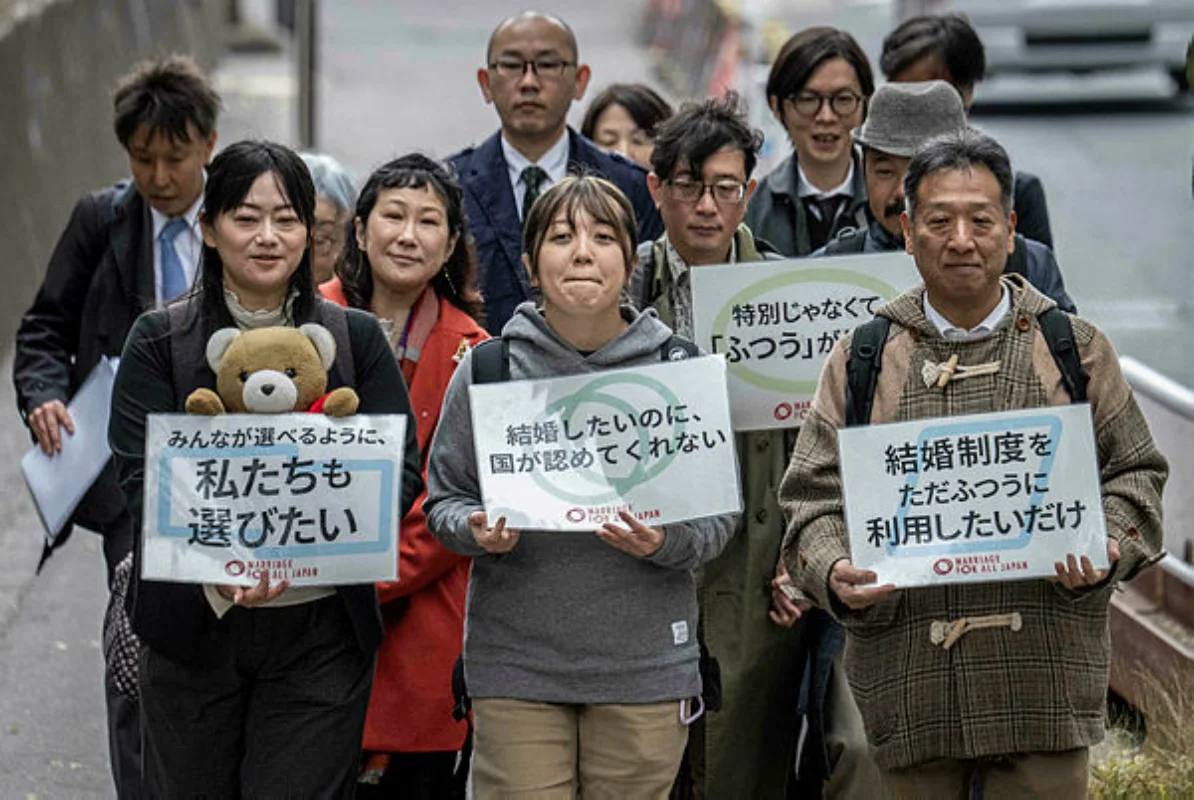
Japanese same-sex marriage campaigners urge the Supreme Court to declare the ban unconstitutional after a recent high court ruling setback
TOKYO: Marriage equality campaigners have urged Japan’s Supreme Court to rule the country’s failure to recognise same-sex unions unconstitutional.
The appeal follows a recent setback at the Tokyo High Court, which ruled last week that the refusal to acknowledge same-sex marriages does not violate the constitution.
More than a dozen couples have filed lawsuits across Japan seeking damages from the state for preventing them from marrying.
Plaintiffs from Hokkaido to Kumamoto gathered with their lawyers on Wednesday to file a letter with the top court.
“I’m truly shocked by the high court ruling,” plaintiff Shinya Yamagata told reporters.
“I never imagined that the judiciary would discriminate against us and would wound our hearts so deeply.”
Another plaintiff, Haru Ono, said they seek simply the ordinary right to marry.
Ono, who raised three children with her partner, said she faced various hardships, including hospital visits where only one parent could attend.
The letter requested the Supreme Court exercise its authority as a bastion of human rights and deliver a clear ruling of unconstitutionality.
It asked the court to consider the lives of people consistently excluded from the legal marriage system.
Japan is the only G7 nation that does not recognise same-sex unions.
In Asia, only Taiwan, Thailand and Nepal allow same-sex marriage.
Opinion polls show growing support for LGBTQ-friendly laws in Japan.
The conservative ruling party espouses traditional family values, and new Prime Minister Sanae Takaichi opposes same-sex unions.
Dozens of major municipalities, including Tokyo, now offer partnership certificates for same-sex couples.
These certificates allow couples to be treated as married in areas such as housing, medicine and welfare.
Many large Japanese businesses also offer the same family benefits to LGBTQ and heterosexual employees.
Japan’s 1947 constitution states marriage requires the mutual consent of both sexes.
It also states that all people are equal under the law. – AFP



