




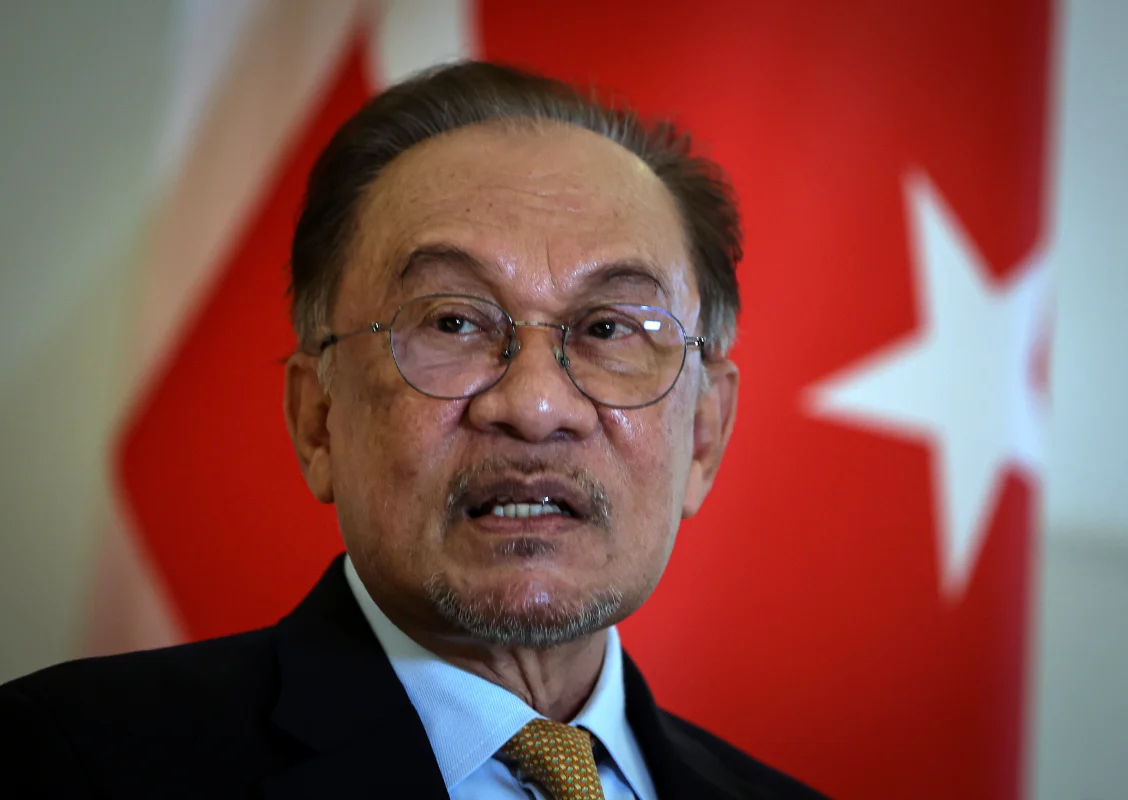
Prime Minister Anwar Ibrahim’s official visit to Türkiye marks a strategic recalibration, elevating ties to a structured, long-term partnership anchored in mutual interests.
KUALA LUMPUR: Prime Minister Datuk Seri Anwar Ibrahim’s recent official visit to Türkiye has marked a significant strategic recalibration in bilateral relations.
Institute of Strategic and International Studies (ISIS) Malaysia chairman Datuk Prof Dr Mohd Faiz Abdullah said the visit elevated ties to a more structured, long-term partnership.
He said it underscored Malaysia’s intent to deepen cooperation in trade, defence, security, technology and governance.
“To be sure, it is not a shift away from Malaysia’s foreign policy of active non-alignment,” he said in a statement.
Mohd Faiz said this was clear from Anwar’s articulation of balanced relations with the United States and China while deepening ties with Türkiye.
A key outcome was establishing the Malaysia-Türkiye High-Level Strategic Cooperation Council (HLSCC).
This formalises engagement at the highest level, signalling a move from ad hoc cooperation to an institutionalised strategic partnership.
On trade, both nations set an ambitious target of USD 10 billion by 2026.
This is a major surge from the USD 4.92 billion recorded between January and November 2025.
Growth is expected from high-value sectors like semiconductors, artificial intelligence, data centres and energy.
Other drivers include advanced electrical and electronics, agri-commodities, halal food and rare earths from Malaysia.
Türkiye offers advanced defence manufacturing, automotive, construction, R&D, higher education and industrial design.
Mohd Faiz emphasised Anwar’s decades-long friendship with Turkish President Recep Tayyip Erdogan.
He is confident the HLSCC and defence procurements provide mechanisms to explore doubling trade volume.
“Although a formidable challenge to take on, the USD 10 billion target is not a pipe dream,” he said.
Defence cooperation is a key growth area, including technology transfer, joint production and procurement.
Türkiye’s expanding defence exports could further strengthen bilateral security ties.
Both nations share common positions on global issues like respect for sovereignty and justice under international law.
They also align on sustainable development, climate change and opposing the selective application of human rights.
On Track Two diplomacy, ISIS Malaysia and Türkiye’s SETA foundation signed a memorandum of understanding.
This will enhance collaboration in strategic research, policy dialogue and expert exchanges.
Anwar’s public lecture titled ‘Power Shift: Strategic Choices for Malaysia and Türkiye’ reflected this alignment.
It highlighted the need to uphold fairness, accountability and the rule of law in global affairs.
Overall, the visit represents a strategic reset in Malaysia-Türkiye relations.
It lays a strong foundation for sustained geopolitical and geo-economic cooperation benefiting both countries long-term.



