




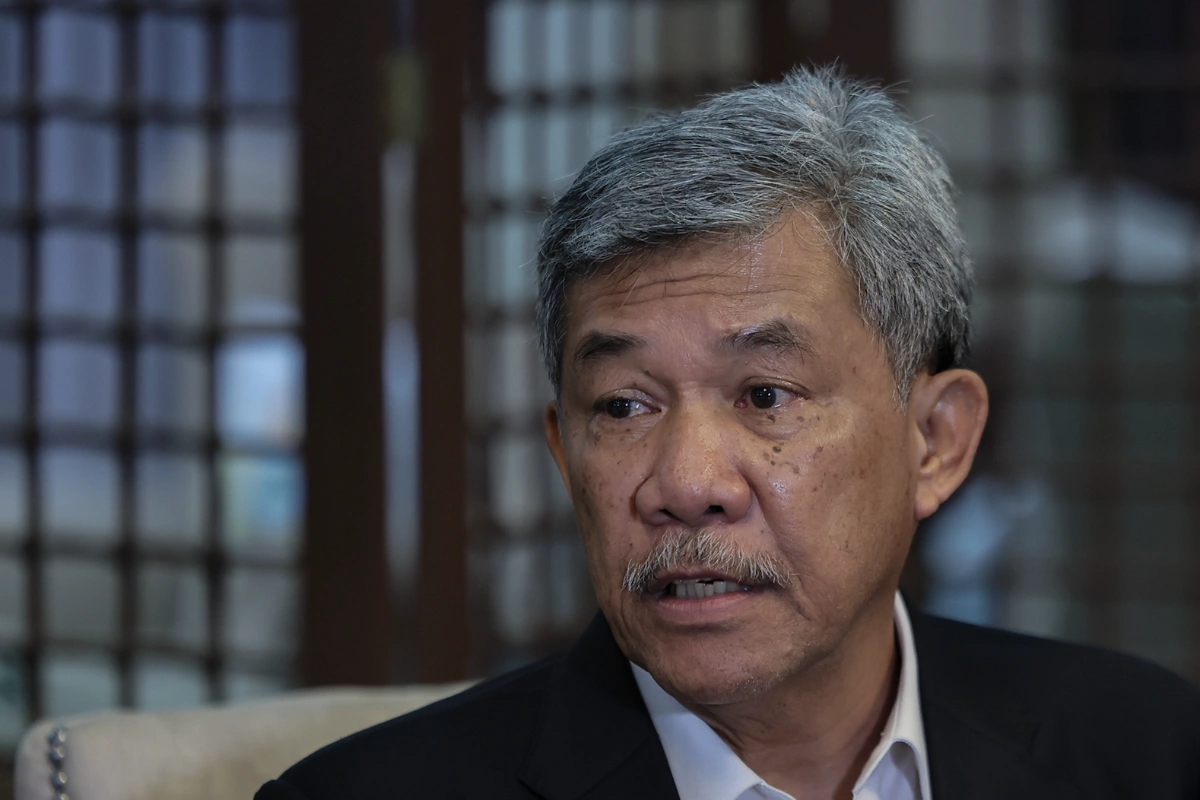
‘The unemployment rate edged up slightly from 2.9% in March to 3.0% in April, involving 511,800 individuals.’
PETALING JAYA: Malaysia’s labour market remained resilient in the first half of 2026, with steady employment growth and only a slight uptick in unemployment, despite ongoing global economic uncertainties.
Economy Minister Akmal Nasrullah said the national labour force rose to 17.33 million, while total employment reached 16.82 million as of April.
He said the labour force participation rate remained stable at 70.9%, reflecting continued economic activity across key sectors.
“The unemployment rate edged up slightly from 2.9% in March to 3.0% in April, involving 511,800 individuals,” he told the Dewan Rakyat.
Akmal said the figure remains below the 4% threshold typically associated with full employment, indicating sustained labour market stability.
Responding to a question from Mohd Syahir Che Sulaiman (PN-Bachok), he said job losses remain contained, with 6,197 workers recorded as having lost their jobs as of June 22, representing about 0.04% of total employment.
This figure is around 20% lower than the 7,766 job losses recorded in May, suggesting a gradual stabilisation in the labour market following earlier fluctuations.
He said the highest number of job losses this year was recorded in January, when 10,658 workers were affected, largely due to year-end restructuring and business realignment.
“The trend shows that disruptions are easing,” he said.
Akmal added that most current labour market disruptions appear to be temporary rather than structural, with continued hiring activity across key sectors.
“If downsizing were permanent, we would not see continued recruitment activity. At present, the disruptions appear temporary,” he said.
He said the government does not currently see a need for extraordinary intervention measures, as unemployment remains within a manageable range of 2.9% to 3%.
Instead, policy responses are being guided by targeted, data-driven measures under the National Economic Action Council (MTEN) to support both workers and businesses.
Among key initiatives is the RM5 billion SME Stabilisation Relief Facility (SRF) under Bank Negara Malaysia, alongside a RM5 billion financing guarantee scheme via Syarikat Jaminan Pembiayaan Perniagaan Berhad (SJPP), providing a total of RM10 billion in support.
Akmal said more than 1,000 SMEs have benefited from the schemes, with over RM700 million approved and more than RM4 billion still available.
“These facilities help SMEs maintain operations and manage cash flow pressures,” he said.
The government has also introduced a RM710 million Progressive Acceleration for Capability and Employment (PACE) package aimed at strengthening job protection and workforce resilience.
Of this allocation, RM580 million is channelled through PERKESO to enhance the Employment Insurance System, RM100 million via HRD Corp for training and job placement through MYFutureJobs, RM20 million for gig worker training via PTPK, and RM10 million via TalentCorp for industrial training initiatives in SMEs and start-ups.
Akmal said job placement performance has improved, with MYFutureJobs recording a 55% increase in placements as of June 12.
Placements rose from 12,119 in April to 18,756, bringing total placements for 2026 to 62,644 individuals.
He added that the government continues to monitor essential goods and supply chains to maintain stability in manufacturing, agriculture, food production and services.
While acknowledging pressures in certain sectors, particularly SMEs, he said interventions will continue to focus on protecting workers and sustaining business activity.
“Every job loss is not merely a statistic; it affects families and household stability,” he said.
Separately, Akmal addressed concerns over long-term global labour market shifts referenced in World Economic Forum projections, saying these challenges are already reflected in the 13th Malaysia Plan (13MP), which prioritises High Growth, High Value (HGHV) industries.
He added that efforts to strengthen education, TVET and workforce development, particularly in semiconductors, advanced manufacturing and technology-driven sectors, will be intensified, alongside the expansion of data centres to support Malaysia’s transition towards higher-value economic activity.



