



The 2027 curriculum will embed character development in all subjects, allocate 60 minutes weekly for it, and introduce integrated learning and co-teaching
PUTRAJAYA: The 2027 school curriculum (KP2027) will bring major reforms to the national education ecosystem by focusing on character development and nurturing knowledge, starting from the early stages of schooling.
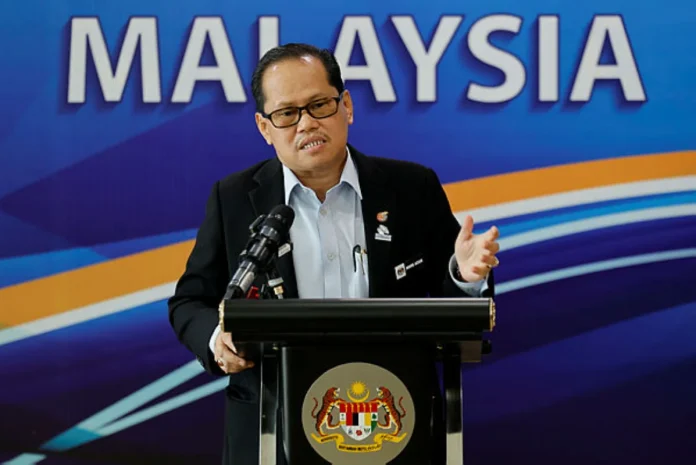
Education director-general Dr Mohd Azam Ahmad said KP2027 is more than a structural curriculum overhaul; it is an effort to revive the true spirit of education and reposition schools as spaces that foster values, cultivate intellectual discipline and shape students’ personalities, rather than merely being places to pursue academic results.
Mohd Azam, who served as an educator for 24 years before leading the Ministry of Education (MoE), said this during a recent engagement session on KP2027 with the media.
CHARACTER DEVELOPMENT
According to Mohd Azam, character formation is the most distinctive feature of KP2027. Values will no longer be taught abstractly or confined to textbook topics; instead, they will be demonstrated and embedded in students’ daily routines.
Students, he said, must see how respect is shown, how empathy is expressed and how tolerance is practised.
“Respect for teachers and peers is demonstrated in the classroom. Cleanliness and responsibility are nurtured through habits such as cleaning the table after meals, while tolerance is instilled through simple actions like waiting in line at the canteen.
“The values we want to foster are not just on paper but values that are clear and ‘living’, such as being happy together, helping one another, and compromising when making decisions. This character development element will appear across all subjects and in all interactions, not as a stand-alone subject,” he stressed.
60 MINUTES A WEEK TO BUILD CHARACTER
MoE Curriculum Development Division director Nooraini Kamaruddin, who was also present at the KP2027 session, said the character development programme under the 2027 school curriculum will be implemented through two main approaches.
“First, the ministry will introduce a character development programme from preschool through upper secondary. At the preschool level, character-building takes place continuously through daily routines such as arranging shoes, sharing food, helping friends and maintaining cleanliness, without a fixed timetable.
“At the primary and secondary school levels, MoE will allocate 60 minutes a week (to the character development programme) within the school timetable. The programme will be carried out through practical, hands-on learning during the teaching and learning sessions to nurture the character traits we aim to develop. This is not a new subject but a programme that is being cultivated at the school level.
“Second, character development will be integrated into all subjects, where every teacher is regarded as a character educator who not only imparts knowledge and skills but also the values, attitudes and behaviours related to the subject matter,” she said.
For example, when teaching Science, the teacher would impart scientific knowledge and theory, along with the skills needed to handle tools and apparatus during experiments. The character development component will see students collaborating in groups, and being tolerant and honest while carrying out their activities together.
NATURE AND HUMANITY
Mohd Azam, meanwhile, revealed that another key component of KP2027 is Nature and Humanity: Integrated Learning which, he explained, is a culture of learning that weaves together multiple disciplines, from music, health, arts and science to TVET (technical and vocational education and training) and digital elements.
“This integrated learning approach aims to bring students closer to real life. Students will understand nature in practical ways and learn to think as an observer,” he said.
“For instance, they plant chilli, record its growth, observe sunlight, draw the sun and the plant, sing about the growth process, and share their findings with their teachers and parents. This exposes students to various intellectual disciplines without relying on memorisation.”
He added that this culture of learning is increasingly important in a world facing climate change and unexpected floods, and shifting to a digital era.
Mohd Azam said children must understand the relationship between humans and nature, and grow to appreciate the environment from a young age so they can become global citizens who value the planet and collective well-being.
CO-TEACHING
Commenting on co-teaching, he said KP2027 gives wider space to this pedagogical method, where two teachers work together in one classroom. The collaboration includes jointly planning, delivering and assessing teaching and learning (PdP, which is the whole process of teaching and acquisition of knowledge or skills).
“Although it has been practised in some schools for years, the approach is now being strengthened and coordinated more clearly,” he said, adding that co-teaching can be carried out in schools where teachers are ready and well-matched to manage classes collaboratively.
“A music teacher and a science teacher, for instance, can team up to teach Nature and Humanity: Integrated Learning. But if constraints arise, such as maternity leave or teacher shortages, a single teacher can continue teaching without disrupting the learning process.”
To ensure orderly and effective implementation, MoE will provide implementation guidelines as the main reference document for all parties involved.
He added that co-teaching is a professional practice that requires flexibility, with the ultimate goal of ensuring students receive creative, holistic and consistent learning experiences.
THREE LEARNING STAGES
Mohd Azam said KP2027 also introduces a new structure of three learning stages tailored to children’s cognitive and emotional development.
Years 1 and 2 form Stage I, which emphasises literacy and numeracy, as well as nurturing students’ enthusiasm for attending school. Pupils are introduced to intellectual discipline in a comprehensive manner and accustomed to enjoy the learning process.
Stage II, covering Years 3 and 4, focuses on the application of knowledge, where pupils not only understand concepts but can connect them to real-world situations.
They learn how sunlight affects plants, why a healthy environment matters and how to apply what they learn.
Stage III, which includes Years 5 and 6, gives students room to think analytically, generate innovations and strengthen their character formation. Students are introduced to the concept of identity, as well as critical thinking and awareness of their role as part of the global community.
BALANCING INTELLECT, EMOTIONS, SPIRITUALITY
Mohd Azam stressed that KP2027 is designed to meet the realities of today’s world – extreme weather, shifts in the global economy, an ageing society and digital dependency.
He said education can no longer produce “bookworms” as in the past. Instead, it must nurture balanced individuals with strong values, emotional stability and creativity.
He also reminded that education cannot be detached from religious values and beliefs, in line with the National Education Philosophy which emphasises intellectual, spiritual, emotional and social balance.
Mohd Azam also said no curriculum, regardless of how strong it is, will succeed without teachers.
“Teachers do not merely teach academic subjects but also shape students – nurturing their emotional growth and building their character,” he said.
Describing the new school curriculum as an educational ‘jihad’ or mission, he said it requires the commitment of all to ensure every student is guided with love and wisdom to have a clear understanding of the world they will face after leaving school.



