



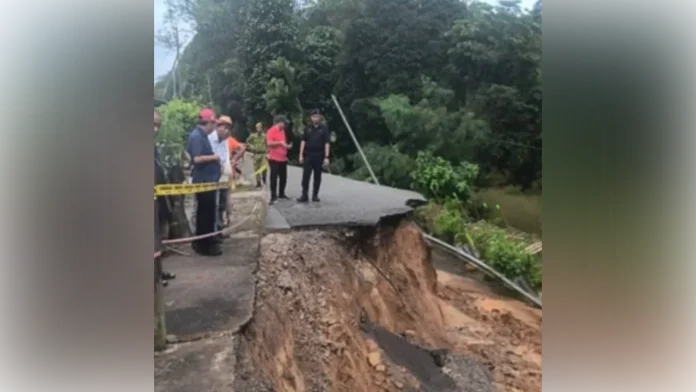
Heavy rain triggers landslides in Tebedu district, cutting access to border settlements with Indonesia
KUCHING: Persistent torrential rainfall and flash flooding have triggered multiple landslides and hillslope failures in Sarawak’s Tebedu district near the Indonesian border, severing critical infrastructure connections to populated settlements.
The terrain collapse has disrupted road access to numerous communities situated along the border boundary with Kalimantan, the State Public Communications Unit reported today.
Water supply systems have been compromised as pipelines were destroyed during the road collapse incidents. The disruption affects both transportation networks and essential utilities serving border communities.
According to the Unit, heavy downpours have persisted since Thursday last week, contributing to the widespread infrastructure failures.
“Authorities and elected state representatives have been notified of these landslide incidents,” the Unit stated in its report.
Restoration efforts are currently underway to re-establish road connections and repair water supply infrastructure.
The flooding crisis has also impacted educational operations, disrupting the scheduled reopening of 28 schools across the state today.
Adding to concerns, Kuching City South Mayor Datuk Wee Hong Seng has issued an alert for another anticipated high tide event.
The mayor forecasts elevated tidal levels from January 17 through 21, which could trigger additional flooding episodes in Kuching district.
“This upcoming high tide cycle may result in another round of inundation in Kuching district,” Wee cautioned via social media.
He urged residents in flood-prone, low-lying areas to remain vigilant and cooperate with evacuation directives should the situation necessitate relocation.
Sarawak is currently experiencing the full intensity of the monsoon season, with weather systems bringing sustained heavy precipitation across the state.
The combination of saturated soil conditions, continuous rainfall, and high tide events has created challenging circumstances for disaster management authorities and affected communities throughout the region.
Emergency response teams continue monitoring the situation as repair crews work to restore connectivity to isolated border settlements while weather conditions remain adverse.



