




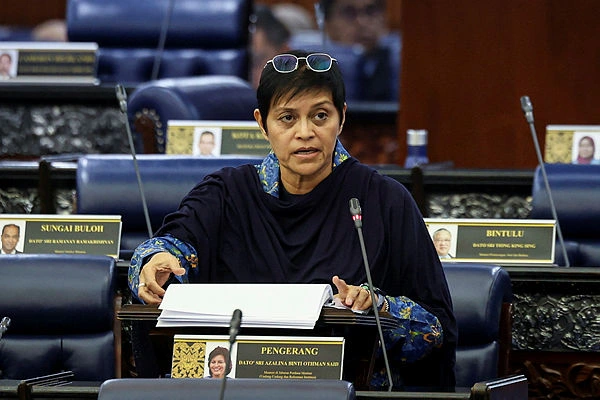
Malaysia leads Southeast Asia with a restorative justice-based Anti-Bullying Act 2026 and tribunal to address bullying complaints.
KUALA LUMPUR: Malaysia is among the first countries in the region to have a dedicated restorative justice-based mechanism to address bullying issues, the Dewan Rakyat was told today.
Minister in the Prime Minister’s Department (Law and Institutional Reform) Datuk Seri Azalina Othman Said said this was made possible through the enforcement of the Anti-Bullying Act 2026 and the establishment of the Anti-Bullying Tribunal, which began operations on June 16.
She said the tribunal was established as a special mechanism to hear and manage bullying complaints more quickly, while emphasising victim recovery and educating perpetrators instead of merely imposing punishment.
“Malaysia is among the earliest countries in the region to provide a dedicated recovery-based complaint resolution mechanism in addressing bullying issues.
“What is important is that the tribunal emphasises restorative justice rather than merely punitive punishment. This approach ensures perpetrators are given an opportunity to change, while victims receive due redress and justice,” she said during a briefing at the Special Chamber session.
She said the Anti-Bullying Act 2026 was gazetted on Jan 23 before coming into force on June 16, introducing legal responsibilities for parties that fail to take action in bullying incidents.
Azalina said under Section 2 of the Act, protected victims include children below 18 years old, students undergoing education or training at educational institutions, as well as children who are being detained, rehabilitated or protected at relevant institutions.
She said the tribunal, established under Section 24 of the Act, has the jurisdiction to hear and manage bullying complaints, thereby providing victims with a faster avenue for resolution.
She said the tribunal is headed by tribunal president Nurul Husna Awang and deputy president Dr Gan Chi Keong, who were appointed from among officers of the Judicial and Legal Service. In addition, it has 56 members comprising experts in education and children’s affairs who will serve as panel members on a rotational basis.
Azalina also said the Legal Affairs Division of the Prime Minister’s Department had also developed the e-TAP electronic complaint system, which allows complainants to file bullying complaints and respondents to submit their replies online.
The tribunal is also supported by the Anti-Bullying Tribunal Regulations 2026, which not only detail procedures for filing complaints, issuing witness summonses and conducting tribunal proceedings, but also set specific guidelines for cases involving children to ensure their emotional and psychological well-being is safeguarded.
“The Anti-Bullying Tribunal will work with the National Education Academy and the Office of the Children’s Commissioner to implement continuous educational programmes involving educators, parents and various stakeholders,” she said.
Azalina said although the Act currently focuses on protecting children and individuals below 18 years old, the government is prepared to study proposals to expand the scope of protection to include victims aged 18 and above should there be a need in the future.



