




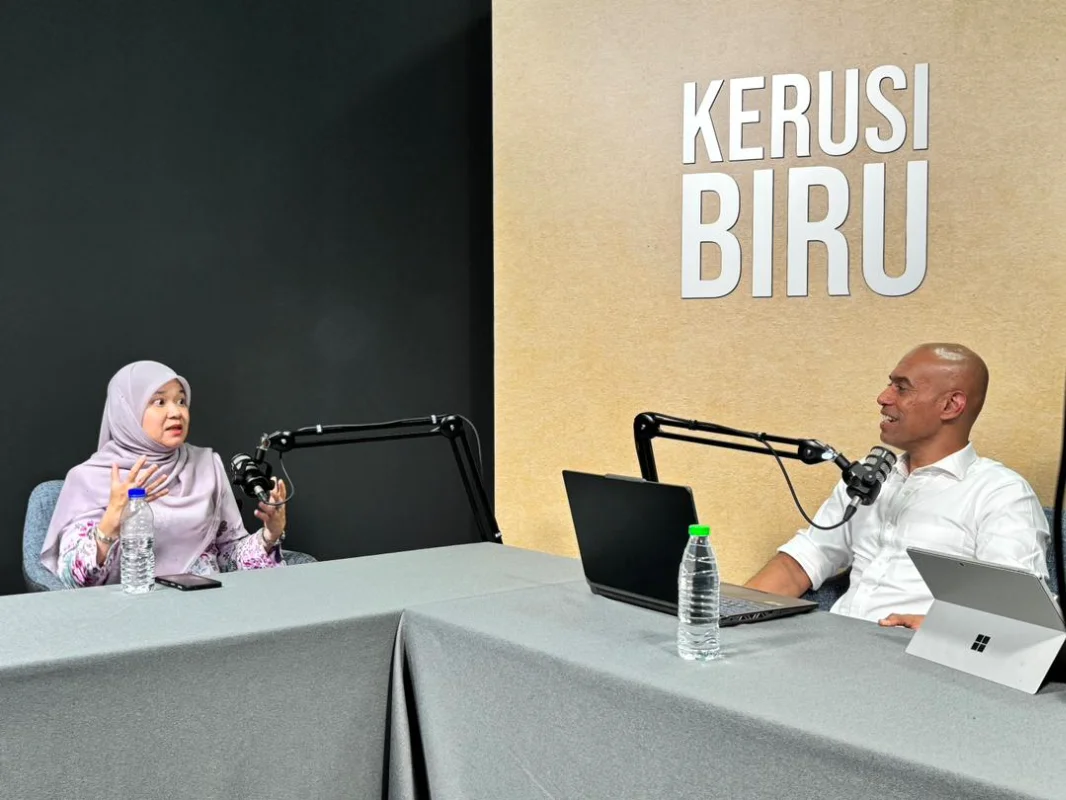
Education Minister Fadhlina dismisses SPM abolition rumors, highlights progress in teacher placement & schools.
PETALING JAYA: Education Minister Fadhlina Sidek has firmly rejected rumors about plans to eliminate the Sijil Pelajaran Malaysia (SPM) examination, emphasising its continued importance as Malaysia’s primary school-leaving credential.
During an appearance on the Kerusi Biru podcast, Fadhlina made clear that the SPM remains integral to the nation’s education system.
“There are no plans whatsoever to remove SPM. It represents the pinnacle certification in our school system,” the minister stated.
She acknowledged that public concern has emerged following the discontinuation of UPSR and PMR examinations, but clarified that these served different purposes.
According to Fadhlina, UPSR operated as a standardized test, whereas PT3—the replacement for PMR—functioned as continuous assessment.
“Other examinations remain in place, including UASA and specialized assessments for admission to MRSM and premier boarding institutions,” she explained.
The minister emphasised that contemporary evaluation approaches aim to provide a more comprehensive picture of student capabilities beyond traditional testing methods.
“Assessment strategies prove more valuable when they extend beyond examination scores alone,” Fadhlina said.
“Each student possesses unique characteristics and strengths, and comprehensive evaluation enables us to recognise these individual differences.”
Addressing education sector challenges
Fadhlina outlined several areas where the Education Ministry has made notable advances, including teacher deployment, infrastructure improvements for deteriorating school buildings, and minimizing bureaucratic demands on teaching staff.
The minister identified teacher supply as a critical concern requiring immediate attention due to its direct impact on learning outcomes.
“Insufficient teaching staff would create serious problems affecting student education,” she warned.
“However, the Madani government has successfully filled 98% of teaching vacancies during the past three years. This momentum must continue—we need to keep addressing these gaps consistently.”
Regarding infrastructure, Fadhlina pointed to sustained government investment across three successive budgets dedicated to renovating schools in poor condition.
“No prior government has demonstrated this degree of dedication toward fixing dilapidated school buildings,” she remarked, noting that ongoing renovation projects show “very positive results”.
Concerning educator workload, the minister recognised this as a persistent challenge faced by successive governments, while highlighting specific measures implemented to enhance teacher welfare.
“During the Madani government’s first year, we rolled out seven initiatives to lighten teachers’ workload. The following year brought the introduction of the Teacher Wellbeing Index,” said the PKR lawmaker.
She added that the ministry has eliminated the SSDM student behavior documentation requirement, further reducing paperwork obligations.
The ministry is actively pursuing strategies to decrease the number of students who opt out of taking the SPM examination.
“Initial figures showed approximately 10,000 students not sitting for the exam. This decreased to roughly 8,000 the subsequent year,” Fadhlina revealed.
“We are examining additional approaches to push this number down further.”
ALSO READ:
Kelantan to offer free online tuition for SPM students
M’sian with learning disability becomes teacher after 10 SPMs



