



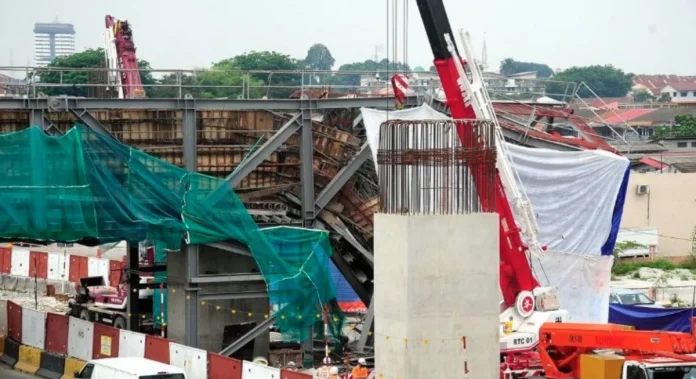
The LRT3, originally slated for completion by the end of this year, has been delayed again
PETALING JAYA: Persistent delays in public transport projects underline why reducing parking for residential developments near transit hubs may be premature, cautioned an expert.
While the idea is sound in principle, Wan Md Hazlin Agyl Wan Hassan, CEO of transport think-tank MY Mobility Vision, warned that Malaysia has yet to achieve the level of rail reliability, first and last-mile connectivity, and enforcement needed to make the policy effective.
“The proposal is directionally correct and reflects where cities around the world are heading. Minimum parking requirements do inflate housing costs, sometimes unnecessarily, especially for developments close to rail stations.”
He highlighted the LRT3 project to illustrate the importance of policy sequencing.
The LRT3, originally slated for completion by the end of this year, has been delayed again due to software glitches, potentially pushing the timeline back to the second quarter of 2026.
“The LRT3 project is not just another rail line – it is a structural corridor for the western Klang Valley. Its delays stem from accumulated issues across multiple administrations, contractual restructuring, scope changes and complex systems integration.”
Wan praised Prasarana’s decision not to rush final testing, noting that rail systems should never be opened to meet political deadlines if technical readiness is lacking.
Yet, from a housing and planning perspective, the delays create uncertainty.
“If parking is reduced today on the assumption that LRT3 will be fully operational soon, but the line takes longer to stabilise, residents are left without the promised alternative. In that situation, people will understandably keep their cars and look for parking elsewhere,” he said.
Reducing parking, he stressed, only works if residents are confident they can live without a car – a confidence that remains uneven across Malaysia.
“Proximity to a station on paper does not always translate into convenient, safe or reliable daily mobility. So while the idea is sound, it needs to be applied carefully, with clear conditions tied to the actual quality of public transport and station access on the ground.”
He added that public transport upgrades must come first or at least move in parallel, because parking limits alone cannot change behaviour.
“Parking reduction shapes behaviour, but behaviour only changes when people have a reliable alternative,” Wan said.
Spillover parking remains a major concern, as many households maintain a “Plan B” car for emergencies, family responsibilities or travel to areas not served by public transport.
“If parking supply is cut without reducing the underlying need for that car, spillover is almost inevitable,” he said.
To make a car-lite lifestyle viable, Wan outlined prerequisites including reliable trains and buses, safe pedestrian access to stations, higher-frequency feeder buses, flexible demand-responsive transit, legal and financing reforms to decouple parking from housing and credible enforcement of on-street parking.
“Reducing parking near transit stations is the right long-term direction and the minister is right to push the conversation forward. But Malaysia has not yet reached the level of transit reliability and connectivity that allows parking reduction to lead the change. When that happens, fewer parking spaces won’t feel like a sacrifice – they’ll feel unnecessary.”



