



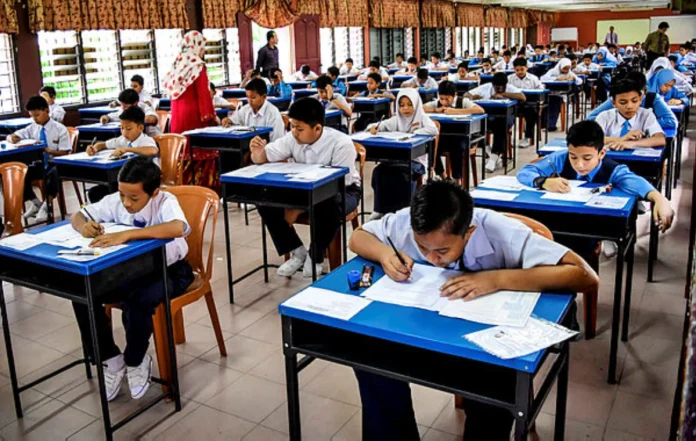
PETALING JAYA: Malaysia is set to overhaul primary education with the centralised Year Four assessment and a new starting age of six for primary school – reforms hailed by educationists as crucial for identifying learning gaps early and giving children a stronger foundation.
Universiti Kebangsaan Malaysia Institute for Development and Inclusive Advancement of Malaysia deputy director Dr Anuar Ahmad told theSun that the newly termed “learning matrix” is a positive initiative as earlier assessment allows for prompt interventions once test results are analysed.
“I have long advocated for assessments at the primary school level. Ideally, these should take place in Year Four or Year Five, rather than Year Six as was the case with UPSR.
“We do not want to wait until Year Six only to realise it is too late. If children struggle with reading, writing or numeracy, there would be insufficient time to implement meaningful support.”
Anuar praised the decision to start preschool at age five and primary school at six, noting that most developed nations have long adopted this approach.
“Introducing children to school earlier benefits their socialisation, emotional development and adjustment under teacher supervision.
“However, challenges are expected next year, as Year One will include both six and seven-year-olds, likely leading to higher enrolment numbers.”
He added that with next year’s primary school intake projected to exceed 500,000 students, the Education Ministry must ensure sufficient teachers, extra classrooms and adequate infrastructure.
National Association of Private Educational Institutions deputy president Dr Teh Choon Jin said the Year Four examination could restore clearer expectations and learning discipline in classrooms.
“It can help teachers and parents identify gaps early. But it must be handled properly. The key is balancing assessment with meaningful learning.
“If implemented well, it could improve literacy and numeracy outcomes because schools will refocus on foundational skills. Yet assessment alone cannot address weaknesses – it must be accompanied by teacher support, targeted interventions and realistic curriculum pacing.”
Parent Action Group for Education Malaysia chairman Datin Noor Azimah Abdul Rahim said the reforms are a positive move, with parents welcoming its focus on quality, inclusivity and preparing students for the future.
“They provide clearer view of education from early schooling to higher education, recognised the importance of technology and AI, and emphasised equity and nation-building.
“However, concerns remain over execution, teacher readiness and school capacity. Inclusivity risks being symbolic unless accompanied by targeted measures for vulnerable communities. Parents will be watching for clear timelines, measurable outcomes, and tangible improvements in classroom teaching and assessment.”
Malaysian Association for Education president Dr Mohd Majid Konting applauded the move, emphasising that assessment is integral to teaching and learning, while UiTM Faculty of Administrative Science and Policy Studies associate professor Dr Azizan Zainuddin urged for a more comprehensive study, noting that children’s development varies individually.



