



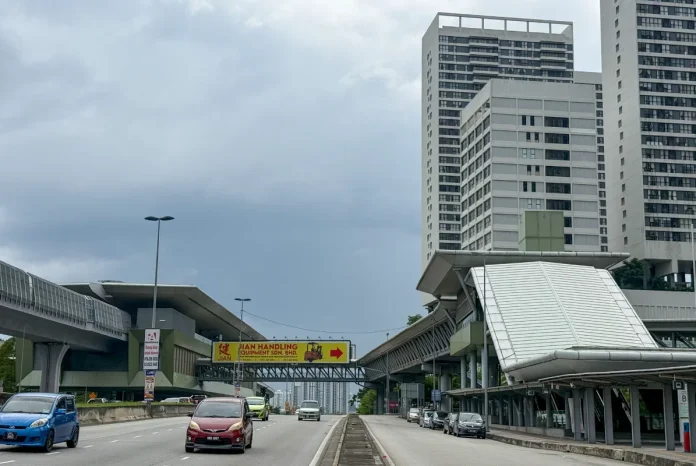
Reducing parking spaces may encourage residents to rely more on public transport
PETALING JAYA: Plans to slash car park units in new high-rise developments near LRT and MRT stations are raising alarm among residents, who say Malaysia’s public transport is still too unreliable for people to give up their cars.
Priyanka (not her real name), a resident of an apartment near a transit station, said the policy might work in areas with excellent connectivity, but for many, owning a car remains a necessity.
“If the policy is implemented in areas that are well connected to public transport, it could be a positive move. Reducing parking spaces may encourage residents to rely more on public transport. However, in locations where access is limited or inconvenient, it would create difficulties.”
Priyanka, who drives to work daily, said the nearest station is about three kilometres from her home, with few practical options to reach her workplace.
“Journeys that take only minutes by car can sometimes take hours by public transport, especially during peak periods,” she said.
She also warned that reducing parking could worsen congestion within high-rise complexes where residents already own cars.
“This may lead to double-parked vehicles, turning two-way roads into one-way streets. Such situations are not only inconvenient but also dangerous. During emergencies, access for ambulances, fire engines, or other services could be severely restricted.”
Highlighting the shortcomings of Malaysia’s public transport system, Priyanka said: “Major hotspots such as Kuala Lumpur, Subang Jaya and Petaling Jaya should be prioritised but improvements are also needed nationwide to ensure wider connectivity.”
She suggested measures to make residents more willing to depend on public transport including increased train and bus frequency, extended operating hours, better last-mile connectivity through bike-sharing or pedestrian-friendly pathways, real-time tracking apps, priority lanes for buses and sufficient parking at transit hubs.
“If these improvements were implemented, public transport would become a more attractive, convenient and practical alternative. Personally, I would be much more willing to rely on it if it were easier, faster and stress-free compared with driving,” she added.
Mohd Haqim Haizar, 27, another high-rise resident in Kuala Lumpur, echoed her concerns.
“Even living next to an LRT station, I still need my car to get to work on time. Reducing parking without improving public transport would only create headaches for everyone,” he said.
Haqim added that while the demand-responsive transit (DRT) system is a promising initiative in principle, its impact remains limited.
“When it started, it worked well, but traffic congestion and a car-centric society have undermined it.”



