





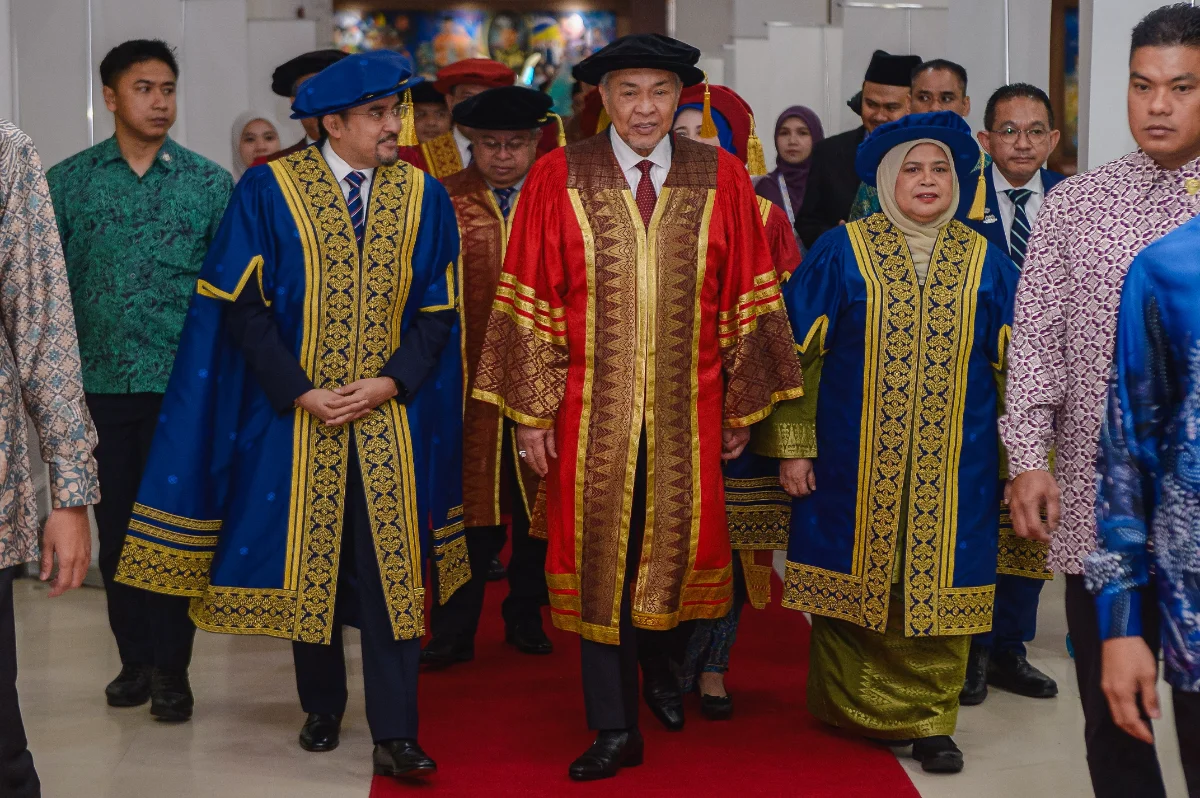
PETALING JAYA: Barisan Nasional (BN) chairman and Umno president Datuk Seri Dr Ahmad Zahid Hamidi is in a catch-22 situation.
Although he succeeded in securing BN’s entry into the Madani government, he continues to operate under sustained pressure from several directions.
Within Umno and the wider BN coalition there are influential leaders and grassroots members who are ideologically and historically uneasy about cooperating with Pakatan Harapan (PH), particularly PKR and DAP, parties that were once BN’s fiercest political rivals.
Ahmad Zahid is also contending with dissatisfaction from BN’s traditional component parties, MCA and MIC, which have openly expressed concerns about their diminished role in the current Unity government.
Both parties suffered severe electoral setbacks in recent general elections and now hold limited parliamentary representation, a factor that has translated into reduced influence in government appointments and policy decision-making.
MCA and MIC leaders have argued that their contributions and historical roles within BN are no longer adequately reflected in the Madani administration, fuelling perceptions that they are being sidelined in favour of PH partners.
However, Ahmad Zahid recently adopted a firmer tone, urging BN component parties to remain patient, reminding them that they did not back him when he first sought to form a government together with PH and other parties after the general election.
Amid these internal tensions, political analysts argue that BN’s current challenges must be viewed in a broader post-2018 context.
Nusantara Academy for Strategic Research senior fellow Dr Azmi Hassan said BN had been in a far more critical condition immediately after the 14th general election (GE14) when component parties from Sarawak exited the coalition.
“That was an enormous pressure on BN because between 10 and 20 parliamentary seats were effectively lost overnight. These were seats that had long been considered BN’s ‘fixed deposits’,” he told theSun via WhatsApp.
Azmi said it significantly weakened BN’s parliamentary standing and altered the political landscape for the coalition.
However, he does not see the recent expressions of discomfort by MCA and MIC as posing the same level of threat to BN’s survival.
“This is because Umno remains the backbone of BN. Although Umno is weaker than before, it has managed to survive from 2018 until now because it is politically astute and able to adapt to changing circumstances.”
Azmi said BN does not expel its component parties unless they commit serious mistakes.
“That is why BN will not remove MCA or MIC from the coalition. However, if MCA and MIC were to leave BN on their own accord it could actually make matters easier for Umno, particularly when it comes to seat allocations in future elections.
“For decades MIC and MCA depended heavily on Umno’s strength. Now, Umno itself has lost much of that strength. This raises the question of who Umno should prioritise when allocating seats.”
Prime Minister Datuk Seri Anwar Ibrahim had announced a Cabinet reshuffle on Tuesday. Despite keeping Umno in the Cabinet, MIC and MCA remained sidelined by the Madani government.



