




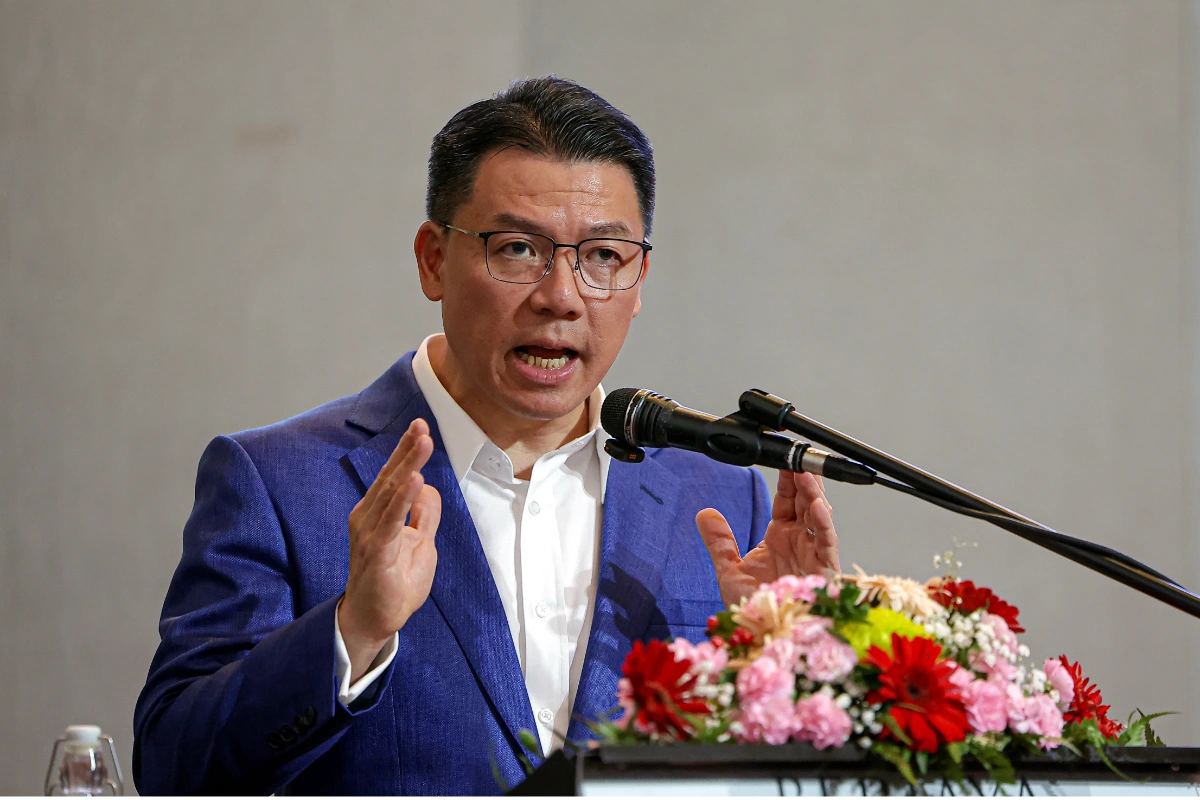
Malaysia’s urban planning must shift from regulation to facilitation to allow innovation to thrive, says Nga Kor Ming.
KUALA LUMPUR: Governments must move beyond regulating innovation and instead create conditions that allow it to thrive while ensuring that technological progress benefits society, said Housing and Local Government Minister Nga Kor Ming.
Speaking at the closing of the Department of Town and Country Planning (PLANMalaysia) City Talk 2026 here, today, he said Malaysia’s urban planning framework must shift from a regulatory approach to a facilitative one that encourages innovation without compromising public interest, safety, sustainability and good governance.
“Regulations are put in place to safeguard public interest, but they should never become barriers to innovation. Our planning system must move away from a culture of control towards one that facilitates responsible development,” he said.
Nga said Malaysia’s housing reform agenda, aligned with the Malaysia MADANI aspirations and the 13th Malaysia Plan (MP13), is anchored on five key principles, namely affordability, liveability, sustainability, connectivity and community building.
He said that under the MP12, the Ministry of Housing and Local Government (KPKT) had successfully met its target by facilitating and approving the construction of more than 511,000 affordable housing units nationwide.
“For many years, affordable housing was unfortunately associated with poor design, inadequate facilities and lower quality of living.
“Today, we are changing that perception. Through stronger collaboration with the private sector and higher development standards, affordable housing in Malaysia is increasingly defined not by compromise, but by dignity and quality,” he said.
Citing a newly launched PR1MA development in Penang, Nga said homes priced from about RM300,000 now offer facilities comparable to private residential developments, including swimming pools, children’s playgrounds, gymnasiums and landscaped recreational spaces.
He also highlighted the transformation of the People’s Housing Programme (PPR) into the Program Residensi Rakyat (PRR), which incorporates greener features such as solar photovoltaic systems, urban farming areas, and Industrialised Building System (IBS) technology to improve construction quality while reducing environmental impact.
Nga said connectivity is another key priority, with KPKT integrating the Transit-Oriented Development (TOD) concept into public housing projects to improve access to employment, education, healthcare and public transportation, particularly for less privileged communities.
On community development, he said cities need more than physical infrastructure, stressing that public spaces play a vital role in promoting mental well-being, social cohesion and stronger neighbourhood connections.
To support this goal, the MADANI Government plans to develop 1,000 Taman MADANI nationwide over the next decade. So far, 216 community parks have been completed within the past 24 months by transforming underutilised land into recreational spaces.
Nga also said the government has identified four pilot projects in Putrajaya, Penang and Kuala Lumpur to introduce the Vertical School Model as a solution to overcrowding in densely populated urban areas.
The conference brought together more than 200 policymakers, urban planners, architects, developers, academics and industry leaders to discuss the future of sustainable, inclusive and resilient urban development.
Held under the theme “Innovation in Urban Development: Creativity vs Compliance”, the conference served as a platform to exchange ideas and best practices to strengthen Malaysia’s urban planning system in addressing challenges such as climate change, digital transformation, demographic shifts and rapid urbanisation.



