





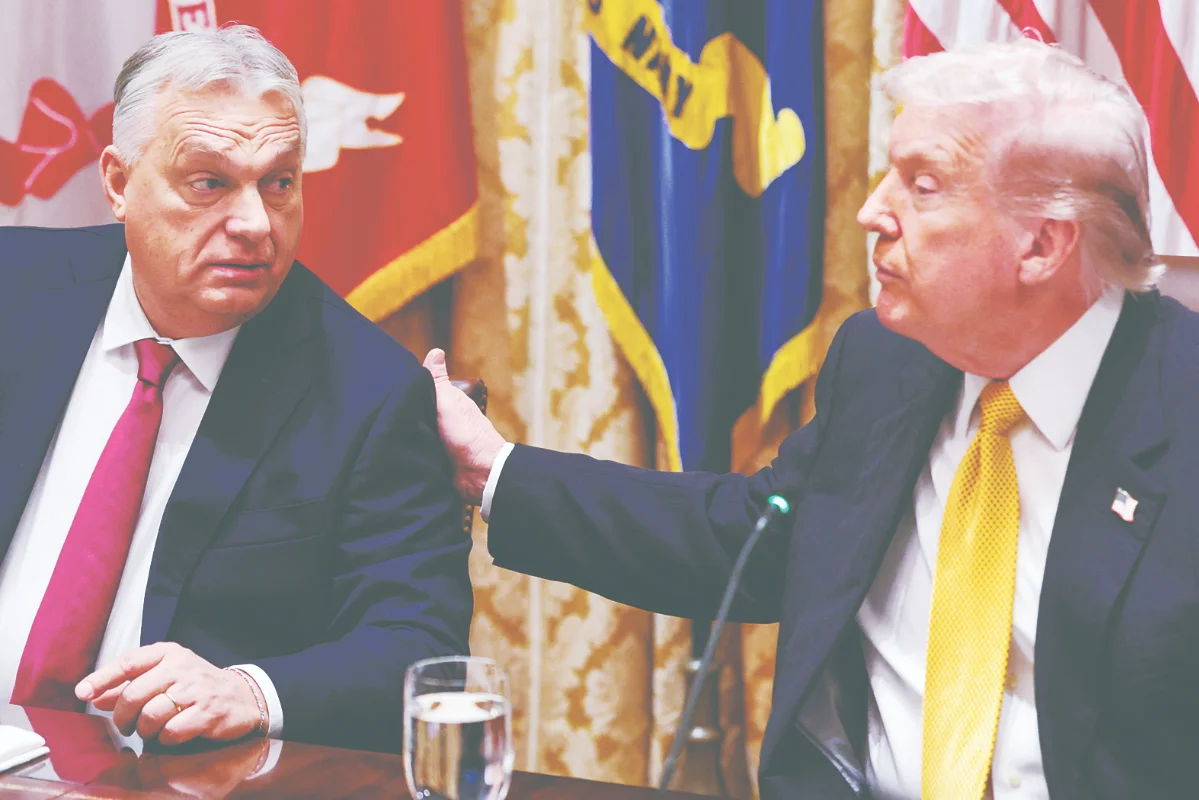
Hungary’s Viktor Orbán emerges as crucial peace broker between Trump and Putin on Ukraine, challenging EU consensus while facing international criticism.
AMONG European and world leaders, the name Viktor Orbán, the prime minister of Hungary, seldom appears in the mainstream media, especially in English-language outlets dominated by news agencies from the US, Britain and their allies, which play a key role in shaping and influencing public opinion on geopolitical developments.
When it does appear, it is invariably in a negative or dismissive light, portraying him as authoritarian, disruptive and an ally of Russian President Vladimir Putin, thus pitting him against the consensus of European Union (EU) policies on Ukraine and European geopolitics.
Not surprisingly, Orban’s latest visit to Washington DC and meeting with US President Donald Trump has received the customary critical coverage despite its potential importance in helping to bring a peaceful resolution to the Ukraine-Russia war.
ALSO READ: US grants Hungary exemption from Russia oil sanctions after Trump-Orban meeting
That the Hungarian leader is an underrated figure in global politics is evident from his standing with Trump. During an earlier meeting at Mar-a-Lago in March 2024, before his inauguration, Trump told a crowd: “There’s nobody better, smarter or a better leader than Viktor Orbán. He’s fantastic.”
At that time, Trump was referring to Orbán’s domestic politics, of which the Republican Party had drawn inspiration for its anti-immigration and LGBTQ positioning. For his current visit, Trump said it was an “honour to have a friend of mine here” at the White House, and repeatedly praised him as a “…great leader. He has done a fantastic job. He is a very powerful man within his country. He has run a great country, and he has got no crime, he has got no problems, like some countries do.”
Trump was clearly drawing attention to his own domestic woes in the US whilst lauding Orbán. But he was also signalling his intention to forge even closer ties with a political leader whose stance on the conflict in Europe, and possibly also personal view of Putin and Russia, converges with his own, and who Trump expects to play a key role in European geopolitics and post-conflict development in the future.
Solidarity on Russia-Ukraine War
Key takeaways from the joint press conference of the two leaders following their White House meeting on Nov 7 are:
Shared goal of peace: Both leaders emphasised their commitment to ending the war. Orbán reaffirmed his support for Trump’s efforts to bring the conflict to an end.
Skepticism on Ukraine’s victory: When asked whether Ukraine could win the war, Orbán stated that “miracles can happen”, and reportedly, he previously told Trump that Ukraine cannot militarily defeat Russia, which is a “strong country” that “wins through war”. Trump echoed this sentiment but suggested the war would conclude soon.
Trump’s role: Trump repeated his view that the war “should never have happened” and indicated it would have ended quickly if he had been president at the time.
Hungary’s position: Orbán stressed that Hungary’s priority is peace, partly because it shares a border with Ukraine. He stated that the US and Hungary were two of the few “pro-peace” voices, contrasting with other nations and the EU, which he claimed still insist Ukraine can win on the battlefield.
In essence, the press conference highlighted a united front between the two leaders on the necessity of a peace deal while also underscoring Hungary’s unique position – a Nato member maintaining close ties with Russia.
Orbán: Pressing for peace
Supporters of the peace movement around the world have long recognised the important role that Orbán has played in refusing to go along with the EU majority seeking a military victory over Russia since the beginning of the war.
Not only has he been a leading voice for an immediate ceasefire and peace negotiations in the war but he has also single-handedly obstructed the escalation of the war in the following ways:
Ukraine conflict stance: Orbán has consistently refused to supply weapons to Ukraine or allow their transfer across Hungarian territory. He has repeatedly blocked or delayed EU decisions on aid packages and sanctions against Russia, arguing that the EU is prolonging the war by supporting military action. He has also exposed the “pro-war” stance of the dominant member states of the EU and Britain whilst reaffirming Hungary’s priority to remain out of the conflict.
EU unity challenge: His actions, such as his meetings with Putin and his attempts to bypass EU decision-making structures, have been criticised by some EU leaders as a direct challenge to the bloc’s unified front against Russia. Critics favouring the expansion of EU military support to Ukraine have accused him of using his “peace mission” for domestic political gain and to secure a favourable position for Hungary post-conflict.
Veto power: His use of Hungary’s veto power in areas requiring unanimity, like foreign policy and EU accession for Ukraine, whilst highlighting the structural vulnerability in EU decision-making, has been necessary to leverage his peace agenda.
Impact on global peace movement
On the world stage, Orbán has played a role as a mediator and leader who prioritises peaceful solutions.
Alignment with Trump: Orbán has closely aligned himself with Trump, advocating for a Russian-Ukrainian peace summit, potentially to be hosted in Budapest. Should that take place, he will position himself as a key interlocutor between Trump and Putin. Should a peace settlement emerge, this will provide a shot in the arm for the global peace movement that has long been moribund.
Diplomatic actions: He has engaged in various high-profile diplomatic meetings – often without consulting his EU partner – to promote his vision for peace, including a visit to the Middle East peace summit, which he has cited as proof of Hungary’s growing diplomatic role.
Orbán’s role has been described by critics as that of a contrarian and spoiler who has used the peace movement to pursue a sovereignist foreign policy that prioritises Hungary’s national interests and maintains relations with the geopolitical giant of Russia.
The fact that he was able to secure a temporary waiver for Hungary from US sanctions on Russian gas and oil imposed by Trump indicates that his detractors may be right. But there can be little doubt that Orbán’s mission of peace to ensure Hungary’s national interest is also in the interest of the global peace movement.



