




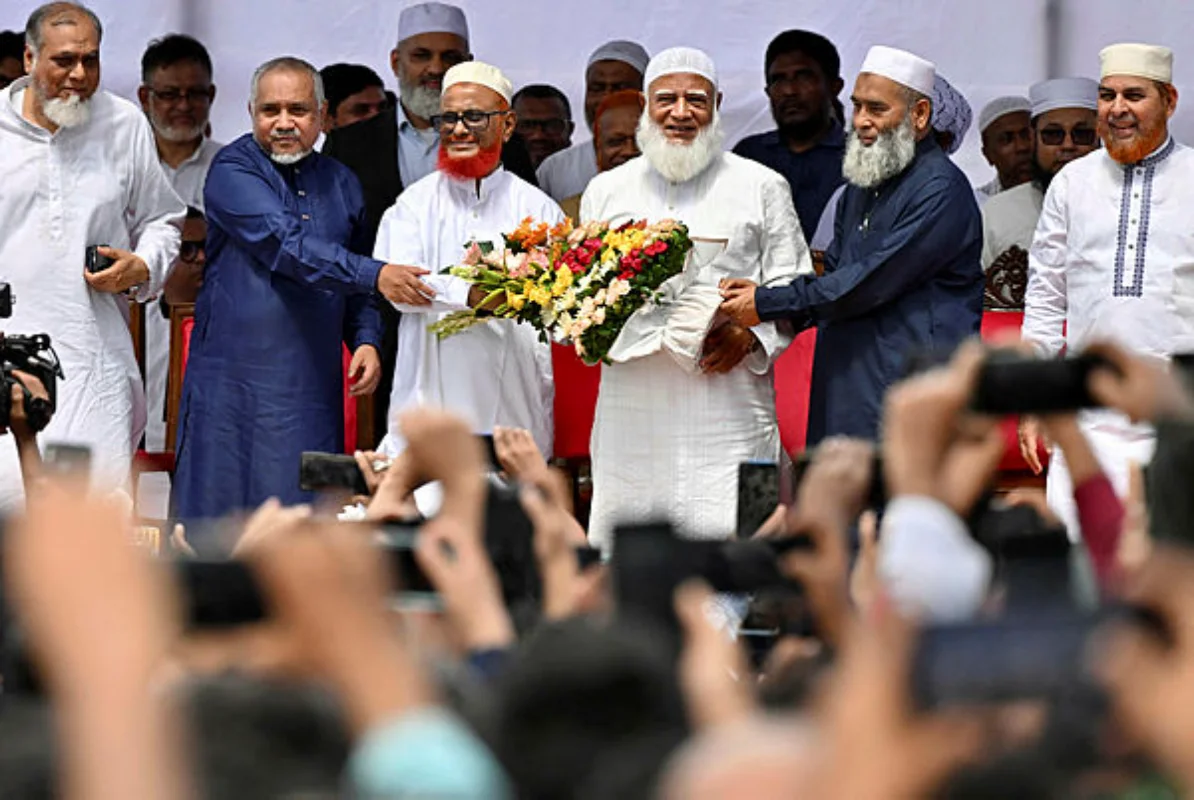
Bangladesh’s largest Islamist party, Jamaat-e-Islami, is mobilising for February polls, forming alliances and sensing a major political opportunity.
DHAKA: Bangladesh’s Islamist groups are mobilising ahead of February 12 elections, sensing their biggest political opportunity in decades after years of repression. The nation is preparing for its first polls since the mass uprising that toppled the autocratic government of Sheikh Hasina in 2024.
At the centre of this push is Jamaat-e-Islami, the country’s largest and best-organised Islamist party. Ideologically aligned with the Muslim Brotherhood, they seek a return to formal politics after years of bans and crackdowns.
They have papered over divisions with other Islamist groups for the election. The Jamaat has also allied with the National Citizen Party, formed by student leaders who spearheaded the 2024 uprising.
Hasina took a tough stand against Islamist movements during her 15-year rule. Under her tenure, several top Islamist leaders were sentenced to death for war crimes related to the 1971 independence war.
She also launched crackdowns against Islamist militants, killing scores and arresting hundreds. Since 2013, extremist groups inspired by Al-Qaeda or Islamic State carried out a string of attacks in the country.
Since Hasina fled to India, key Islamist leaders have been released from prison. Islamist groups have grown increasingly assertive in the political space.
They have demanded restrictions on cultural activities they consider “anti-Islamic”. More violent elements have smashed Sufi shrines and exhumed bodies.
Many are inspired by the Deobandi teachings, the ideological source of Afghanistan’s Taliban. Hefazat-e-Islam, an influential coalition of Islamic schools, acts as a powerful grassroots pressure group.
Hefazat leaders travelled to Afghanistan last year, and Afghan Taliban officials visited Bangladesh in December. Other strands follow the rigid Wahabi and Salafi schools of Islam.
Bangladesh includes a wide range of beliefs, with a significant number of Sufi followers. Sufi popularity poses a challenge to the Islamists, who condemn their mystical interpretation of the Koran.
Jamaat-e-Islami has named a Hindu candidate for the elections. Analysts remain sceptical of such outreach efforts.
“These efforts are to deceive the public. The reform is not coming from within,” political analyst Altaf Parvez told AFP.



