




The overarching aim of primary education is to help children learn to listen, read, write and do arithmetic while also developing as social beings who can interact and cooperate in a multiracial society.
PUBLIC examinations in Malaysia have long played a central role in the education system, serving as a yardstick for measuring students’ progress as well as teachers’ competency.
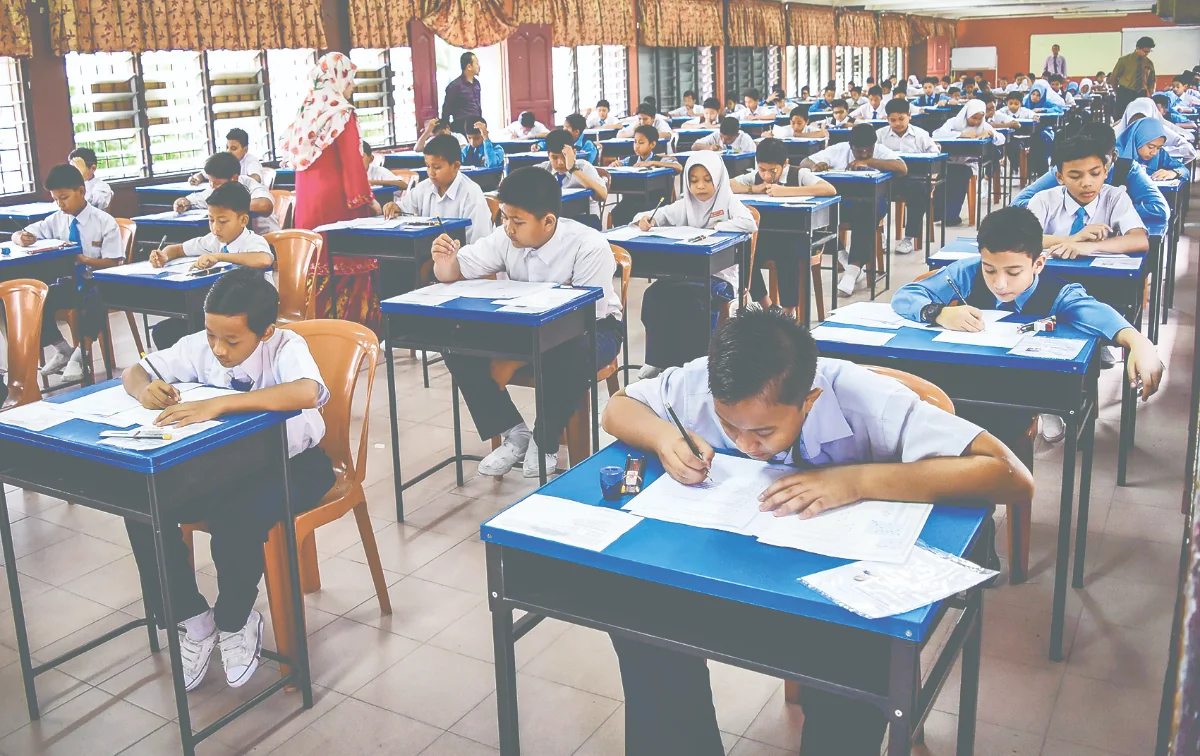
The UPSR year-six primary school examination, abolished in 2021, after more than 30 years in existence, brought relief and joy to many children but caused trepidation among some parents and educators.
The examination served as a gauge of a child’s capabilities in reading, writing, arithmetic and science at the primary level, and was later used to determine entry into elite secondary schools and Mara Junior Science Colleges.
Since the examination was scrapped, parents and educators have raised two key concerns: first, what will motivate children to learn without the exam, and second, how their progress will be measured.
Many believe that without the UPSR examination, children will lose focus and lack the drive or incentive to learn. However, this is precisely why this examination should remain abolished: it undermines the true purpose and meaning of learning.
Learning solely to pass examinations is a short-term goal that does not yield long-term results. It would be wise to revisit the aims of education as set out in the National Education Policy, which seeks to develop individuals in a holistic and integrated manner – intellectually, emotionally, spiritually and physically – so that they are balanced and harmonious. This should be the driving force of teaching and learning at the primary school level.
Children in primary schools should be taught to listen, speak, read, write and count, as well as to understand their environment and the natural world. Unfortunately, many primary school pupils progress to secondary school without being able to read, write or communicate effectively.
Primary school teachers should devote their time and effort to helping children master the three basic skills (3Rs): reading, writing and arithmetic. In the past, pressure from the UPSR examination often left teachers with little time to support children with learning difficulties. Now, teachers should be able to focus on every child and ensure that none is left behind in essential literacy skills, particularly reading and writing.
Children should be exposed to other languages, such as Mandarin, Tamil and foreign languages, from an early age as young learners acquire languages more quickly and effectively. Alongside language skills, they should be taught social communication and interpersonal skills to help them navigate relationships and collaborate with others.
Reading should be a central part of primary education. More reading sessions should be conducted and classrooms should include a reading corner stocked with storybooks. Teachers can read aloud from Big Books with colourful illustrations to spark interest and foster a lifelong love for reading.
Religious education should also be incorporated, with schools accommodating the diverse faiths of their pupils. Teacher Training Institutes should prepare educators from different religious backgrounds to nurture children’s spiritual development effectively.
Similarly, moral and civic education should be provided to all children, guiding them to distinguish right from wrong and learn how to live responsibly in society.
Play and enjoyment are equally essential. Children thrive on laughter, games and fun, so both indoor and outdoor activities should be a key part of school life.
Indoor games such as Checkers, Chess, Scrabble, Carrom and Snakes and Ladders can provide enjoyment and mental breaks from lessons while outdoor play encourages physical development.
Creative activities like music, singing, art, drawing and hands-on projects should also feature prominently.
Music and singing lessons reinforce listening, speaking, vocabulary and pronunciation in a fun way while art and creative projects foster imagination and practical skills.
Teachers play a vital role in motivating children and making school an exciting place to learn. They must think innovatively and find ways to inspire every child.
To address concerns about assessing children’s progress without standardised examinations, school-based assessments provide a holistic view of their development across all primary school disciplines. This approach evaluates participation, oral and written work and project-based learning, ensuring that children are supported in every aspect of their growth. This approach emphasises a well-rounded assessment rather than relying solely on written tests.
There is no need to measure the progress of a 12-year-old as they are not applying for a job upon leaving primary school. Exams can be torturous and exhausting.
Children should be allowed to be children – free from examinations, stress and constant evaluation. We owe them the opportunity to discover the joy of learning and to explore through adventure and fun.
The overarching aim of primary education is to help children learn to listen, read, write and do arithmetic while also developing as social beings who can interact and cooperate in a multiracial society.
Comments: [email protected]



