



A ZUS Coffee barista’s “motivational” messages turned into viral anti-inspiration, sparking online debate
A customer’s simple request for inspirational words on their ZUS Coffee order has become an internet sensation—but not for the reasons they expected.
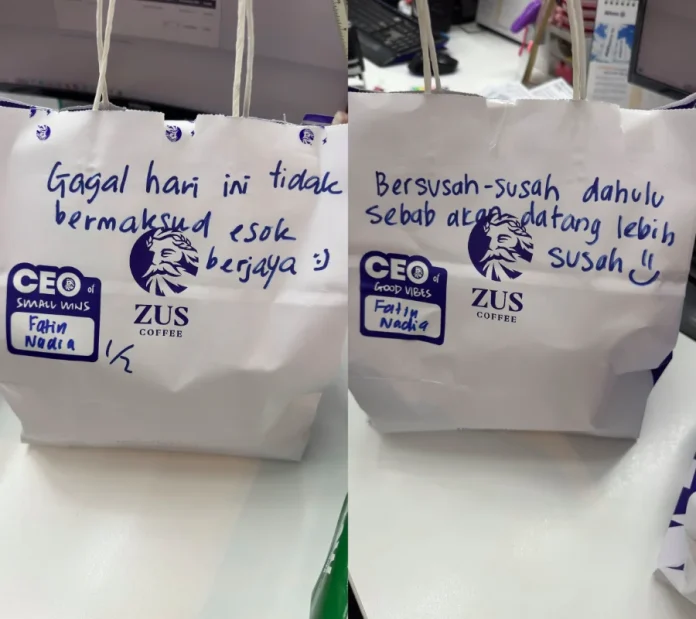
The incident, which quickly spread across social media this week, features two coffee bags bearing messages that are decidedly less “you can do it” and more “maybe you can’t.”
Instead of the uplifting encouragement the customer hoped for, the barista—referred to as a “zurista” in ZUS Coffee terminology—delivered what many are now calling “toxic chicken soup.”
Written in Bahasa Melayu, the messages read:
- “Failing today doesn’t mean you’ll succeed tomorrow :)”
- “Struggle now because the future will be even harder :)”
Both phrases were completed with cheerful smiley faces, adding an extra layer of ironic contrast to the pessimistic content.
“Ordered ZUS this afternoon, asked for some motivational words… but the words they gave me made me feel not very motivated at all,” the customer shared on social media, punctuating their post with crying-laughing emojis.
The post sparked intense discussion online, with users divided over the barista’s intentions.
Some commenters defended the zurista, suggesting the messages were a form of reverse psychology designed to lower expectations and reduce disappointment. Others argued it was simply brutally honest life advice delivered without sugar-coating.
A third camp speculated the barista might have been experiencing a particularly challenging day themselves.
One commenter introduced the Chinese internet term “毒鸡汤” (toxic chicken soup) to describe the phenomenon—online slang for anti-motivational content that prioritizes brutal honesty over artificial positivity.
The comments section quickly filled with similarly depressing yet humorous contributions:
- “If at first you don’t succeed, stop and go home to sleep”
- Other variations on traditionally uplifting sayings twisted into pessimistic truths
The viral response suggests a cultural shift away from relentless optimism. In an era dominated by what some call “toxic positivity”—the excessive and ineffective promotion of positive thinking regardless of circumstances—many people appear to appreciate unfiltered honesty, even when it’s discouraging.
As one pragmatic commenter noted: “What she wrote is correct.”
While the customer’s motivation levels may have taken a hit, the entertainment value was undeniable.
Final rating: 0/10 for motivation, 10/10 for entertainment—and perhaps unexpected philosophical reflection with your morning coffee.
Whether intentional comedy, accidental wisdom, or simply an employee’s unfiltered thoughts making it onto customer orders, the incident has resonated with thousands who apparently relate more to existential honesty than inspirational platitudes.
ZUS Coffee has not publicly commented on the viral messages.



