




Building trust by shifting blockchain towards everyday use
Table of Contents
Ask most people what comes to mind when they hear the word blockchain and the answers are usually the same. Crypto prices. Scams. Stories of people losing money they could not afford to lose. It is not something most users actively want to deal with.
What often gets missed is that blockchain does not always show up as a product or a decision. In many cases, it already sits underneath systems people use without thinking about the technology at all.

That is where advocates speaking at the Malaysia Blockchain Week 2026 media launch say blockchain actually works best.
“We need to start moving away from trying to highlight that this is blockchain. It is just another infrastructure. It is just another technology,” said Activ8 managing partner Ian Tan.
He compared it to something most Malaysians already use daily.
“Today, do you use Touch ’n Go? Do you ask how Touch ’n Go works? No. As long as I am sending RM5 to you, you just want to see that RM5 appears on the card,” he said.
That, Tan added, is what it is meant to feel like from a user’s point of view.
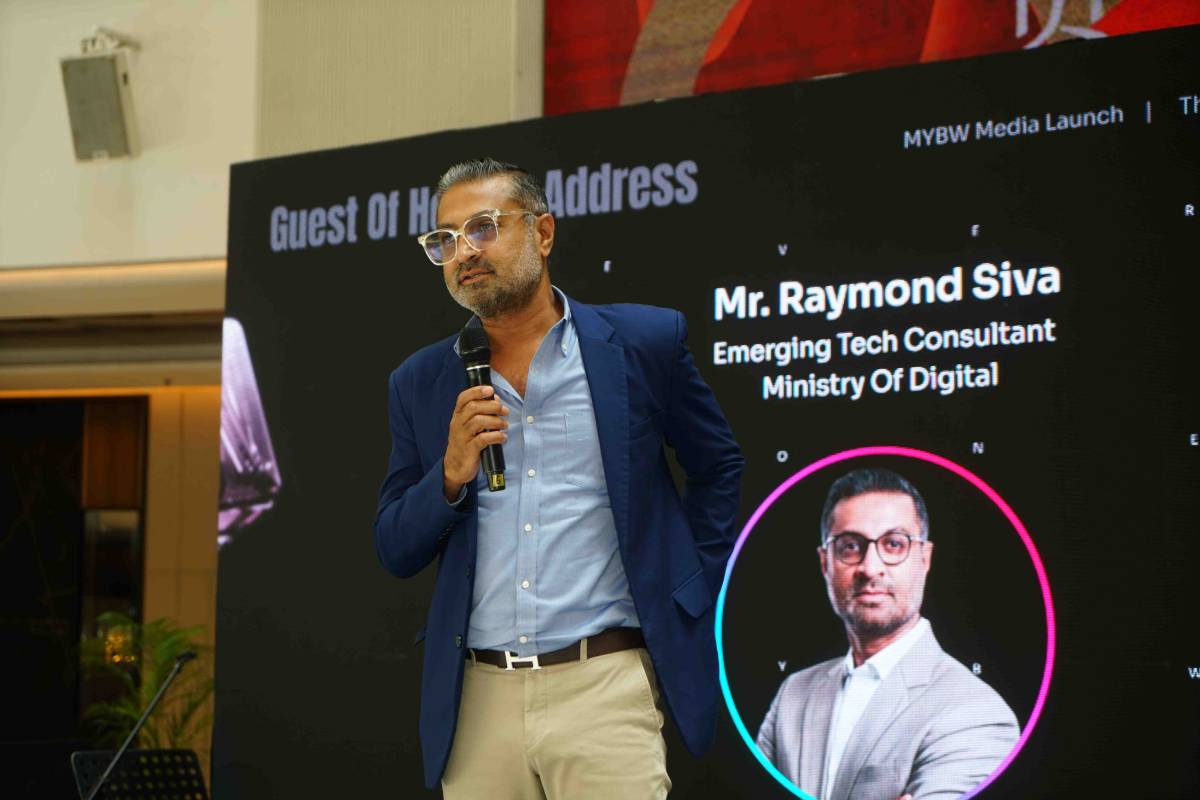
Emerging tech consultant Raymond Siva echoed that view, arguing that blockchain should be judged by what it fixes rather than how it works.
“There are so many use cases out there that will save us money and make things more efficient,” he said, pointing to applications such as digital certificates and records that reduce delays and paperwork for users.
Why users bounced off blockchain
One reason it struggles to reach mainstream users is that it demanded too much attention and responsibility. Wallets. Private keys. Recovery phrases. One wrong step and there is no reset button.
The promise was control and independence. The experience often felt closer to being your own IT department. Lose a password and you reset it. Lose a recovery phrase and your money is gone.
For many users, that is not empowering. It is stressful.
“When you talk to the typical layperson on the street about blockchain, they assume blockchain is crypto, crypto is bitcoin and bitcoin is scams,” said Zetrix co-founder Datuk Fadzli Shah.
That perception did not appear out of thin air. It was shaped by very real losses and highly visible failures.
“Safeguards are for the layperson on the street to be able to understand it clearly and engage into it safely,” he said.
The industry is now being forced to acknowledge that expecting average users to manage complex security processes on their own was never realistic.
Useful does not have to be exciting
The most practical applications are also the least dramatic. They do not promise overnight wealth or digital revolutions. They shorten processes, reduce friction and remove steps users have learned to tolerate.

Cross-border payments are one example. Some banks already use blockchain-based payment rails to move money faster and at lower cost. From the user’s side, nothing looks different. Transfers just clear sooner.
“Blockchain technology is supposed to be like that. Users should not feel like they need to understand it to benefit from it,” Tan said.
There is also a broader effort to make these systems feel less exclusive.
“We aim to lower barriers to understanding and adoption ensuring that Web3 is not just for a few but for everyone,” said Activ8 managing partner Noelle Lee.
When blockchain finally works
After years of scams and collapses, trust remains its biggest hurdle. And trust does not come from bold promises. It comes from systems behaving the same way every time.
“Crypto is a loaded word. It depends on who you talk to,” Fadzli said.
When blockchain finally works for users, they may not even notice it. And that may be the clearest sign that it is doing its job.
READ MORE:
Agibot debuts embodied intelligence at AI World in Malaysia
AI tools still avoided at work
Love is in the app: A dating app showdown for Valentine’s Day



