




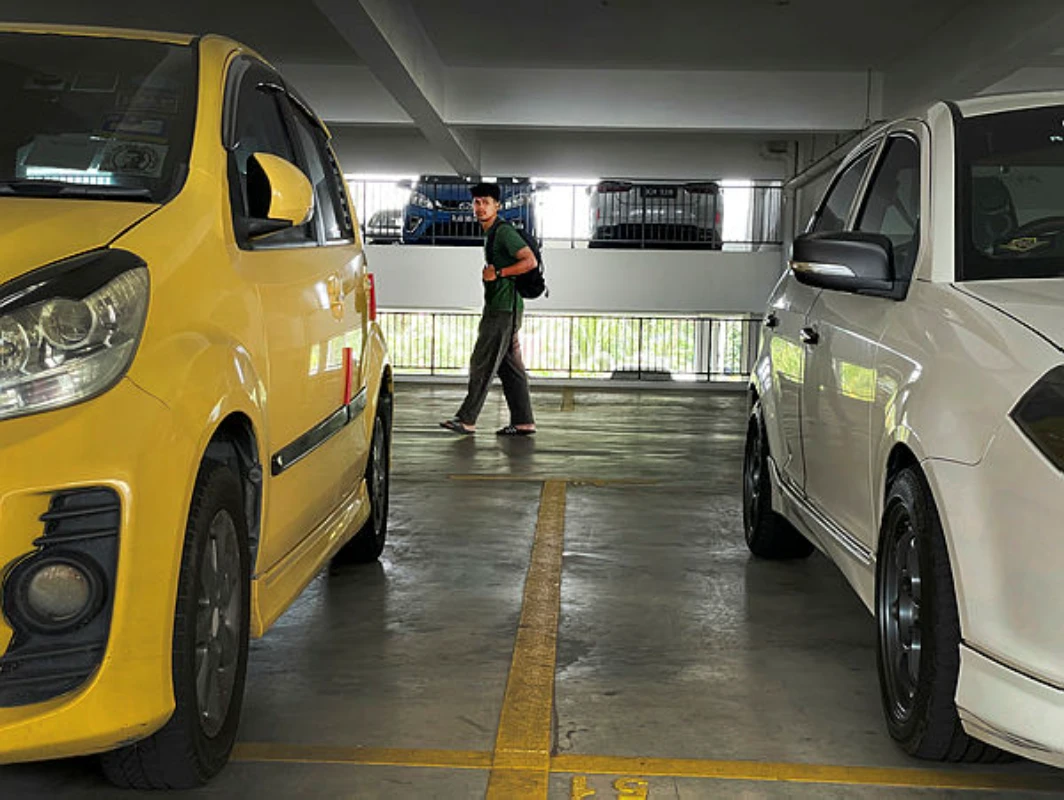
Designated parking spaces would not address underlying safety needs of male victims: Human Rights Commission
PETALING JAYA: Men do face crime risks in car parks but these are not driven by gender and should be addressed through comprehensive safety design rather than gender-specific parking zones, said the Human Rights Commission.
Its commissioner Melissa Abd Akhir said inclusive safety planning must be informed by local crime patterns and structured needs assessments that account for risks faced by men alongside other vulnerable groups.
“Men also experience the dangers of crime in general. Indeed, men can become victims of robbery or injury for various reasons.
“However, studies show that when men become victims of being followed in parking areas or public places, it is generally not due to their gender.”
She said introducing designated parking spaces for men would not address the underlying safety needs of male victims of crime.
“For example, my first supervisor when I was in the Attorney-General’s Chambers, Kevin Morais, was abducted on a public road in broad daylight and later murdered.
“He was targeted not based on his gender but due to motives related to stopping other criminal cases he was handling as a prosecutor.
“In short, parking spaces for men do not answer the safety needs of men who become victims of crime in general. Different fields have different grasshoppers.”
She said the safety reforms that followed the 2003 murder of Canny Ong are grounded in the fundamental right to be free from gender-based violence.
“Ong, as a woman, was followed, abducted from a car park, raped and murdered and then burned by Najib Aris, a man.
“In the case of Suzaily Mokhtar, a woman was taken from inside a public bus to a remote place, raped and murdered and her body later dumped in Klang.
“Once again, the killer and rapist was a man. Both women became victims based on their gender.”
Melissa said violence against women in public spaces remains a persistent reality.
“‘Less exposed or always in the position of not being victims’ is not an assumption but a default mode or privilege, in which usually men hold more power in public spaces compared with women, in terms of level of safety.”
On broader urban and infrastructure planning, she said safety design should be guided by structured key needs assessments rather than blanket measures.
“This assessment could illuminate inclusive and focused steps in terms of access to safety, and what dangers are experienced by persons with disabilities, the elderly, women and men, according to their respective local realities.”
She added that long-term solutions lie in accountability, effective prosecution and changing offender behaviour, while physical measures, such as lighting, surveillance and regular patrols, should be implemented in ways that benefit all users.



