




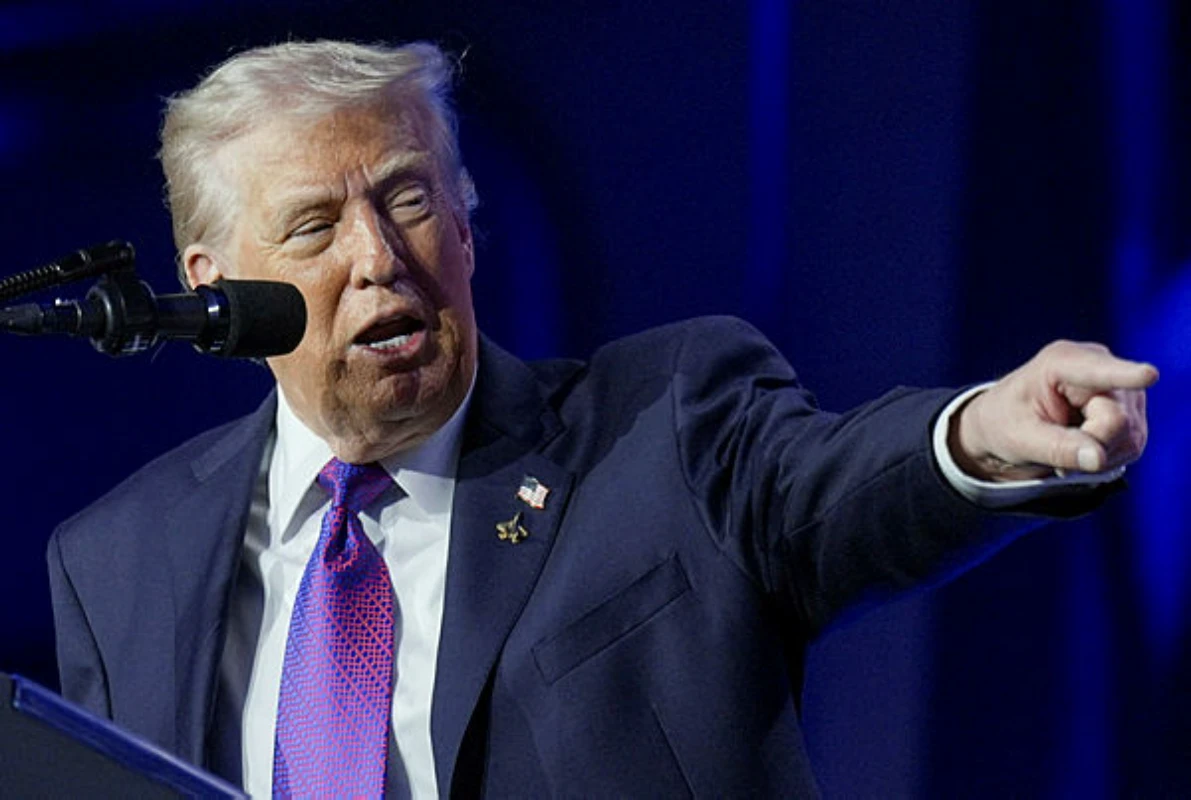
President Trump prefers diplomacy but warns Iran of military options as high-stakes talks begin in Oman, with major disagreements over the agenda.
WASHINGTON/DUBAI: The White House stated on Thursday that diplomacy remains President Donald Trump’s preferred approach to Iran. Press secretary Karoline Leavitt confirmed the president will await the outcome of high-stakes talks in Oman.
She also warned that Trump has “many options at his disposal, aside from diplomacy,” as commander-in-chief. The talks proceed amid a major US military buildup in the Middle East, which Trump has described as a massive “armada.”
Regional fears are growing that failed negotiations could escalate into a wider conflict. The two sides remain divided, with the US insisting discussions must cover Iran’s missile programme, its regional proxies, and human rights issues.
READ MORE: Turkey works to avert US-Iran war as missile dispute looms
Iran insists talks should be confined exclusively to its disputed nuclear programme. Tehran’s Foreign Minister Abbas Araqchi departed for Oman on Thursday, with his spokesperson stating Iran aims for a “fair, mutually acceptable and dignified understanding on the nuclear issue.”
On the eve of the talks, Iranian state TV announced the deployment of an advanced long-range ballistic missile. The Khorramshahr 4 missile has a reported range of 2,000 km and is capable of carrying a 1,500-kg warhead.
The US has pressed Iran to accept a much more limited missile range. When asked if Iran’s Supreme Leader Ayatollah Ali Khamenei should be worried, Trump told NBC News, “I would say he should be very worried.”
Regional powers are working to prevent tensions from tipping into open conflict. Turkish President Tayyip Erdogan said his government was striving to avert a new Middle East war.
German Chancellor Friedrich Merz expressed “great concern” about potential escalation during a visit to the Gulf. He urged Iran to end aggression and help stabilise the region.
US Secretary of State Marco Rubio said talks must include ballistic missiles, support for proxies, and Iran’s treatment of its own people. Trump has warned that “bad things” would probably happen if a deal cannot be reached.



