




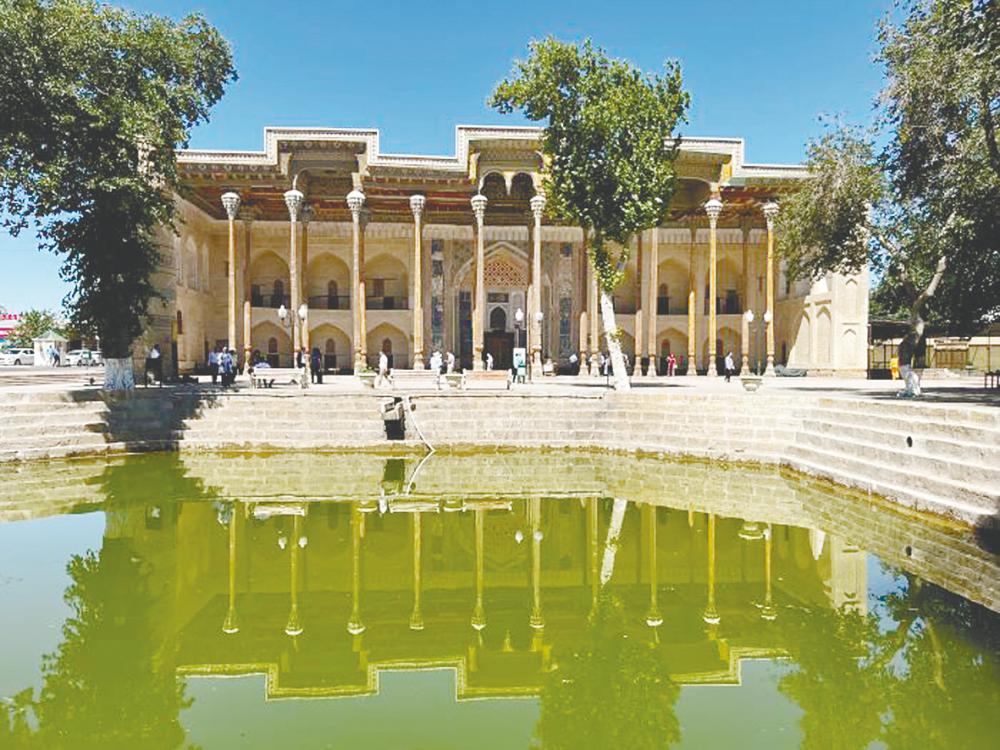
BUKHARA was an important stop for traders and merchants on the ancient Silk Road. Located almost two hours by high-speed train from Samarkand, Uzbekistan, this ancient city rose from the swamp soil to become a key hub for the Islamic religion, in particular for Sufism.
The city has a completely different vibe to serene Samarkand as its medieval townscape transports visitors into a place where time has seemingly stood still. Bukhara is a prime example of a medieval Muslim city in Central Asia and it was listed on Unesco’s list of World Heritage Sites in 1993.
Much of Bukhara’s buildings feature designs and architecture that can be traced back Sheibanid dynasty, a Turko-Mongol monarchy descended from Genghis Khan in the 15th century.
On Unesco’s website, Bukhara is decribed as “the most complete and unspoiled example of a medieval Central Asian town that has preserved its urban fabric to the present day.” It was the largest centre for Muslim theology, particularly on Sufism, in the Near East, with over 200 mosques and more than 100 madrasahs, between the 9th and 16th century.



