




The grand tapestry of World Cup folklore is entirely built upon these magnificent anomalies.
THERE is an intoxicating romance to footballing survival, a fragile beauty that exists only when one, despite every early prediction of absolute ruin, stubbornly refuses to break.
It is the raw defiance found in the heart (and lungs) of the underdogs. It is the story of Cape Verde stepping onto fields they have no mathematical right to grace; it is Japan hunting down giants with the calculated precision of an executioner; it is Colombia refusing to drop their heads even when the entire institutional weight of the sport tries to compress them. These are teams that simply will not go quietly into the night without leaving their fingernails dragged across the canvas.
One of my earliest memories was back in 2002, when Guus Hiddink somehow, through a combination of relentless physical conditioning and psychological warfare, inspired South Korea all the way to the semifinals of the World Cup.
In those days, the tournament did not feel pre-packaged or engineered for a global superstar to march toward an inevitable corporate crowning. It was a bleeding testament to raw passion. Of course, Brazil eventually emerged to claim the trophy and entirely rightly so.
That 2002 Selecao squad – brimming with the fluid genius of Ronaldo, Rivaldo and Ronaldinho – remains the finest, most complete collection of footballing souls I have ever witnessed together in a team. Heck, even Ronaldinho himself told me exactly that during an interview back in 2018.
Yet, as we navigate the modern terrain of the 2026 edition, our eyes are drawn back to the East. Some optimistic pundits have taken to calling Japan genuine contenders, but in reality, they are something far more compelling: a profoundly resilient, immensely talented group of underdogs.
Later today, Japan will take on Brazil, and the footballing world finds itself deeply culturally divided. I have been conditioned by decades of television marketing and my family to possess an automatic soft spot for the yellow jersey of Brazil.
Yet, across the circle of my friends and the wider continent, the Asian connection pulls fiercely at the heartstrings. There is an unspoken obligation to back the continental neighbour.
This emotional tug-of-war arrives at a historic crossroads for Asian football. The expanding 48-team format has transformed the tournament’s demographic landscape, granting Asia a record eight direct qualification slots plus an intercontinental playoff route.
Today, the narrative is no longer about merely showing up to collect corporate gift bags. This representation has fundamentally reshaped the tournament. What used to be a European and South American tourney is now a battlefield where the traditional elite are forced to sweat for their passage.
I’ve always had a pathological obsession with the underdog. I think it stems entirely from a childhood spent watching the Mighty Ducks trilogy. Though if I were being intellectually honest for a second, I’ve never understood how a team can win two consecutive championships, acquire elite, state-of-the-art training facilities, and still somehow be marketed as the ragtag underdogs in the third movie.
The Canadians arrived on this stage carrying that exact same tag, yet they have suddenly found a spark.
Watching them dismantle South Africa in a raucous, emotionally charged display was a stark reminder of what momentum can do. The barren history of their past appearances has been momentarily swept away.
Now, they find themselves in uncharted territory, and frankly, I cannot wait to see just how far they can stretch this stay. The massive home advantage is a weapon they will absolutely have to exploit to its absolute limit if they are to survive the tactical chess matches ahead.
The grand tapestry of World Cup folklore is entirely built upon these magnificent anomalies. I remember reading about Cameroon’s raw fury in 1990, then watching Senegal playing with absolute joy in 2002, Costa Rica’s tactical defiance in 2014, and Morocco’s historic run to the semifinals in Qatar.
Morocco will face the heavy corporate machinery of the Netherlands. And if you ask me, the Netherlands are the genuine underdogs in this fixture. The global footballing press has spent months dissecting the profound structural malaise inside the Dutch camp – a side weighed down by internal disconnects, a stark lack of clinical, world-class modern forwards, and the immense pressure of their own historical failures. By stark contrast, Morocco enter this knockout stage carrying the fierce, unified momentum of a golden generation that has completely mastered the art of tournament resilience through their defensive organisation.
The consensus has shifted so dramatically that even the European broadsheets are warning that the Oranje no longer possess the psychological edge. Perhaps that is the only fragile way I can soothe my own nerves, desperately trying to mentally prepare myself as they face each other later in the morning.
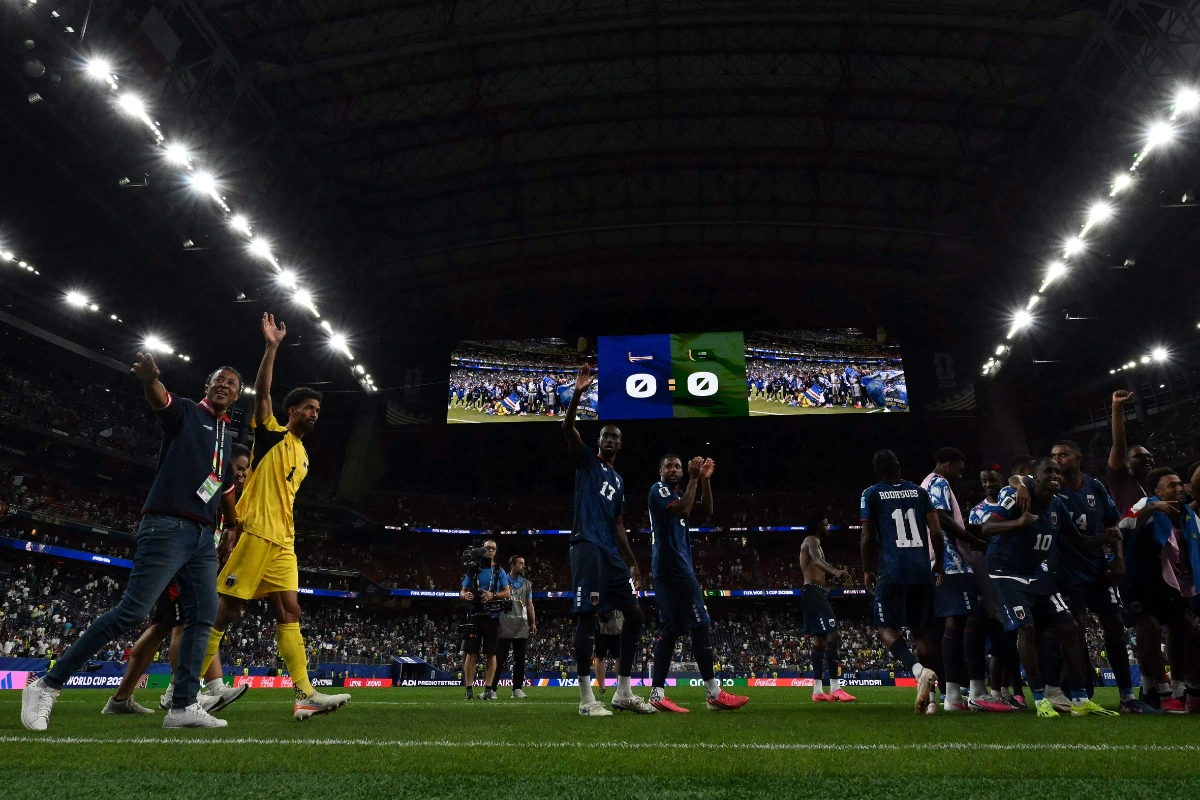
But my absolute favourite story of this modern tournament belongs entirely to Cape Verde. They are my ultimate Mighty Ducks. The tiny island nation has captured the global imagination, defying every metric of population and infrastructure. Yet, beneath the romantic neutral flags, the human cost is heavy. Take their goalkeeper, whose family was cruelly denied visas to travel and watch his historic moment in the sun. Because I am an absolute sucker for these deeply human, agonising narratives, I am utterly hooked on their journey.
As Cape Verde prepares to take on Argentina, we must brace ourselves for the inevitable reality of modern tournament football. Yes, it is the tragic comedy of official intervention. Based on history, we know exactly how this script goes. The match will likely be defined by a series of baffling VAR decisions that seem to magically fall into the lap of the traditional superpower.
We are, after all, still living in the shadow of historical administrative robberies, none more absurd than the recent VAR tragedy that saw Colombia completely robbed of a famous victory against Portugal. The scoreline lied about that pulsating 0-0 draw; Néstor Lorenzo’s men completely dominated, only for Davinson Sanchez’s winner to be cruelly disallowed because his big toe was deemed half a millimetre offside by a group of men sitting in an air-conditioned shipping container looking at a digital rendering.
You have to admire the sheer, clinical pedantry of modern VAR. In 2018, I had this exact argument with Vijhay Vick, a former sports journalist who is now the Head of Media at Johor Darul Ta’zim FC. I firmly believed that VAR would ruin the game by killing off the raw beauty of human talking points, and he thought otherwise.
Looks like he was right all along. Just look at the sheer comedy of choices being checked by the men in the booth. In the opening week, we watched Lionel Messi clearly stomp an opponent’s leg, only for the VAR monitors to suddenly experience a convenient bout of blindness. Then, in the match against Jordan, Giovani Lo Celso blatantly handled the ball inside the area, yet the referee looked the other way, subsequently awarding a crucial freekick to Argentina that wasn’t even a foul in the first place, from which they naturally scored.
It’s brilliant that we’ve taken the most passionate, volatile sport on earth and handed it over to a bunch of middle-aged bureaucrats who want to apply the same rigid, joyless logic to a football pitch that they may use for their tax returns.
In the midst of this bureaucratic madness, I have come to a highly controversial conclusion: the referees are also underdogs.
Think about it. They step out onto the pitch universally hated by thousands in the stadium and millions watching at home. They are entirely unloved, completely isolated and utterly doomed from the moment they blow the whistle. If they get a decision right, nobody cheers; if they make a microscopic error, their families receive death threats on Instagram before the halftime whistle.
When Cape Verde faces Argentina on the fourth of July, the referee will be under far more pressure than any forward. He is the ultimate, tragic underdog, trapped entirely between the romantic dream of an island fairy-tale and the corporate necessity of keeping the tournament’s main television draw in the competition.
On the fourth of July, as the tiny island nation lines up against the giants of world football, we will watch, because in this beautiful, broken game, you never truly know when, who will pull off the unthinkable.
As the Independence Day fireworks light up the American sky outside the stadium, the referee will be praying he doesn’t ignite an international diplomatic incident inside it.



