




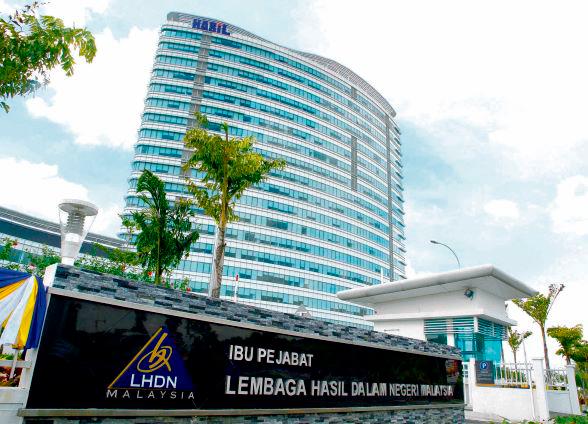
PETALING JAYA: The government should increase its revenue base by improving and extending the tax system, said Universiti Utara Malaysia economics professor Dr K. Kuperan Viswanathan.
He told theSun that there was a rapid expansion of government-linked companies and public authorities in the 1970s and 1980s, but the government is now facing difficulty maintaining them as the current tax system does not provide adequate revenue to do so.
“One of the options available is to raise revenue through the Goods and Services Tax (GST). But this system is regressive as the rich and poor pay the same percentage of tax, which becomes a burden to lower-income families.”
Kuperan said a possible solution is for the government to develop a system in which some of the GST is redirected to lower-income groups to help them deal with the tax and to improve their living conditions.
He said the government could not perpetually rely on Petronas for funds, although it is common to utilise natural resources to meet national expenditure.
“The government can follow the example of other countries and set up an investment fund which, in the long run, will provide revenue to help it in its budget planning.
“There is still time to go down that route,” he said, adding that highly experienced individuals will be needed to run such a fund to ensure profitability.
Pointing out that Petronas contributes some 10% to 15% towards the government’s budget, he said Malaysia’s petroleum reserves for oil and gas resources are projected to last another 15 years only, according to the Reserve Life Index calculation.
Minister in the Prime Minister’s Department Datuk Seri Azalina Othman Said, in a written reply in Parliament, said as of Jan 1 last year, Malaysia’s probable and proven reserves of petroleum totalled 6.9 billion barrels of oil equivalent.
She said this could be optimised and stretched to over 40 years with high capital investment, new technology, as well as a more stable and competitive investment landscape.
Azalina said 70% of the oil and gas fields in the peninsula, Sabah and Sarawak had been awarded to companies for exploration and development.
The dividend for last year was only RM50 billion, despite crude oil prices averaging US$100.93 a barrel. Indirect taxes amounted to RM41 billion in 2019, which was close to the dividend payout by Petronas.
Think-tank Emir Research president Dr Rais Hussin said the country should strengthen the oil and gas (O&G) sector by enhancing the attractiveness of existing energy and petrochemical hubs, increasing and intensifying exploration in the South China Sea and offshore deepwater elsewhere in the world.
He said the objective is to maximise output and include a robust stockpiling policy and infrastructure for a rainy day.
“Diversify and expand the O&G sector by transforming Petronas and its subsidiaries from an O&G or oil and energy company into a global industrial conglomerate.
“It should not be limited to expansion and investments in the energy and renewable energy business and assets, but also renewable chemicals, petrochemicals, materials and other businesses.
“The term ‘core’ business must be wider and more flexible to quickly adapt to market forces and disruptions.”
He said strengthening the palm oil sector was also important as it would likely remain a major food oil for the world and as a base oil for various products.
He pointed out that palm oil mills generate methane biogas or renewable natural gas, while oil palm plantations and mills generate biomass (palm residues) that can be used for power generation and other renewables, such as fuels, chemicals and materials.
“Key economic sectors also need to move from lower-value, high-volume commodities or simpler products to higher-value end-user products to reap more from the value chain.”
Rais said institutional reforms and good governance are key to major structural reforms and will need to be undertaken to ensure justice, equity, talent availability and good governance.
“Without these, policies and strategies will not be successfully or sustainably implemented. Policies must become needs-based, instead of discriminatory, arbitrary or based on knee-jerk reactions,” he said.



