




Malaysia’s High-Impact and Sustainable Technical and Vocational Education and Training (TVET) agenda requires an approach that meets the evolving needs of industry.
KUALA LUMPUR: Cybersecurity training has become an urgent strategic priority as every critical sector in the country from banking and energy to defence relies on digital systems that must be safeguarded, Deputy Human Resources Minister Datuk Khairul Firdaus Akbar Khan said.
He said Malaysia’s High-Impact and Sustainable Technical and Vocational Education and Training (TVET) agenda requires an approach that meets the evolving needs of industry.
“High-Impact and Sustainable TVET demands a shift from mass training programmes to focused, industry-driven initiatives capable of producing certified, highly skilled graduates who are job-ready from day one,” he said.
Khairul was speaking after witnessing the signing of three memoranda of understanding (MoUs) involving SG TVET Group Berhad, Yayasan Mahir Malaysia (YMM), the Department of Skills Development (JPK) and Job Store Sdn Bhd at the SG Academy campus in Putra Majestik here on Tuesday.
At the same event, Yayasan Mahir Malaysia announced sponsorships totalling RM150,000, comprising RM50,000 to support a cybersecurity training programme developed in collaboration with the BlackBerry Cybersecurity Centre of Excellence, and RM100,000 for short courses in electric vehicle (EV) and drone technology in Sandakan, Sabah, to expand access to high-impact skills training for youths in East Malaysia.
The three MoUs were signed between SG TVET Group Berhad and JPK, Yayasan Mahir Malaysia and JPK, as well as SG TVET Group Berhad and Job Store Sdn Bhd, the latter aimed at facilitating employment opportunities for graduates.
JPK was represented by its director-general, Dr Kamaruzaman Md Ali.
Khairul Firdaus said the direct signing of an MoU with JPK marked a significant recognition for SG TVET Group, elevating its role from that of a training provider to a strategic partner in implementing the nation’s skills development policies.
Meanwhile, Yayasan Mahir Malaysia chairman Datuk Seri Ganes Palaniapan said the cybersecurity programme developed with BlackBerry was a pioneering industry-led TVET initiative designed to address current labour market demands.
“The cybersecurity programme is also integrated with artificial intelligence (AI) to ensure its training content remains relevant and up to date, giving TVET graduates a competitive edge in securing high-impact jobs,” he said.
Ganes said the MoU with JPK marked the culmination of more than 25 years of the organisation’s involvement in national skills development.
“The signing of today’s MoU with JPK represents the culmination of our 25-year journey in developing Malaysia’s skilled workforce.
“The RM150,000 contribution from Yayasan Mahir Malaysia — RM50,000 for the BlackBerry cybersecurity programme and RM100,000 for EV and drone short courses in Sandakan — reflects our commitment to ensuring high-impact training opportunities reach young people across the country, including those in Sabah and Sarawak,” said Ganes, who is also Group Chief Executive Officer of SG TVET Group.
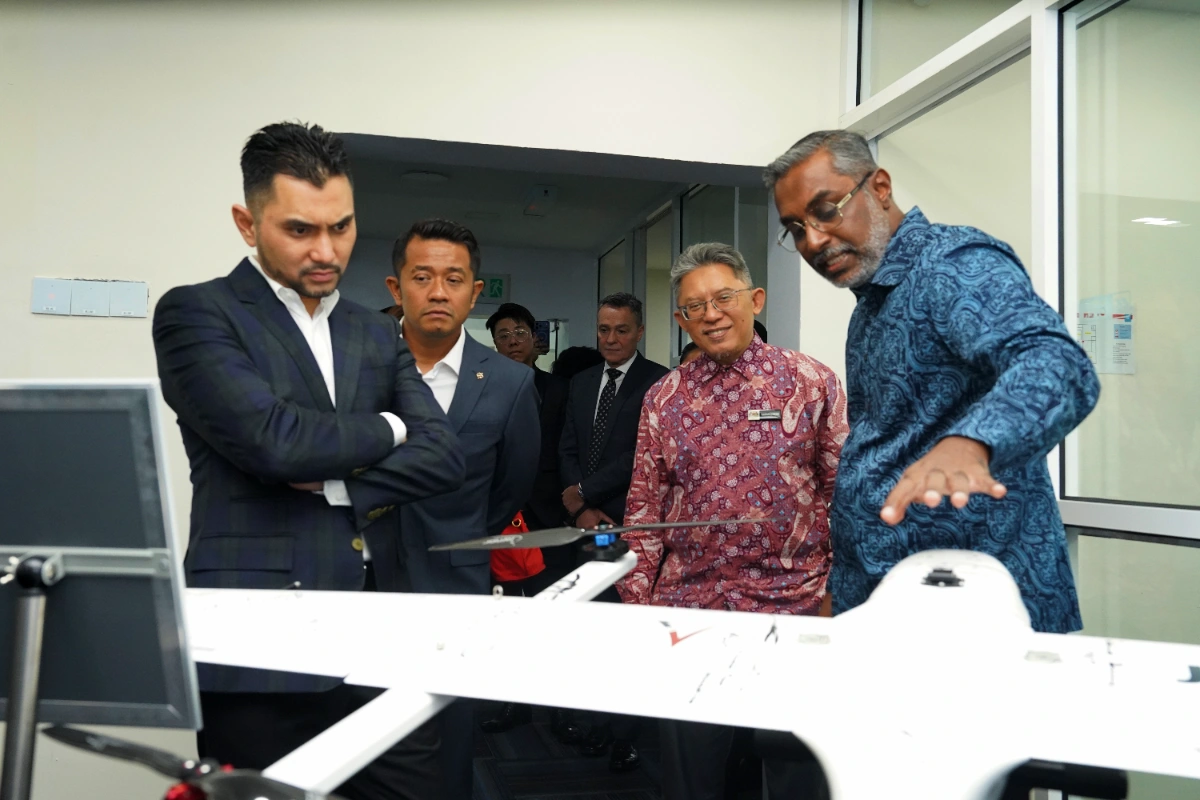
SG TVET Group is the country’s first TVET college to receive accreditation from the Civil Aviation Authority of Malaysia (CAAM) for drone training and was among the earliest training providers to offer programmes in electric vehicles and solar energy.
Through its public-private partnership model with the Department of Manpower (JTM), the group has trained more than 3,000 participants in drone and EV technologies at ADTEC JTM campuses in Perai, Kuala Lumpur, Sandakan, Miri and Melaka, including the launch of the SIEMENS Industry Training Hub at ADTEC JTM Perai in 2024.
Since 2013, the group’s international Malaysian Skills Certificate (SKM) programme has attracted more than 500 international students to SG Academy.
The event also brought together international industry partners, including BlackBerry in cybersecurity, SIEMENS in mechatronics and industrial automation, CompTIA in computer and information technology, as well as collaborations with Autotronics, the Malaysia Automotive, Robotics and IoT Institute (MARii), and the Sustainable Energy Development Authority (SEDA) Malaysia for EV and solar energy programmes.



