




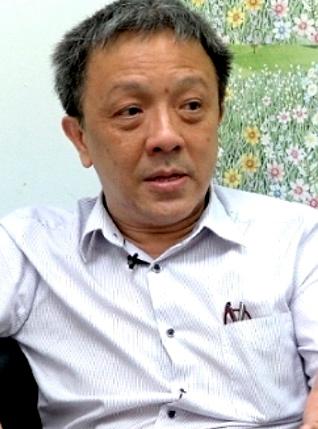
PETALING JAYA: Health experts say any main protocols to be included by the Health Ministry and the Election Commission (EC) for the 15th general election (GE15) should be based on the principles of preventing airborne Covid-19 transmission.
Universiti Malaya head of social and preventive medicine Dr Victor Hoe (pix) said although variants of concern exist, the basic transmission of the virus has not changed.
“It is still a respiratory virus and is mostly (spread by) airborne transmission. If we follow the control measures for airborne transmission, the riske of infection will be low,” he told theSun.
Besides wearing face masks, social distancing and observing hand hygiene, Hoe said an important protocol is proper ventilation, especially in confined areas such as voting stations.
Hoe was commenting on Health Minister Khairy Jamaluddin’s recent announcement that Covid-19 patients may be allowed to vote in the upcoming GE15.
Khairy said the Health Ministry and the EC are working in tandem to develop a protocol for Covid-19 patients to vote in GE15.
“There are two main protocols that the EC should have; the first is for the campaign period and the second is for the polling day. Both protocols should be based on the principles of preventing airborne transmission,” he said.
“The number of people going for campaigns should be based on the capacity of the areas. It would be good to hold all campaigns in open areas, as the ventilation is better, and ensure that all people continue to follow the basic standard operating procedures (SOP). Better yet, online campaigns should be considered too,” he added.
Hoe also stressed that those who are Covid-positive and have yet to be fully vaccinated should not be denied their constitutional right to vote.
However, as some of the voting centres may be too small to accommodate the voters while still following the SOP, he suggested to either extend the voting process to two or three days or to get a larger venue for people to be able to cast their vote safely.
“Most of the voting centres are in public schools where there is good natural ventilation. All centres are encouraged to only use naturally ventilated voting areas, this will reduce the risk of transmission,” he said.
“The EC could consider working with the MySejahtera team, turning the app into an online voting tool since it contains information such as our identification card numbers,” he suggested.
Virologist Prof Dr Sandy Loh of University of Nottingham Malaysia said while there is a high risk of Covid-19 patients spreading the disease during the identification of voters (removing masks for identification), having isolated voting centres for Covid-positive voters might not work out.
“If isolated voting for Covid-19 patients is proposed, a substation for polling requires healthcare workers to take care of the substation, putting efforts for achieving the transmission blocking objective or minimising the negative impact. With rising cases, healthcare workers are fully occupied and containment at the substation, disinfection measures and post-election surveillance will cost a lot,” she pointed out.
Loh added that a better option would be to have an isolated voting centre for Covid-19 patients at a healthcare setting like a hospital instead.
“This will aid expert healthcare personnel and facilities to better contain the spread of infection,” she said.
“Deltacron, a recombinant virus between both the Delta and Omicron variants, arises when more than one variant infects and replicates in the same person. This same scenario can apply to Malaysia, hence, locally emerging variants are possible,” she cautioned.



