




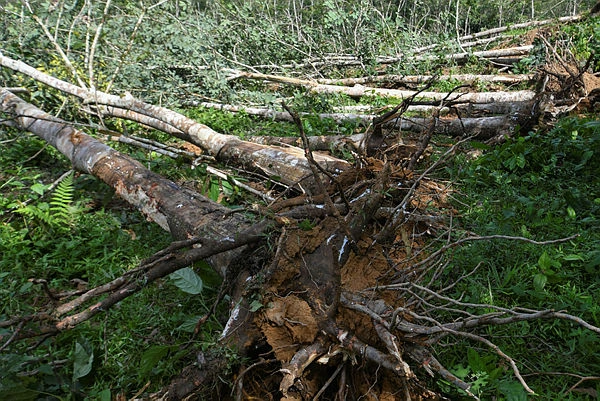
BY the end of this month, DBKL will have felled 90 “high-risk” trees across the capital. The reason given: public safety.
Recently, the courts ordered DBKL to pay RM824,180 in damages to the family of a motorist who was killed by a falling tree along Jalan Sultan Ismail.
But as Malaysia braces for a Super El Nino that could push temperatures to a blistering 40°C, is chopping down our natural air conditioners really the smartest move?
Replanting promise that never happens
DBKL maintains that it only fells trees deemed dangerous by experts. But many residents remain unconvinced. In Bangsar, activist Chandran Nair watched 30- to 40-year-old trees reduced to stumps – trees that had been cleared as safe by an arborist.
According to Nair, DBKL officers are rarely present at these sites; instead, the work is carried out by contractors.
His question is simple: “Where is the paperwork and where did the wood go?”
Adding insult to injury, DBKL has allegedly left more than 200 stumps rotting in the Lucky Garden and Bukit Bangsar areas over the past decade, without returning to replant them. The directive to plant 100 trees for every one felled remains, quite literally, a dead letter.
The Malaysian Meteorological Department has warned that the southwest monsoon will bring hotter and drier conditions, increasing the risk of fires and haze.
A Super El Nino event is also expected to develop from November 2026 and continue into January 2027.
Urban trees are not merely decorative. They are among the city’s most cost-effective defences against rising temperatures.
Studies show urban trees can reduce temperatures by up to 8°C. Without them, Kuala Lumpur’s dense concrete jungle risks becoming an urban oven.
The urban heat island effect has already made built-up areas up to 3.6°C hotter than forested zones.
By felling trees now, DBKL is effectively ripping out the city’s natural air conditioning just as temperatures hit full throttle.
What needs to happen now
Stop the indiscriminate felling: Bring in certified arborists – not contractors – to assess each tree properly.
Enforce replanting policy: Plant climate-resilient species before the heatwave arrives – not years later.
Maintain, don’t destroy: Regular pruning and treatment – 17,626 trees were treated between August and December 2024 – is the sustainable path.
Be transparent: The public deserves to know who approved each cut and where does the timber go?
DBKL may be legally entitled to cut these trees but safety and survival are not the same thing.
As the mercury threatens to hit record highs, stripping the city of its canopy is not just bad policy; it is dangerous.
Kuala Lumpur’s future is not in the axe; it is in the shade.
Awalludin Ramlee
Kuala Lumpur



