




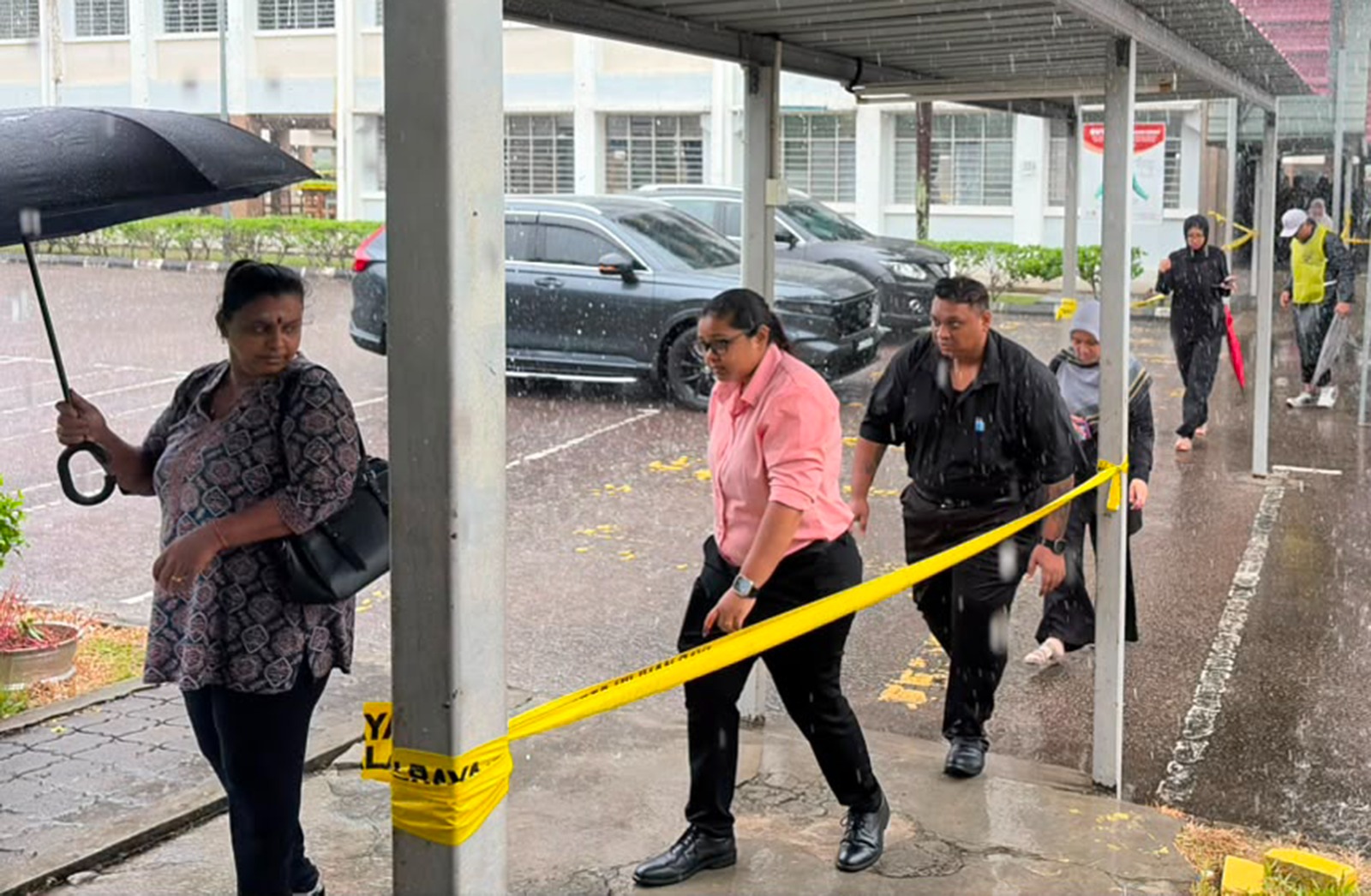
Johor election exposes changing political fault lines
PETALING JAYA: The Johor state election has signalled shifting political fault lines in Malaysia, with analysts saying ethnic voting patterns remain a factor but traditional support bases can no longer be taken for granted.
They said the results showed growing voter fluidity, with economic concerns, reform fatigue and local issues increasingly influencing choices alongside identity politics.
READ MORE: BN’s Johor formula may not work in Negeri Sembilan: Analysts
Prof Dr Kartini Aboo Talib, Malaysian Studies chairholder at Victoria University of Wellington and political analyst, said the election exposed deeper structural tensions within Malaysia’s party system and highlighted the need for political parties to move beyond identitybased strategies.
“If the coalitions respond by chasing ethnic purity rather than cross-ethnic legitimacy, identitybased politics will deepen.
“But if they instead compete on performance in mixed constituencies and Malay-majority seats, the ethnic divide could be politically managed rather than weaponised.”
She added that despite the continued influence of identity politics, coalitions would still need to build common ground through power-sharing, bargaining and negotiation.
Kartini also said Chinese and Indian voters largely remained Pakatan Harapan’s core support base, particularly in urban Johor, but there were signs of voter fatigue, including lower turnout, frustration over slow reforms and concerns over the rising cost of living.
“The risk for PH is not an immediate collapse, but a gradual erosion characterised by lower turnout and more protest votes.”
Kartini said non-Malay voters could become increasingly willing to experiment with alternatives if local grievances remained unresolved.
She cited economic concerns, wage stagnation, pressure on small and medium enterprises and perceptions that the Unity government had been fragmented in its economic response as among the factors shaping voter behaviour.
On Malay voters, she said the Barisan Nasional-PH alliance could potentially slow or reverse Perikatan Nasional’s consolidation of Malay support if it delivered tangible improvements to Malay livelihoods and addressed religious concerns.
She added that any gains made by BN or PN among Chinese and Indian voters would carry significant implications ahead of the 16th general election.
“If BN gains some Chinese and Indian support, it strengthens the case for the PH-BN Unity government as more than just a tactical alliance.
“If PN gains some Chinese and Indian support, it breaks the stereotype of PN as a purely MalayMuslim coalition.”
Kartini also said increasing volatility in mixed constituencies suggested Johor could emerge as a key battleground, with urbanisation, economic pressure and local issues shaping outcomes beyond ethnicity.
Meanwhile, political analyst Dr Oh Ei Sun said the Johor election did not indicate a significant or widening ethnic divide.
“There is no such thing as nonMalays all voting for PH while all Malays voted for BN. I think it is more mixed.”
He added that unofficial information suggested BN, particularly MCA, had regained some Chinese support, with as much as 30% of Chinese votes potentially returning to the coalition.
Oh said PH could no longer assume continued support from Chinese and Indian voters, with some possibly shifting back to BN due to dissatisfaction over the pace of reforms and perceptions that BN’s experience made it better equipped to govern.
“Some wanted to punish PH for reneging on its reform promises or because the reforms have been too slow.”
He added that BN had also made gains among non-Malay voters.
“Barisan certainly made a lot of gains in non-Malay votes. Otherwise, they would not win so many seats and PH would not lose so many seats.”
However, Oh cautioned against drawing national conclusions from Johor’s results alone, adding that the state had traditionally been a BN stronghold.
“Let us wait until the Negeri Sembilan results before we make any preliminary conclusion regarding BN’s resurgence.”
Political analyst Prof James Chin said Umno’s strong campaign helped it retain its dominance in Johor, but cautioned that the outcome might not signal a wider political trend.
“Umno has shown that it is capable of defending Johor by winning in a landslide,” he said, describing the result as a “very unique Johor phenomenon” that may not be replicated in other states.
“We have to wait for the results in Negeri Sembilan and Malacca. My prediction is that it cannot be replicated elsewhere.”
Chin also pointed to DAP’s declining ability to mobilise its traditional Chinese support base, citing low turnout in several DAPheld areas.
“The results suggest that DAP is no longer able to mobilise the Chinese ground as effectively as before.”



