



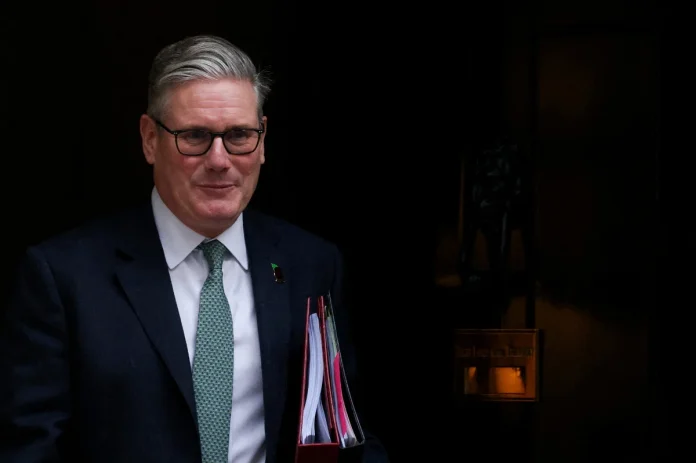
Beijing firmly rejects UK PM’s comments on national security and Hong Kong, calling them groundless interference in China’s internal affairs.
BEIJING: China has accused British Prime Minister Keir Starmer of making “groundless accusations” a day after he labelled the country a national security threat.
The Chinese embassy in London said it “firmly opposes the British side’s remarks… that groundlessly accuse China and interfere in its internal affairs”.
It stated that China’s development “poses no threat to any nation” and called Starmer’s remarks “erroneous”.
The rebuke followed Starmer’s speech at the annual Lady Mayor’s Banquet on Monday.
He said China “poses real national security threats” and vowed London would continue to raise human rights issues with Beijing.
Starmer promised his government’s China policy would no longer blow “hot and cold”.
He described a failure to have a relationship with China as a “dereliction of duty” and called for a “serious approach”.
“You can work and trade with a country… while still protecting yourself,” the prime minister said.
He pledged to engage with China on trade, nuclear proliferation, AI and climate change.
He also vowed to give security services updated powers to deter what he called the security threat posed by Beijing.
This follows recent warnings from Britain’s domestic intelligence agency about Chinese espionage activities.
Starmer said Britain would continue to raise concerns over the “curtailment of freedom in Hong Kong”.
The Chinese embassy responded that Hong Kong issues were China’s “internal affairs”.
“Britain has neither the qualification nor the right to make unfounded remarks or interfere improperly,” it said.
Relations have remained strained despite attempts to reset ties, including Starmer’s meeting with Chinese leader Xi Jinping in November 2024.
Tensions persist over spying accusations and the fate of Hong Kong, a former British colony.
A proposed vast new Chinese embassy in London has also triggered security and rights concerns.
The UK government is due to decide whether to grant permission for the embassy by December 10.



