



Malaysia’s economy grew 4.7% in the first nine months of 2025, driven by domestic demand and fiscal reforms, positioning it as Southeast Asia’s second-fastest growing economy
KUALA LUMPUR: Malaysia’s economy demonstrated notable resilience throughout 2025, advancing despite fiscal constraints, subsidy reforms, and a turbulent global trade environment.
The country recorded 4.4% gross domestic product growth in both the first and second quarters, supported by robust domestic demand and a stable labour market.
Growth accelerated to 5.2% in the third quarter, the strongest quarterly increase since 2022, putting Malaysia on track to achieve the upper end of its full-year target of 4.0–4.8%.
Prime Minister Datuk Seri Anwar Ibrahim said domestic demand and continued investment in high-growth sectors were laying a solid foundation for sustained momentum.
For the first nine months of the year, the economy grew 4.7%, underscoring its stability amid global challenges.
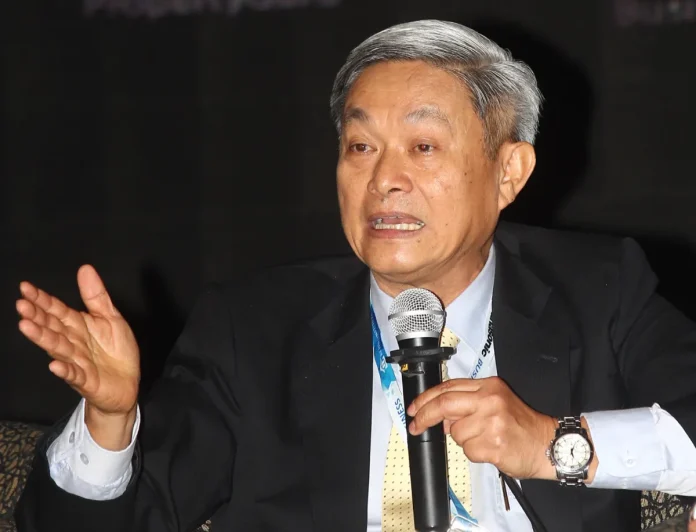
Sunway University economist Dr Yeah Kim Leng described 2025 as a defining year for demonstrating economic resilience, with growth outpacing several regional peers.
He attributed the stronger performance to low inflation, near-full employment, and firm domestic demand, which cushioned external shocks.
Public investment in transport, utilities, healthcare, and industrial parks provided additional support throughout the year.
A rebound in the global semiconductor cycle also helped stabilise export shipments and lift trade numbers toward year-end.
Analysts have turned more upbeat, with HSBC Global Research revising its 2025 GDP forecast upward from 4.2% to 5.0%.
Several other institutions issued similar upgrades, positioning Malaysia as the second-fastest growing economy in Southeast Asia behind Vietnam.
Fiscal consolidation remained a central policy theme under the Public Finance and Fiscal Responsibility Act.
Khazanah Research Institute chairman Dr Nungsari Ahmad Radhi said consolidation efforts were on track, anchored by credible reforms including subsidy rationalisation.
A major fiscal milestone was the rationalisation of RON95 subsidies under the BUDI MADANI RON95 programme, effective from September 30.
The government allocated RM11 billion to cover the price difference between the subsidised rate of RM1.99 per litre and the unsubsidised pump price of around RM2.60.
More than 84% of eligible Malaysians, or 13.9 million people, enjoyed the subsidised petrol price as of November 30.
The government expects to generate annual savings of between RM2.5 billion and RM4 billion from this initiative.
Other reforms included the full enforcement of e-invoicing from August and the continued expansion of the Sales and Services Tax base.
These measures support the government’s commitment to lowering the fiscal deficit to 3.8% in 2025 and 3.5% in 2026.
Headline inflation remained below 3%, which economist Geoffrey Williams described as “one of the key success stories of 2025”.
He noted households continue to feel the impact of rising prices, reflecting structurally low incomes.
The Progressive Wage Policy is showing early results, with 1,966 employers increasing salaries for 20,737 workers as of October.
Williams said the policy would work better if simplified by removing complex requirements and introducing a straightforward reverse income tax.
Malaysia’s monetary environment remained stable, with Bank Negara Malaysia keeping the overnight policy rate unchanged.
The ringgit regained momentum in the second half of the year, reaching a 14-month high of 4.1200 against the US dollar on December 3.
Investment remained robust, driven by inflows into semiconductors, clean energy, and advanced industries.
The National Semiconductor Strategy gained traction with new commitments in manufacturing and research.
The National Energy Transition Roadmap made significant strides with large-scale solar deployment and hydrogen pilot projects.
Malaysia also strengthened its digital infrastructure, marked by the introduction of the national Digital ID in October.
Investments in data centres, cloud infrastructure, and artificial intelligence computing capabilities surged during the year.
As ASEAN Chair, Malaysia steered the bloc through geopolitical uncertainty while strengthening its economic architecture.
The country accelerated negotiations on the ASEAN Digital Economy Framework Agreement to unlock growth in digital trade.
It also pushed for progress in upgrading the ASEAN Trade in Goods Agreement to reduce non-tariff barriers.
In the energy sector, Malaysia revitalised momentum for the ASEAN Power Grid, securing commitments on cross-border interconnections.
Yeah forecasts GDP growth of 4–5% for 2026 but cautioned that risks remain from a global slowdown or renewed geopolitical tensions.
He said Malaysia’s most pressing challenge heading into 2026 will be firm-level productivity and competitiveness.
Nungsari said the next phase of growth depends on Malaysian firms becoming more innovative and resilient.
“As Malaysia moves toward the 13th Malaysia Plan, 2025 was less about headline numbers and more about laying the fiscal and institutional foundations for the next phase of transformation,” he said. – Bernama



