




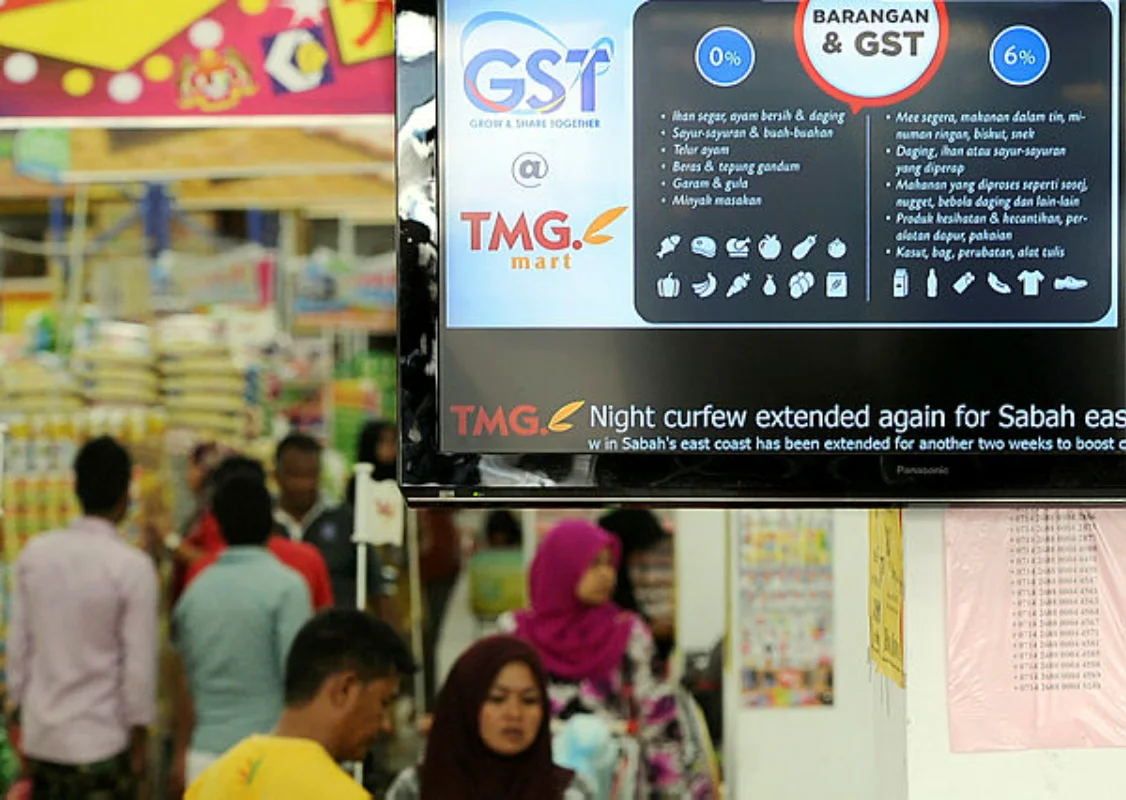
PETALING JAYA: Bringing back GST could help close Malaysia’s fiscal gap but tax experts warn that strong political will would be essential to navigate potential public backlash.
Putra Business School Associate Prof Dr Ida Md Yasin said GST would be a sensible and fair approach, widely used in nearly 100 countries.
“GST is fairer because it is applied broadly across goods and services. In this context, ‘equitable’ means almost all goods and services are taxed at a standard rate, with exemptions for certain items determined by the government.”
She added that essential items such as rice, chicken and other basic necessities can be zero-rated or exempted, shielding lower-income households from direct taxation.
“Under SST, the government specifies which goods and services are taxed, leaving many items outside the tax net. That is why GST is generally regarded as fairer.”
On the impact for poorer households, she emphasised that exemptions for essentials would protect vulnerable groups.
“The government would list certain goods and services as basic necessities. These items would be zero-rated, meaning they are not taxed. Lower-income groups then would not be directly affected by GST on essential items.”
Ida also pointed to Malaysia’s fiscal situation, with expenditures exceeding income, as a key reason for reconsidering GST.
“The government must explore ways to increase revenue and reduce the fiscal gap. GST is one possible solution.
“Malaysia has implemented GST before, but it was later reversed. Moving forward, political courage will be necessary if the government decides to shift from SST to GST.”
From a tax administration perspective, KPMG Malaysia Head of Tax Soh Lian Seng said GST offers greater transparency than SST and helps reduce cascading through its value-chain credit mechanism.
“SST can result in embedded taxes that are less visible and may increase costs within the supply chain.”
Soh added that lessons from past implementation would be critical if GST were reintroduced.
“Key focus areas should include timely and predictable refunds, clear and stable rules, strong digital systems and adequate support for SMEs. Any future implementation must balance revenue sustainability with ease of compliance and business confidence.”
Singapore Institute of International Affairs senior fellow Dr Oh Ei Sun said the push for GST may reflect shifting public sentiment.
“GST was viewed as cumbersome and exorbitant. However, the various taxes and subsidy cuts by the current government are seen by many as even more inconvenient and heavier.”
He said the public may now view a return to GST more favourably. Oh also said some observers believe GST could return in the future under a new name.



